

Maddy summaryThis bill, titled the Prediction Markets Are Gambling Act, prohibits the listing, clearing, or trading of contracts related to sports events or casino-style games on regulated financial exchanges. It directly affects platforms and entities that currently operate prediction markets by banning them from offering bets on outcomes like professional sports matches or casino games such as roulette and blackjack. The law achieves this by amending the Commodity Exchange Act to explicitly define these activities as prohibited agreements, while also clarifying that state laws regulating such contracts remain unaffected. Essentially, the legislation removes the ability for federally registered markets to facilitate gambling on sports and traditional casino games.
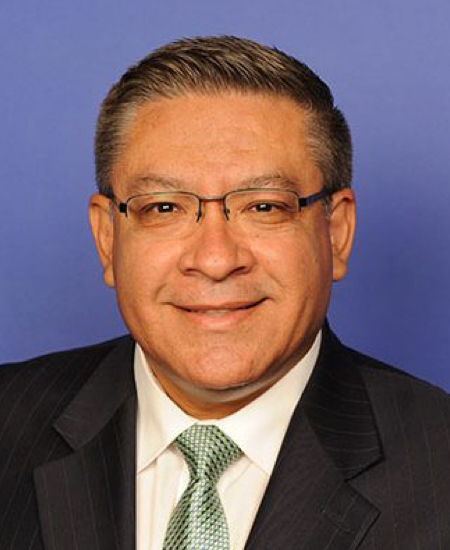
Rep. Salud O. Carbajal
Sponsored bills
Maddy summaryThe Public Safety Officers' Benefits Enhancement Act of 2026 modifies how public safety officers can claim federal benefits related to line-of-duty injuries. It simplifies the claims process by removing a requirement that injuries must be caused by factors other than pre-existing cardiovascular risks and extends the time limit for reporting certain incidents from 24 to 72 hours. These changes apply to any benefit claims that are pending or filed after the law is enacted. The bill directly affects public safety officers seeking compensation for work-related injuries.
Maddy summaryThis bill, titled the Ensuring Kids Have Access to Medically Necessary Dental Care Act, modifies the Children's Health Insurance Program to expand dental coverage for low-income children and pregnant women. It mandates that states remove any lifetime or annual dollar limits on dental benefits for eligible participants and requires states to offer dental-only supplemental coverage instead of allowing them to opt out. The changes take effect six months after the law is enacted, ensuring that these specific groups receive consistent access to necessary dental services without financial caps.
Maddy summaryThis bill amends Medicare to cover dental and oral health services for the first time, affecting all current and future Medicare beneficiaries. It defines covered services to include routine cleanings, fillings, extractions, root canals, crowns, dentures, and emergency care. For most individuals, federal payment for these services will gradually increase from 0% to 80% over an eight-year period, while low-income individuals eligible for prescription drug subsidies will receive 80% coverage immediately. The legislation also establishes frequency limits, such as two cleanings and exams per year and a five-year limit on full dentures, and requires the U.S. Preventive Services Task Force to include at least one oral health professional.
Maddy summaryThe Medicaid Dental Benefit Act of 2026 mandates that Medicaid programs cover a range of dental and oral health services for adults starting in 2027, including dentures, implants, and treatments for pain and emergencies. To help states afford this expansion, the bill provides 100 percent federal funding for these specific services for a 12-quarter period beginning in 2027, while allowing states the option to add extra dental benefits if they choose. In addition to expanding coverage, the legislation requires the federal government to develop standardized quality measures to track adult oral health outcomes and report on disparities based on race, ethnicity, and other demographics. The bill also directs the creation of an outreach program to help eligible adults find care and establishes a timeline for a comprehensive report on access barriers and reimbursement issues.
Maddy summaryThis concurrent resolution formally recognizes the persistent wage gap between Black women and white, non-Hispanic men in the United States. It highlights data showing that Black women earn significantly less than their male counterparts and reaffirms Congress's support for existing laws that prohibit pay discrimination based on sex or race. The document does not create new laws or change policy but serves as a symbolic statement to raise awareness about the economic disparities faced by Black women.
Maddy summaryThe Protecting Immigrants From Legal Exploitation Act of 2026 aims to combat fraud by increasing criminal penalties for individuals who falsely represent themselves as immigration lawyers or provide fraudulent services. It requires non-lawyer immigration service providers to identify themselves on applications and allows victims of unauthorized practice of law to withdraw and resubmit their immigration forms without penalty. The bill also empowers the Attorney General to issue civil injunctions against fraudulent providers and mandates that convicted fraudsters reimburse their clients for services rendered. To support legitimate legal aid, the legislation authorizes funding for outreach programs and grants to nonprofit organizations that provide direct legal assistance to immigrants.
Maddy summaryThis bill directs the U.S. Geological Survey to launch a program using advanced quantum technology to map critical minerals on Federal lands. The initiative requires the agency to conduct mobile surveys in specific western regions, comparing new quantum data with existing records to improve how well they detect mineral deposits. Survey results will be shared publicly and with mining companies to encourage private investment, while state geological surveys will be consulted throughout the process. Additionally, the bill mandates that the Secretary of the Interior submit a detailed report to Congress within two years, outlining the survey findings, cost comparisons, and recommendations for future scaling.
Maddy summaryHR 6529, the Protecting Families from AI Data Center Energy Costs Act, mandates the Federal Energy Regulatory Commission (FERC) to hold a technical conference within 90 days of enactment. The conference will include AI data centers, utilities, and ratepayer advocates to develop strategies protecting residential and small commercial customers from rising energy costs caused by large energy users. FERC must then submit a report with recommendations to Congress within 180 days. This procedural bill directly affects households and small businesses facing potential rate increases due to AI data center energy demands.
Maddy summaryThe AADAPT Act reauthorizes and expands Project ECHO grants to improve Alzheimer’s and dementia care through technology-enabled training. It specifically funds grants for healthcare providers in rural, frontier, or medically underserved areas to enhance early diagnosis, quality care, and provider retention for dementia patients. The bill authorizes $1 million annually (2027-2032) for these dementia-focused training programs, requiring funds to supplement - not replace - existing resources. This directly supports primary care providers licensed to serve underserved communities, using collaborative online learning to address care gaps.