

Maddy summaryHR 3152, the "Fight CRIME Act," aims to maintain international restrictions on Iran's missile-related activities by requiring diplomatic efforts to extend these restrictions before they expire in October 2023. The bill mandates annual reports detailing U.S. diplomatic strategies, potential impacts of expiration, and measures to deter missile technology transfers to Iran. It establishes sanctions against foreign individuals or entities that knowingly support Iran's missile or drone programs, including asset freezes and visa restrictions. These sanctions apply regardless of whether UN restrictions remain in effect after their expiration, directly affecting foreign entities involved in these activities.
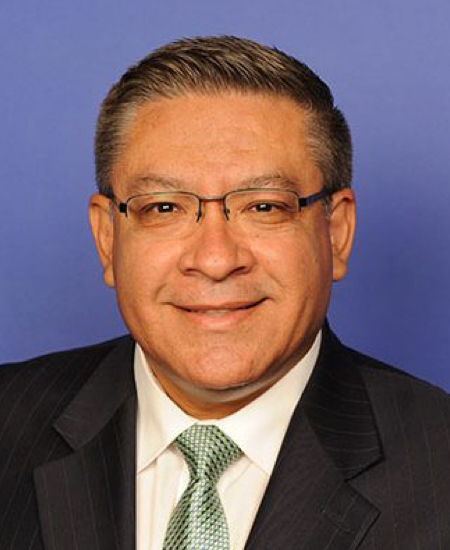
Rep. Salud O. Carbajal
Sponsored bills
Maddy summaryHR 5419, the Direct Seller and Real Estate Agent Harmonization Act, amends the Fair Labor Standards Act to exclude direct sellers (like door-to-door sales representatives) and qualified real estate agents from the federal definition of "employee." This change means these workers would no longer be automatically covered by federal minimum wage and overtime protections under the Fair Labor Standards Act. The bill directly affects individuals working in these specific roles by altering their legal classification under labor law. The key provision is a new definition inserted into existing law, aligning labor classification with existing tax code definitions for these professions.
Equality in the Halls of Congress Act This bill authorizes the President to invite each U.S. territory to provide and furnish no more than two statues for placement in National Statuary Hall.
Pollution-Free Aviation Sites Act or the PFAS Act This bill directs the Department of Transportation (DOT) to provide grants to Part 139 airports for a per- and polyfluoroalkyl substances (PFAS) replacement program for firefighting foams and related equipment. (Part 139 airports include airports that serve scheduled and unscheduled air carrier operations for aircraft with more than 30 seats or serve scheduled air carrier operations for aircraft with 10-30 seats.) DOT must establish the PFAS replacement program within 90 days of the Department of Defense approving a fluorine-free firefighting agent (i.e., an agent that does not contain any PFAS). Under the program, DOT must reimburse eligible airport sponsors for the reasonable and appropriate costs associated with the one-time initial acquisition of fluorine-free firefighting alternatives, the disposal of PFAS products as part of the transition to a fluorine-free agent, cleaning or disposal of existing equipment or components, and replacement of aircraft rescue and firefighting equipment. DOT must prioritize grants of up to $2 million to replace aircraft rescue and firefighting vehicles at specific smaller airports (i.e., Index A airports) that do not have existing capabilities to produce fluorine-free foam. DOT must determine the eligibility of costs payable under the PFAS replacement program by taking into account all engineering, technical, and environmental protocols and generally accepted industry standards that are developed or established for fluorine-free foams.
Maddy summaryHR 5355, the Save Our Airports Reporting Act, requires the FAA Administrator to submit biannual progress reports to Congress on developing a national transition plan for fluorine-free firefighting foam at airports. The reports must detail progress in providing certified commercial airports (part 139 airports) and local authorities with EPA guidance on environmental limits, DoD transition plans, decontamination best practices, and implementation timelines. The reporting continues until the FAA notifies Congress the transition plan is complete. This bill directly affects FAA operations, certified airports, and local airport safety oversight authorities. It is a procedural requirement focused on transparency, not a direct policy change to firefighting standards.
Maddy summaryThis bill increases penalties for companies causing oil spills in offshore waters. It directly affects offshore oil operations and polluters by raising minimum civil fines and doubling maximum criminal penalties, including higher fines and longer prison terms for violations. Key changes include raising minimum civil penalties from "up to" amounts to "at least" those amounts, and doubling all maximum fines (e.g., from $2,500 to $5,000 per violation) and prison sentences under the Federal Water Pollution Control Act. The bill modifies specific sections of the law to strengthen enforcement against offshore pollution.
Women's Business Centers Improvement Act of 2023 This bill reauthorizes the Women's Business Center Program through FY2027, raises the cap on individual center grants, establishes an accreditation program for grant recipients, and revises the duties of the Office of Women's Business Ownership. Specifically, the bill modifies the Women's Business Center Program to enable the Small Business Administration (SBA) to provide initial and continuation grants to eligible entities to operate women's business centers for the benefit of women-owned small businesses. The SBA must also publish standards for a program to accredit entities that receive grants from the Women's Business Center Program, and such entities' receipt of continuation grants shall be contingent upon their obtaining accreditation.
Maddy summaryThis bill renames a U.S. Postal Service facility in Escondido, California, to honor Captain E. Royce Williams. It officially designates the building at 1157 West Mission Avenue as the "Captain E. Royce Williams Post Office Building" and updates all federal references to the location to use this new name. The change affects only official documents and records, not the building's operations or services. This is a purely administrative naming action with no policy or funding implications.
Maddy summaryHR 5293, the Youth Voting Rights Act, would improve voting access for young people aged 18-29 through several concrete changes. The bill requires public colleges and universities to serve as voter registration agencies, establishes pre-registration for 16-year-olds, mandates on-campus polling locations for all institutions of higher education, and prohibits age-based restrictions on voting by mail. It also requires states to accept student ID cards as valid voter identification and provides grants to states for youth voter engagement programs. The bill would collect data on voting trends by age to help identify barriers to youth participation. These changes aim to address systemic barriers that have led to lower youth voter turnout and higher ballot rejection rates among young voters.
Maddy summaryThis bill requires the Bureau of Prisons to develop and implement a strategy for scanning all incoming mail at federal prisons to stop fentanyl and other synthetic drugs from entering facilities. It directs the Bureau to evaluate existing scanning technology within 180 days and submit a detailed plan to Congress within 90 days, including how to provide digital copies of mail to inmates within 24 hours and physical copies within 30 days (if safe). The strategy must achieve 100% mail scanning capacity at all federal prisons, prioritize high-security facilities, and include a budget proposal for fiscal years 2024-2026. This directly affects federal prisons, inmates, and Bureau employees by changing mail processing procedures to enhance safety and reduce staffing burdens from manual mail checks.