

Sanctioning Russia Act of 2025 This bill imposes penalties on certain persons (individuals and entities) if the President determines that the Russian government or a person acting at Russia's direction is involved with (1) refusing to negotiate a peace agreement with Ukraine; (2) violating a negotiated peace agreement; (3) initiating another invasion of Ukraine; or (4) overthrowing, dismantling, or seeking to subvert the Ukrainian government. If the President makes such a determination, the bill requires certain actions including the President must impose visa- and property-blocking sanctions on specified persons such as the Russian president, certain Russian military commanders, and any foreign person that knowingly provides defense items to the Russian armed forces; the President must increase the rate of duty on all goods and services imported from Russia into the United States to at least 500% relative to the value of such goods and services; the President must increase the rate of duty on all goods and services imported into the United States from countries that knowingly engage in the exchange of Russian-origin uranium and petroleum products to at least 500% relative to the value of such goods and services; the Department of the Treasury must impose property-blocking sanctions on any financial institution organized under Russian law and owned wholly or partly by Russia, and any financial institution that engages in transactions with those entities; and the Department of Commerce must prohibit the export, reexport, or in-country transfer to or in Russia of any U.S.-produced energy or energy product.
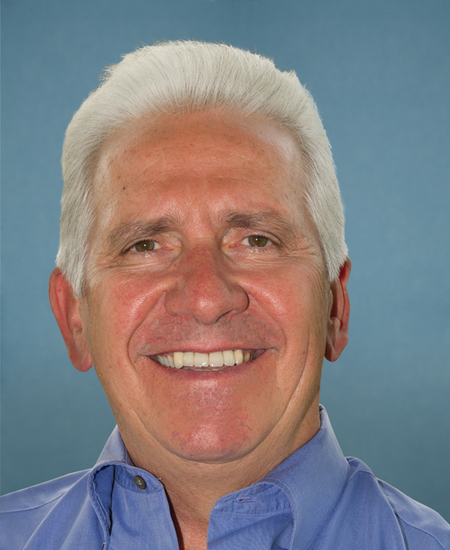
Rep. Jim Costa
Sponsored bills
Maddy summaryHRES 280 is a non-binding House resolution supporting National Women’s History Month in March 2025. It formally recognizes the month-long observance and honors individuals and organizations that have advanced women’s history education and the women’s suffrage movement. The resolution does not create new laws, funding, or obligations - it is a symbolic statement of support. It directly affects no specific group but aims to raise public awareness of women’s historical contributions. The resolution aligns with longstanding congressional practice of recognizing national observances.
Maddy summaryThe American Tank Car Modernization Act of 2025 provides $100 million annually (2026-2029) to fund grants for freight railcar owners to install telematics systems or gateway devices on railcars, with priority for tank cars carrying hazardous materials (toxic inhalation, flammable, or hazardous substances). These systems enable real-time tracking of railcar location, asset health, and specific safety metrics like wheel temperature, hatch status, and internal temperatures. The bill requires railcar owners to report on implementation outcomes, including safety incident data and cost efficiency, to Congress within three years. It directly affects railcar operators managing hazardous material transport by modernizing their data collection capabilities.
Maddy summaryThis bill establishes special base pay rates for wildland firefighters employed by the Forest Service or Department of the Interior, increasing their base pay by specific percentages (from 1.5% to 42%) based on their grade. It creates "incident response premium pay" at 450% of hourly rate for firefighters deployed to respond to qualifying wildfire incidents, with a yearly maximum of $9,000. The bill also provides for paid rest and recuperation leave following wildfire incident response. These provisions replace temporary pay increases that were previously authorized under other legislation and directly affect wildland firefighters who perform duties related to wildland fires.
Maddy summaryThe SHOPP Act of 2025 amends the Gus Schumacher Nutrition Incentive Program to expand eligible food items for SNAP participants. It adds legumes (like beans and peas) to the list of qualifying foods and allows fresh frozen fruits and vegetables to count toward year-round incentives. This directly affects SNAP recipients shopping at participating farmers markets or retailers, making it easier to access more types of produce. The bill updates existing program language to replace "fruits and vegetables" with "fruits, vegetables, and legumes" and "fresh fruits and vegetables" with "fresh or fresh frozen fruits, vegetables, and legumes." These changes aim to increase access to a wider variety of nutritious foods through existing incentive programs.
Save America's Forgotten Equines Act of 2025 or the SAFE Act of 2025 This bill permanently prohibits the slaughter of equines (e.g., horses and mules) for human consumption. (Current law prohibits the slaughter of dogs and cats for human consumption. This bill extends the prohibition to equines.) Specifically, this bill prohibits a person from knowingly (1) slaughtering an equine for human consumption; or (2) shipping, transporting, possessing, purchasing, selling, or donating an equine to be slaughtered for human consumption or equine parts for human consumption. The bill subjects a violator to a fine. The bill applies to conduct in or affecting interstate or foreign commerce or within the special maritime and territorial jurisdiction of the United States. However, it does not apply to an activity carried out by an Indian for a religious ceremony. As background, in recent years, the appropriations acts have prohibited the Department of Agriculture (USDA) from using federal funds to inspect horses before they are slaughtered for human consumption. Therefore, there are currently no USDA-inspected horse slaughter facilities in the United States.
Delivering for Rural Seniors Act of 2025 This bill directs the Food and Nutrition Service (FNS) to award competitive grants to state agencies under a home delivery pilot program for participants in the Commodity Supplemental Food Program (CSFP). As background, the CSFP works to improve the health of low-income persons at least 60 years of age by supplementing their diets with nutritious Department of Agriculture foods. Under the pilot program, a state agency must distribute grant funds to an eligible entity (i.e., a local agency or subdistributing agency) to operate projects that facilitate home delivery of commodities to CSFP participants. Grant funds may be used for costs associated with transportation and distribution of commodities to CSFP participants, staffing required to operate home delivery services, and home delivery outreach to CSFP participants or potential participants. A state agency must prioritize eligible entities that serve CSFP participants who reside in rural areas. A state agency must also submit an annual report to FNS about the project, including best practices regarding the use of home delivery to improve the effectiveness of the CSFP.
Maddy summaryHR 2439 authorizes $50 million for fiscal year 2026 and $55 million for 2027 to fund the United Nations Population Fund (UNFPA), directly supporting its global programs. The bill specifies that these funds will help end preventable maternal deaths, address unmet contraceptive needs, combat gender-based violence, and end harmful practices like child marriage and female genital mutilation. UNFPA operates in over 150 countries, primarily aiding women and girls in developing nations and crisis zones, including those affected by conflict or natural disasters. The bill emphasizes UNFPA’s compliance with U.S. restrictions (not funding abortion) and its role in advancing U.S. strategic interests through voluntary family planning and reproductive health services.
Maddy summaryThis bill repeals Section 338 of the Tariff Act of 1930 (19 U.S.C. 1338), which granted the President unilateral authority to impose tariffs without Congressional approval. It directly affects the President's ability to use this specific provision for tariff actions. The key mechanism is the removal of this legal authority from U.S. trade law. The bill makes no other changes to tariff policy or procedures.
Maddy summaryHR 2457, the Mining Schools Act of 2025, establishes a competitive grant program to fund education and training programs for the U.S. mining industry. It directs the Secretary of Energy to award up to 10 annual grants to eligible "mining schools" - defined as accredited engineering programs (including Tribal Colleges) or specific geology/engineering departments at public universities in states with significant mining GDP - to recruit students and enhance curriculum. Grants must support education in critical areas like critical mineral extraction, environmental reclamation, rare earth element processing, and reducing reliance on foreign mineral supplies. The program requires geographic diversity in grant selection and mandates an advisory board (with industry and academic members) to review applications and ensure funds are used for specified educational purposes, with no new federal funds authorized.