Hate Crimes Commission Act of 2021 This bill establishes the United States Commission on Hate Crimes. The commission must investigate and report on whether hate crimes have increased; factors that contributed to an increase in hate crimes, if one is determined to exist; policies or actions by law enforcement agencies to reduce the commission of hate crimes; the impact of underreporting on hate crimes statistics and prevention; and successful community bias prevention responses.
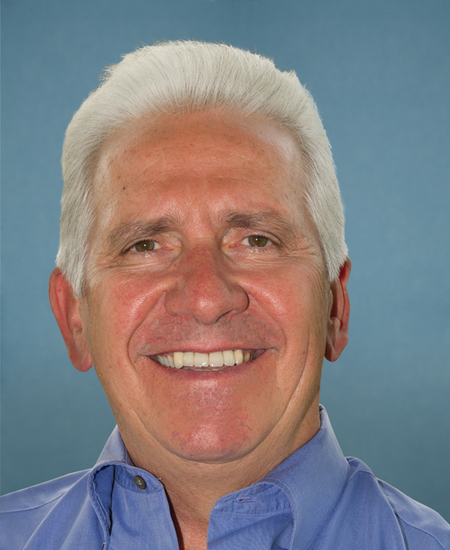
Rep. Jim Costa
Sponsored bills
COVID - 19 Hate Crimes Act This bill requires a designated officer or employee of the Department of Justice (DOJ) to facilitate the expedited review of COVID-19 (i.e., coronavirus disease 2019) hate crimes and reports of COVID-19 hate crimes. It defines COVID-19 hate crime as a violent crime that is motivated by two things: (1) the actual or perceived characteristic (e.g., race or ethnicity) of any person, and (2) the actual or perceived relationship to the spread of COVID-19 of any person because of that characteristic. The bill requires DOJ to issue guidance for state and local law enforcement agencies on (1) the establishment of online hate crime reporting processes and the availability of online reporting in multiple languages, and (2) the expansion of culturally competent education campaigns. Additionally, DOJ and the Department of Health and Human Services must issue guidance on best practices for mitigating racially discriminatory language in describing the COVID-19 pandemic.
Resources for Victims of Gun Violence Act of 2021 This bill establishes the Advisory Council to Support Victims of Gun Violence. Among other things, the advisory council must assess the needs of victims of gun violence and disseminate information about helpful resources.
Farm Workforce Modernization Act of 2021 This bill contains provisions related to alien farmworkers, including provisions establishing a certified agricultural worker (CAW) status and changing the H-2A temporary worker program. The Department of Homeland Security (DHS) may grant CAW status to an applying alien who (1) performed at least 1,035 hours of agricultural labor during the two-year period prior to March 3, 2021; (2) on that date was inadmissible, deportable, or under a grant of deferred enforced departure or temporary protected status; and (3) has been continuously present in the United States from that date until receiving CAW status. The bill imposes additional crime-related inadmissibility grounds on CAW applicants and makes some other grounds inapplicable. CAW status shall be valid for 5.5 years and may be extended. DHS may grant dependent status to the spouse or children of a principal alien. An alien with a pending application may not be detained or removed by DHS and shall be authorized for employment until DHS makes a final decision on the application. A CAW alien (and dependents) may apply for lawful permanent resident status after meeting various requirements, including performing a certain amount of agricultural labor for a number of years. DHS shall create an electronic platform for (1) filing H-2A petitions, (2) facilitating the processing of H-2A cases, and (3) providing agencies a single tool for obtaining H-2A-related case information. The bill makes various changes to the H-2A program, such as (1) modifying the method for calculating and making adjustments to the H-2A worker minimum wage, (2) specifying how an employer may satisfy requirements that it attempted to recruit U.S. workers, (3) requiring H-2A employers to guarantee certain minimum work hours, (4) making the program available for agricultural work that is not temporary or seasonal, and (5) reserving a visa allocation for the dairy industry. DHS shall establish a pilot program allowing certain H-2A workers to apply for portable status, which gives the worker 60 days after leaving a position to secure new employment with a registered H-2A employer. DHS shall establish an electronic system patterned on the E-Verify Program for employers to verify an individual's identity and employment authorization. Employers hiring individuals for agricultural employment must use the system. This bill permanently establishes the Housing Preservation and Revitalization Program, which provides financing assistance for rural rental housing and off-farm labor housing and rental assistance for qualified tenants of such housing. It also authorizes the Department of Agriculture to provide various assistance, including funding for insuring loans and grants for new farmworker housing.

George Floyd Law Enforcement Trust and Integrity Act of 2021 This bill requires the Department of Justice (DOJ) to take specified steps to address accreditation standards, management operations, and misconduct of law enforcement. Specifically, it requires DOJ to develop uniform accreditation standards for law enforcement agencies and adopt policies and procedures to encourage law enforcement agencies to pursue accreditation. It authorizes DOJ to make grants to law enforcement agencies to obtain accreditation from certified organizations. The bill authorizes DOJ to make grants for studying law enforcement agency management and operations standards and developing pilot programs to address law enforcement misconduct. DOJ must study the prevalence and effect of any law, rule, or procedure that allows a law enforcement officer to delay the investigation and prosecution of complaints of law enforcement misconduct. The bill also establishes the Task Force on Law Enforcement Oversight to coordinate the detection and referral of complaints of alleged law enforcement misconduct. Law enforcement agencies must report data regarding practices on traffic violation stops, pedestrian stops, frisk and body searches, and use of deadly force. Finally, DOJ must create a medallion for survivors of each law enforcement officer killed in the line of duty and memorialized on the wall of the National Law Enforcement Officers Memorial.
Biodiesel, Renewable Diesel, and Alternative Fuels Extension Act of 2021 This bill extends and modifies the tax credits for biodiesel, renewable diesel, and alternative fuels. The bill extends through 2025 (1) the income tax credit for biodiesel and renewable diesel used as fuel, (2) the excise tax credit for biodiesel mixtures, (3) the excise tax credit for alternative fuels, (4) the excise tax credit for alternative fuel mixtures, and (5) the payments that are equivalent to the excise tax credits for biodiesel mixtures and alternative fuels. Beginning in 2023, the bill phases down the credits for biodiesel, biodiesel mixtures, alternative fuels, and alternative fuel mixtures by reducing the credits by specified amounts.
Pregnant Workers Fairness Act This bill prohibits employment practices that discriminate against making reasonable accommodations for qualified employees affected by pregnancy, childbirth, or related medical conditions. A qualified employee is an employee or applicant who, with or without reasonable accommodation, can perform the essential functions of the position, with specified exceptions. Specifically, the bill declares that it is an unlawful employment practice to fail to make reasonable accommodations to known limitations of such employees unless the accommodation would impose an undue hardship on an entity's business operation; require a qualified employee affected by such condition to accept an accommodation other than any reasonable accommodation arrived at through an interactive process; deny employment opportunities based on the need of the entity to make such reasonable accommodations to a qualified employee; require such employees to take paid or unpaid leave if another reasonable accommodation can be provided; or take adverse action in terms, conditions, or privileges of employment against a qualified employee requesting or using such reasonable accommodations. The bill sets forth enforcement procedures and remedies that cover different types of employees in relation to such unlawful employment practices. The Equal Employment Opportunity Commission must provide examples of reasonable accommodations that shall be provided to affected employees unless the employer can demonstrate that doing so would impose an undue hardship. The bill prohibits state immunity under the Eleventh Amendment to the Constitution from an action for a violation of this bill.
This bill waives certain eligibility requirements for hospitals participating in the 340B drug discount program (i.e., a program that allows entities to receive covered outpatient drugs at reduced prices from manufacturers) during the COVID-19 (i.e., coronavirus disease 2019) public health emergency. Specifically, the bill waives the required minimum proportion of low-income patients served for hospitals that began participating in the program during or prior to the COVID-19 emergency.
Restoring WIFIA Eligibility Act This bill modifies the budgetary treatment of certain financial assistance provided to nonfederal entities under the Water Infrastructure Finance and Innovation Act (WIFIA) program.
Metastatic Breast Cancer Access to Care Act This bill expedites payment of Social Security Disability Insurance (SSDI) benefits and eligibility for Medicare coverage for those with metastatic breast cancer (i.e., breast cancer that has spread to other sites in the body). Specifically, the bill eliminates the 5-month waiting period for SSDI benefits and the subsequent 24-month waiting period for Medicare coverage for individuals with metastatic breast cancer. Under current law, individuals generally must wait five months after the onset of disability to begin receiving SSDI benefits and an additional 24 months to become eligible for Medicare.