Philippine Human Rights Act This bill imposes limitations on providing assistance to the police or military of the Philippines. No federal funds may be used to provide such assistance until the Philippines government has taken certain actions, including (1) investigating and successfully prosecuting members of its military and police forces who have violated human rights, (2) withdrawing the military from domestic policing activities, and (3) establishing that it effectively protects the rights of journalists and civil society activists. The President shall also direct U.S. representatives at multilateral development banks to vote against providing loans to the police or military of the Philippines.
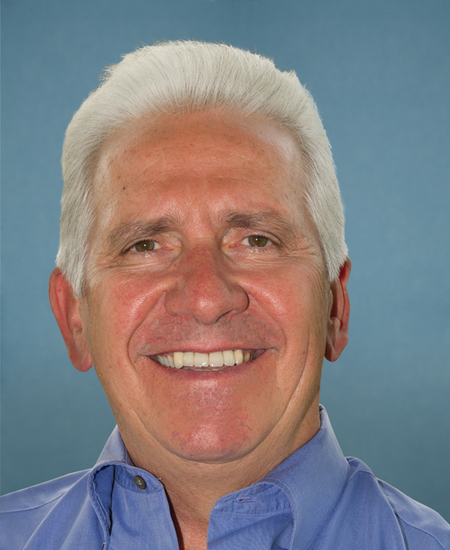
Rep. Jim Costa
Sponsored bills
LGBTQ Essential Data Act This bill directs the Centers for Disease Control and Prevention to more frequently collect information on the sexual orientation and gender identity of deceased individuals through the National Violent Death Reporting System.
Codifying Useful Regulatory Definitions Act or the CURD Act This bill provides statutory authority for a definition of natural cheese . Under the bill, natural cheese is defined as cheese that is produced from animal milk or certain dairy ingredients and is produced in accordance with established cheese-making standards.
Basic Assistance for Students In College Act or the BASIC Act This bill directs the Department of Education (ED) to award planning and implementation grants to institutions of higher education in order to identify and meet the basic needs of students, including food, housing, transportation, and health care. ED must also implement an agreement to (1) share data with other federal agencies in order to identify students who may be eligible for certain federal benefits; and (2) coordinate efforts to enroll those students in federal benefits programs, including Medicaid and the Supplemental Nutrition Assistance Program.
Canal Conveyance Capacity Restoration Act This bill authorizes the Bureau of Reclamation to provide financial assistance for various projects in California to mitigate the sinking or settling of the ground (i.e., subsidence mitigation), specifically for projects related to the Friant-Kern Canal, the Delta-Mendota Canal, and certain parts of the San Luis Canal/California Aqueduct.
Paycheck Fairness Act This bill addresses wage discrimination on the basis of sex, which is defined to include pregnancy, sexual orientation, gender identity, and sex characteristics. Specifically, it limits an employer's defense that a pay differential is based on a factor other than sex to only bona fide job-related factors in wage discrimination claims, enhances nonretaliation prohibitions, and makes it unlawful to require an employee to sign a contract or waiver prohibiting the employee from disclosing information about the employee's wages. The bill also increases civil penalties for violations of equal pay provisions. Additionally, the Equal Employment Opportunity Commission (EEOC) and the Office of Federal Contract Compliance Programs must train EEOC employees and other affected parties on wage discrimination. The bill directs the Department of Labor to (1) establish and carry out a grant program to provide training in negotiation skills related to compensation and equitable working conditions, (2) conduct studies to eliminate pay disparities between men and women, and (3) make available information on wage discrimination to assist the public in understanding and addressing such discrimination. The bill establishes the National Award for Pay Equity in the Workplace for an employer who has made a substantial effort to eliminate pay disparities between men and women. It also establishes the National Equal Pay Enforcement Task Force to address compliance, public education, and enforcement of equal pay laws. Finally, the bill requires the EEOC to issue regulations for collecting from employers compensation and other employment data according to the sex, race, and national origin of employees for use in enforcing laws prohibiting pay discrimination.
Community Broadband Mapping Act This bill authorizes the Department of Agriculture's Rural Utilities Service to award telecommunications grants to local governments, electric and telephone cooperatives, economic development and community groups, and small internet providers for collecting local broadband service information.
This resolution expresses support for the designation of Portuguese National Heritage Month. The bill also esteems the integral role of the Portuguese-American community and the manifold heritage of Portugal in the economy, culture, and identity of the United States.
Hamas International Financing Prevention Act This bill imposes sanctions targeting Hamas, the Palestinian Islamic Jihad, and any affiliate or successor groups. The President shall periodically report to Congress a list of each foreign person or instrumentality that knowingly assists, provides significant support or services to, or is involved in a significant transaction with a senior member or supporter of any of the targeted groups. The President shall impose two or more sanctions on the named persons. Specifically, the person may be (1) denied credit and services from the Export-Import Bank, (2) barred from purchasing certain controlled defense articles, (3) denied exports of items on the U.S. Munitions List, (4) prevented from receiving exports of certain goods or technology controlled for national security reasons, (5) prohibited from receiving financing of more than $10 million from any U.S. financial institution, or (6) subject to property-blocking restrictions. The President shall periodically report to Congress a list of foreign governments that have repeatedly provided material support for the targeted groups' terrorist activities. The President shall bar these governments from receiving for one year (1) U.S. assistance, or (2) exports of controlled munitions. The Department of Treasury shall instruct U.S. leadership of international financial institutions to oppose the provision of assistance to an identified government for one year. The bill provides for certain exceptions and waivers, such as for transactions that would serve U.S. national interests. The President shall report to Congress and periodically provide briefings on other specified topics related to the targeted groups, such as where these groups secure financing and surveillance equipment.

Armed Forces Transgender Dependent Protection Act This bill expands the policy of the Office of Special Needs within the Department of Defense to address transgender dependents. Specifically, the bill codifies the definition of a medical or educational special need to include gender dysphoria. Under the bill, the policy of the office must prohibit the assignment of a military family with special needs to a permanent duty location where the law restricts medically necessary treatment for a medical or educational special need. A member who is serving at a location when such a law is established may elect to be reassigned.