

Maddy summary# Summary of Legislative Text This is a comprehensive legislative proposal focused on addressing substance use disorder through public health approaches, with significant funding and program requirements. Key elements include: 1. **Major Funding Programs:** - **Subtitle A (Local Grants):** $3.0 billion annually (2024-2033) for local entities to provide prevention, treatment, and recovery services - **Subtitle B (State/Regional Grants):** $4.6 billion annually (2024-2033) for state-level programs - **Subtitle C (Other Grants):** $1.0 billion annually (2024-2033) for specific entities and underserved populations - **Subtitle D (Innovation/Training):** $1.5 billion annually (2024-2033) for training, research, and capacity building 2. **Key Program Requirements:** - Mandates for evidence-based treatment services across multiple levels of care - Requirements for cultural competency, particularly for Native American communities - Specific focus on harm reduction, prevention, and recovery support - Provisions for naloxone distribution and overdose reversal programs 3. **Regulatory Changes:** - New certification requirements for covered manufacturers, distributors, and dispensers of Schedule II controlled substances - Penalties for failure to submit certifications or submitting false certifications - Creation of a "Comprehensive Addiction Resources Fund" for penalty revenues 4. **Focus Areas:** - Prevention services (including trauma-informed approaches) - Early intervention services - Recovery support services - Harm reduction programs - Workforce development for treatment providers - Special attention to underserved populations (rural communities, racial minorities, formerly incarcerated individuals) 5. **Funding Priorities:** - 10% of funds for Native American communities - Specific requirements for cultural competency and language access - Mandated data collection and reporting systems This legislation represents a significant shift toward public health approaches to substance use disorder, emphasizing prevention, treatment, and recovery support rather than punitive measures, with substantial funding commitments over a decade.
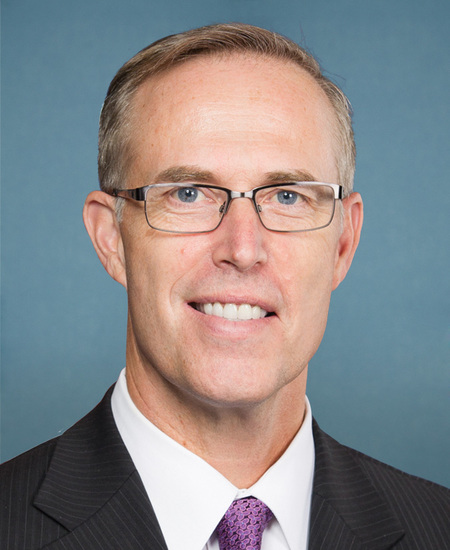
Rep. Jared Huffman
Sponsored bills
Maddy summaryThe Public Service Freedom to Negotiate Act of 2024 establishes federal minimum standards for collective bargaining rights for public employees and supervisory employees. The Federal Labor Relations Authority will determine if each state's laws "substantially provide" for these rights, and if not, federal standards will apply to that state. These standards include the right to self-organization, collective bargaining, recognition of labor organizations, and procedures for resolving disputes. The bill preserves existing collective bargaining agreements and excludes certain employee categories like emergency services workers from some provisions.
Maddy summaryThis bill amends a 2021 law to specify the location for the National Medal of Honor Monument on federal land in Washington, D.C. It requires the monument to be placed within the National Mall's "Reserve" area and attached to, or no more than 1,000 feet from, the Lincoln Memorial. The change directly affects the National Medal of Honor Museum Foundation, which is authorized to build the monument under existing law. This policy adjustment finalizes the physical placement of the monument to honor Medal of Honor recipients, aligning it with the Lincoln Memorial's historical significance.
Maddy summaryThis bill authorizes the placement of a memorial honoring women who contributed to World War II efforts on the National Mall or adjacent federal land in Washington, D.C. It specifically removes a location restriction (under 40 U.S.C. § 8908) to allow the memorial - previously authorized by the 2023 Consolidated Appropriations Act - to be situated within Area I of the National Mall or the National Mall Reserve. The memorial would commemorate over 18 million women who worked as pilots, engineers, mechanics, and codebreakers during the war. The bill directly affects the Women Who Worked on the Home Front Foundation, which is tasked with establishing the memorial.
Maddy summaryThe Tribal Tax and Investment Reform Act of 2024 creates tax parity for Indian tribal governments by extending various tax benefits currently available to states. The bill treats tribal governments similarly to states for excise taxes, bond issuance, pension plans, charitable organizations, child support enforcement, and adoption credits. It also establishes new tax credits for investments in tribal areas and clarifies exclusions for certain tribal programs like health service loan repayments and scholarships. This legislation directly affects Indian tribal governments, their citizens, and tribal organizations by addressing historical tax disadvantages and improving access to capital for economic development.
Maddy summaryThe BUILD GREEN Infrastructure and Jobs Act establishes a $50 billion annual grant program (2025-2034) to fund electrified transportation infrastructure projects that reduce greenhouse gas emissions and improve transportation access. It prioritizes projects in frontline, vulnerable, or disadvantaged communities (requiring 40% of funds), with 30-40% allocated to rural areas and 60-70% to urban areas. The bill mandates recipients use 5% of grant funds for workforce training, pay a minimum wage of $17 per hour (increasing annually), and use renewable energy sources for project operations. Eligible projects include electric buses, rail systems, port infrastructure with EV charging, and micromobility initiatives that reduce emissions and improve transportation services.
Maddy summaryThis bill names a specific United States Postal Service facility at 24355 Creekside Road in Santa Clarita, California, as the "William L. Reynolds Post Office Building." It directly affects the physical location of this post office by changing its official designation. The key provision is a simple name change, with all existing references to the building in federal documents automatically updated to reflect the new name. This is a ceremonial designation with no policy or funding changes.
Maddy summaryHRES 1202 is a symbolic resolution expressing the U.S. House of Representatives' support for designating May 5-11, 2024, as Wildfire Preparedness Week. It encourages public education on fire safety, evacuation planning, and preventive measures like vegetation management and reducing human-caused ignitions (e.g., fireworks). The resolution does not create new laws or allocate funding but aims to raise awareness about wildfire risks, citing statistics on recent fires and health impacts from smoke exposure. It directly supports communities in wildfire-prone areas by promoting existing preparedness resources and educational initiatives. The resolution was introduced by Representatives Torres, Huffman, and Jacobs and referred to the Committee on Natural Resources.
Maddy summaryThis bill codifies the Environmental Protection Agency's 2023 determination that the Pebble Mine project would cause unacceptable harm to Bristol Bay's salmon habitats. It makes the EPA's prohibition on the mine's waste disposal sites legally binding, directly affecting the Pebble Mine developers and protecting the watershed. The key provision permanently enforces the EPA's finding that the mine would destroy critical salmon streams, wetlands, and fishery areas vital to the region's ecosystem and Indigenous subsistence culture.
Maddy summaryThis resolution is a symbolic gesture expressing support for designating May 4, 2024, as a "National Day of Reason." It does not create new laws or directly affect any individuals or groups, as it is purely a non-binding statement of support. The resolution encourages citizens to observe the day and emphasizes reason, critical thought, and scientific inquiry as vital to addressing societal challenges. It cites historical and contemporary contexts where reason has driven progress, but the resolution itself only proposes recognition, not policy changes.