

Lavender Offense Victim Exoneration Act of 2022 or the LOVE Act of 2022 This bill offers a formal apology from Congress for encouraging policies at the Department of State, such as the Lavender Scare, which resulted in the wrongful termination of at least 1,000 people for alleged homosexuality, and addresses related issues. The State Department must (1) review all employee terminations that occurred as a consequence of the Lavender Scare to identify those who were wrongfully terminated, and (2) issue a public report on the findings. The State Department must establish an independent Reconciliation Board to contact any employee (or a family member of a deceased employee) wrongfully terminated during the Lavender Scare and offer to change the employee's record to reflect this finding. The board must accept and review petitions from former employees who believe they were terminated due to sexual orientation. The State Department must establish a board of senior-level officials to address issues that lesbian, gay, bisexual, transgender, queer, and intersex (LGBTQI) Foreign Service employees and their families face. The board must report on improving State Department policies to prevent discrimination based on sexual orientation, gender identity, or sex characteristics. The State Department must report on (1) countries that do not issue spousal visas for Foreign Service employee spouses due to sexual orientation, gender identity, or sex characteristics; and (2) recommendations for State Department responses, such as eliminating visa reciprocity for such countries.
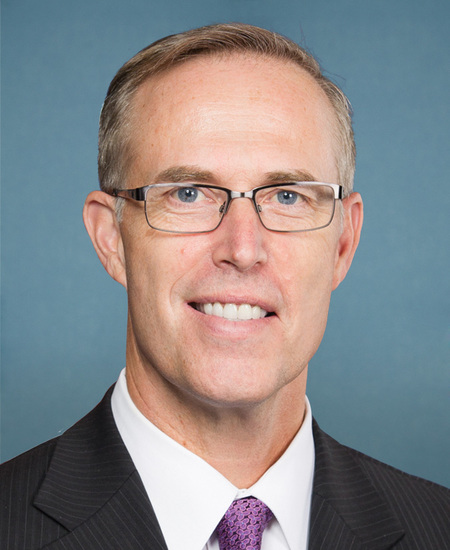
Rep. Jared Huffman
Sponsored bills
Recovering America’s Wildlife Act of 2022 This bill provides funding for the conservation or restoration of wildlife and plant species of greatest conservation need, including endangered or threatened species, and establishes related requirements. TITLE I--WILDLIFE CONSERVATION AND RESTORATION (Sec. 101) This title establishes and funds a subaccount of the Wildlife Conservation and Restoration Account, which was established under the Pittman-Robertson Wildlife Restoration Act. The subaccount must be used to support efforts of states, territories, or the District of Columbia to recover and manage wildlife and plant species of greatest conservation need. The Department of the Interior must use a portion of the funding from the subaccount for grants to state fish and wildlife departments, the District of Columbia fish and wildlife department, fish and wildlife departments of territories, nonprofit organizations, or regional associations of fish and wildlife departments. The grants must be used for innovative recovery efforts for species of greatest conservation need, species listed as endangered or threatened species, or the habitats of such species. Funding for the subaccount must supplement existing funds available to the states from funds distributed under the Dingell-Johnson Sport Fish Restoration Act and the Wildlife Conservation and Restoration Account. Recipients of the funding from the subaccount must match federal funds as specified by the title. The Government Accountability Office must study and report on the progress of states, territories, the District of Columbia, and Indian tribes in protecting species of greatest conservation need, endangered species, and threatened species. TITLE II--TRIBAL WILDLIFE CONSERVATION AND RESTORATION (Sec. 201) This title establishes and funds a Tribal Wildlife Conservation and Restoration Account to support Indian tribes' efforts to recover and manage wildlife and plant species of greatest conservation need. Indian tribes are not required to provide matching funds. TITLE III--ENDANGERED SPECIES RECOVERY AND HABITAT CONSERVATION LEGACY FUND (Sec. 301) This title establishes and funds through FY2026 the Endangered Species Recovery and Habitat Conservation Legacy Fund. The U.S. Fish and Wildlife Service must use the fund to (1) implement an Endangered Species Recovery Grant Program; (2) address its interagency consultation responsibilities under the Endangered Species Act of 1973; (3) work with nonfederal entities to conserve wildlife habitat and at-risk species, threatened or endangered species, or species proposed to be listed as threatened or endangered species; or (4) address the development and permitting of voluntary conservation agreements under such act. Amounts made available under the fund must supplement other federal amounts made available to carry out such activities. The President must annually submit to Congress, together with the annual budget of the United States, a list of threatened species and endangered species for which recovery plans will be developed or implemented with amounts from the Endangered Species Recovery and Habitat Conservation Legacy Fund. TITLE IV--REPORT (Sec. 401) Interior must also report on information concerning the amount of grants and contracts that were awarded or are allocated under this bill to Historically Black Colleges and Universities, Hispanic-serving educational institutions, tribally controlled colleges and universities, minority-serving educational institutions, minority-owned business enterprises, women-owned business enterprises, and community-based organizations that are principally administered by, operated by, or serving minority communities.
Advanced Aviation Infrastructure Modernization Act or the AAIM Act This bill establishes a pilot grant program to support advanced air mobility (AAM) infrastructure. AAM infrastructure refers to an air transportation system that transports individuals and property between points in the United States in both controlled and uncontrolled airspace using certain aircraft, including remotely piloted, autonomous, or vertical take-off and landing aircraft. The Department of Transportation (DOT) must award planning grants for AAM infrastructure to (1) state, local, or tribal governments; (2) airport sponsors; (3) transit agencies; (4) port authorities; (5) metropolitan planning organizations; or (6) consortia of such entities. Entities that receive these grants must develop a comprehensive plan for AAM infrastructure, including vertiports (sites that support the landing, takeoff, loading, and other operations of vertical take-off and landing aircraft). Topics covered in the plan must address matters such as identifying locations for AAM infrastructure and available sources of funding. DOT must brief Congress about the plans it receives. The briefing must include an evaluation of the planned or proposed locations for vertiports and a description of best practices or lessons learned through the review of comprehensive plans. If the Federal Aviation Administration issues type certificates for at least two aircraft models designed to provide AAM transportation and other requirements are met, DOT may award construction grants to entities that submitted comprehensive plans. Recipients may use grant funds for design, environmental studies, and other capital costs related to the construction of a public-use vertiport or associated infrastructure. Grants may not be awarded after September 30, 2023.
Native Plant Species Pilot Program Act of 2021 This bill establishes a pilot program for native plant species and a study on the cost-effectiveness of using native plant materials to carry out land management activities on federal lands. The National Park Service (NPS) shall establish a pilot program in at least two NPS regions to promote the use of native plant materials. The NPS shall conduct a study to determine the cost-effectiveness of using native plant materials in land management activities on federal lands under the jurisdiction of the NPS or other federal land management agencies.
Maddy summaryThis non-binding resolution (HR 8040) expresses Congress's view that many national security threats are non-military and calls for reducing the Pentagon's 2023 budget by $100 billion. It directs the Secretary of Defense to consider a 2021 CBO report when implementing potential cuts, while exempting specific accounts like military personnel pay and defense health programs from reductions. The resolution proposes reallocating the savings to address non-military national priorities. It does not alter actual funding but sets a policy direction for the Department of Defense budget.
Commission To Study the Potential Creation of a National Museum of Asian Pacific American History and Culture Act This bill establishes a Commission to Study the Potential Creation of a National Museum of Asian Pacific American History and Culture. The commission must (1) report recommendations for a plan of action for the establishment and maintenance of a National Museum of Asian Pacific American History and Culture in Washington, DC; (2) develop a fundraising plan to support the establishment, operation, and maintenance of the museum through public contributions; (3) obtain an independent review of this fundraising plan, including an analysis of the resources necessary to fund the construction of the museum and its operations and maintenance in perpetuity without reliance on federal funds; and (4) submit a legislative plan of action to establish and construct the museum. The commission may convene a national conference relating to the museum. The commission shall be solely responsible for acceptance of contributions to it and payment of its expenses. No federal funding may be obligated to carry out this bill.
Military Spouse Hiring Act This bill expands the Work Opportunity Tax Credit (WOTC) to include the hiring of a qualified military spouse. (The WOTC permits employers who hire individuals who are members of a targeted group such as qualified veterans, ex-felons, or long-term unemployment recipients to claim a tax credit equal to a portion of the wages paid to those individuals.) A qualified military spouse is any individual who is certified by the designated local agency as being (as of the hiring date) a spouse of a member of the Armed Forces.
Protecting Our Kids Act This bill makes various changes to federal firearms laws, including to establish new criminal offenses and to expand the types of weapons and devices that are subject to regulation. Among the changes, the bill generally prohibits the sale or transfer of certain semiautomatic firearms to individuals who are under 21 years of age; establishes new federal criminal offenses for gun trafficking and related conduct; establishes a federal statutory framework to regulate ghost guns (i.e., guns without serial numbers); establishes a framework to regulate the storage of firearms on residential premises at the federal, state, and tribal levels; subjects bump stocks to regulation under federal firearms laws; generally prohibits the import, sale, manufacture, transfer, and possession of large capacity ammunition feeding devices; and requires the Department of Justice to report on the demographic data of persons who are determined to be ineligible to purchase a firearm based on a background check performed by the national instant criminal background check system.
Coal Royalty Fairness and Communities Investment Act of 2021 This bill addresses coal royalties and the economic vitality of coal communities, including by (1)requiring the coal lease royalty to be at least 12.5% of the assessment value of federal coal (currently, 12.5% of the value as defined by regulation); (2)establishing the Coal Area Economic Revitalization Fund; (3)providing grant assistance to impacted communities for economic and workforce development programs; (4)providing financial assistance for the design, construction, and operation of large-scale projects to capture and store carbon dioxide emissions from industrial sources; and (5)providing technical assistance and educational outreach to impacted communities.
This resolution recognizes World Oceans Day and affirms the individual and collective duty, both nationally and internationally, to protect, conserve, maintain, and rebuild our oceans and its resources. It also expresses commitment to increasing the investment of federal funds into scientific research and monitoring to better understand the changing oceans, empower the federal government to address and mitigate the effects of the changing climate, and accomplish the goals of the United Nations Decade of Ocean Science for Sustainable Development.