This bill designates the facility of the United States Postal Service located at 502 East Cotati Avenue in Cotati, California, as the Arturo L. Ibleto Post Office Building.
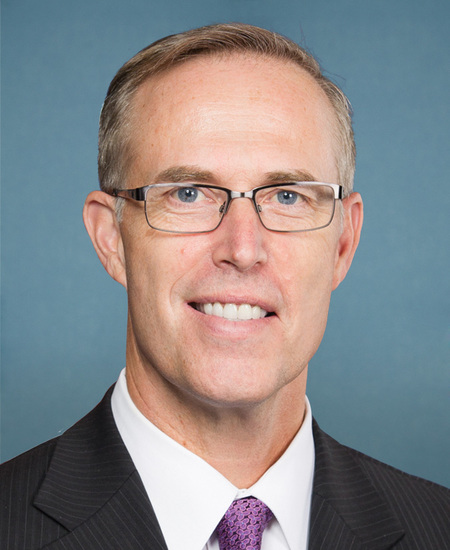
Rep. Jared Huffman
Sponsored bills
My Body, My Data Act of 2022 This bill establishes protections, subject to certain limits, for personal reproductive or sexual health information. This includes information relating to past, present, or future surgeries or procedures, such as the termination of a pregnancy. Specifically, commercial entities, including individuals, nonprofits, and common carriers, may not collect, retain, use, or disclose personal reproductive or sexual health information except (1) with the express written consent of the individual to whom such information relates, or (2) as is strictly necessary to provide a requested product or service. Commercial entities also must provide individuals with access to, and a reasonable mechanism to delete, any of their reproductive or sexual health information upon request. Further, commercial entities must maintain and publish a privacy policy describing their practices with respect to such information. The bill's provisions do not apply to entities that are subject to certain existing health-related privacy regulations, such as the privacy regulations issued under the Health Insurance Portability and Accountability Act of 1996. Additionally, the provisions do not apply to the disclosure of personal reproductive or sexual health information for the publication of newsworthy information of legitimate public concern. The bill provides for enforcement by the Federal Trade Commission and by private civil actions.
Wild Rogue Conservation and Recreation Enhancement Act This bill designates specified Bureau of Land Management land in Oregon as the Rogue Canyon National Recreation Area and adds approximately 59,512 acres of federal land to the Wild Rogue Wilderness. The Department of the Interior, for public land, and the Department of Agriculture (USDA), for National Forest System land, must conduct a wildfire risk assessment that covers the recreation area, the Wild Rogue Wilderness, and any adjacent federal land. Interior and USDA must develop plans to mitigate wildfire risk to communities located near the land. No new permanent or temporary roads shall be constructed within the recreation areas except as necessary for public safety or to implement the wildfire mitigation plan. Interior or USDA, as appropriate, may take measures within such wilderness additions as are necessary to control fire, insects, and disease. All federal surface and subsurface land within the recreation area or the wilderness additions is withdrawn from entry, appropriation, or disposal under the public land laws; location, entry, and patent under the mining laws; and disposition under all laws pertaining to mineral leasing, geothermal leasing, or mineral materials.
Advanced Research Project s Agency-Health Act or the ARPA-H Act This bill establishes within the Department of Health and Human Services (HHS) the Advanced Research Projects Agency-Health to accelerate health and medical innovation by investing in high-risk, high-reward research. The bill also establishes a committee to advise on agency activities. HHS must transfer all authorities, functions, funds, and personnel from a similar entity within the National Institutes of Health to a new, independent agency. Additionally, the President must appoint a director to lead the agency. The director may submit testimony and recommendations concerning the agency to Congress without review or approval by other federal officers or agencies. The director must appoint personnel to administer the agency's research programs, including by selecting projects to support and making recommendations about terminating or continuing projects. The agency may use grants, prize competitions, and a variety of other mechanisms to support the research projects. The agency's budget is separate from that of HHS. The agency must coordinate with the Food and Drug Administration and the Centers for Medicare & Medicaid Services to expedite development and coverage of high-need cures. Additionally, the agency may partner with other public and private entities (e.g., institutions of higher education and patient advocacy organizations). The bill also requires the agency to develop and periodically update a strategic plan and annually report on its activities. Furthermore, (1) the National Academies of Sciences, Engineering, and Medicine must evaluate the agency's performance; and (2) the Government Accountability Office must review the research portfolio of HHS and its components, including the new agency.

Save America’s Forgotten Equines Act of 2021 or the SAFE Act of 2021 This bill prohibits the transporting, receiving, possessing, purchasing, selling, or donation by a person of an equine (e.g., horse) that the person has reason to believe will be slaughtered for human consumption.
This bill designates the facility of the United States Postal Service located at 1 League in Irvine, California, as the Tuskegee Airman Lieutenant Colonel Robert J. Friend Memorial Post Office Building.
Generating Resilient and Energy Efficient Network Communications Act or the GREEN Communications Act This bill establishes a program and sets out other requirements for federal agencies concerning the efficiency and resiliency of communications infrastructure. Specifically, the National Telecommunications and Information Administration (NTIA) must competitively award grants and revolving loans to public or private providers, operators, or owners of communications networks or communications infrastructure for efficiency and resiliency projects. The NTIA must also (1) develop best practices concerning energy-efficient and carbon-neutral communications infrastructure, and (2) annually report on the energy efficiency and greenhouse gas emissions of communications infrastructure and certain network outages. Additionally, the Federal Communications Commission (FCC) must establish a framework to promote resilient communications networks and communications infrastructure. The FCC must consult with specified federal entities on the framework. The FCC must also report on the feasibility of maintaining a map of projected risks to communications infrastructure arising from severe weather, natural disasters, and climate change; provide technical assistance to a provider, owner, or operator of communications infrastructure concerning risks and vulnerabilities related to severe weather, natural disasters, and climate change; and require broadband network outages to be reported to the Network Outage Reporting System. The bill also requires the Department of Energy to report on the projected growth of electrical consumption of, and recommendations for energy efficiency standards for, data centers in the United States.
Cleaner, Quieter Airplanes Act This bill directs the National Aeronautics and Space Administration (NASA) to establish an initiative to research, develop, and demonstrate new technologies and concepts to reduce emissions and noise from aviation. Emissions to be addressed include carbon dioxide (CO2), nitrogen oxides (NOx), water vapor, black carbon, and sulfate aerosols. The goals and objectives of the initiative shall include ensuring U.S. leadership in research and technology innovation leading to substantial reductions in aviation noise and greenhouse gas emissions, a reduction of greenhouse gas emissions from new aircraft by at least 50% as compared to the highest-performing aircraft technologies in service as of December 31, 2021, net-zero greenhouse gas emissions from aircraft by 2050, and demonstrating new technologies developed pursuant to the initiative on regional aircraft intended to enter into service by 2030 and single-aisle aircraft designed to accommodate more than 125 passengers intended to enter into service by 2040.
This bill reauthorizes through FY2026 and revises the Coastal and Estuarine Land Conservation Program. For example, the bill modifies the name of the program to the Coastal Estuarine Resilience and Restoration Program. It also revises goals of the program to include (1) climate change mitigation; and (2) restoring developed property in vulnerable coastal and estuarine areas to a natural state to restore ecological function, allow for shoreline migration, and protect coastal communities. Additionally, the bill requires the National Oceanic and Atmospheric Administration to designate at least five new national estuarine reserves.
Prohibit Wildlife Killing Contests Act of 2022 This bill makes it unlawful for any persons, except as provided below, to organize, sponsor, conduct, or participate in wildlife killing contests on public lands. This bill shall not apply to field trials, wildlife killing contests that exclusively target ungulates (e.g., deer) or birds of the orders Galliformes (e.g., turkeys) or Anatidae (e.g., ducks), or lethal control actions by state or federal agencies that target wildlife classified as invasive by the National Invasive Species Information Center.