

Maddy summaryThe HOPE Act of 2024 would establish HOPE Accounts, tax-advantaged savings accounts for paying qualified medical expenses. These accounts would allow individuals to save for medical costs with tax-free growth and distributions, with contribution limits of up to $4,000 per month for self-only coverage or $8,000 for family coverage. To qualify, individuals must have minimum essential health coverage and cannot have other health savings accounts like HSAs or FSAs. Contributions are generally not deductible but may be excluded from gross income for lower-income individuals, and distributions for qualified medical expenses would be tax-free. The bill also includes rules for employer contributions and coordination with existing health savings mechanisms.
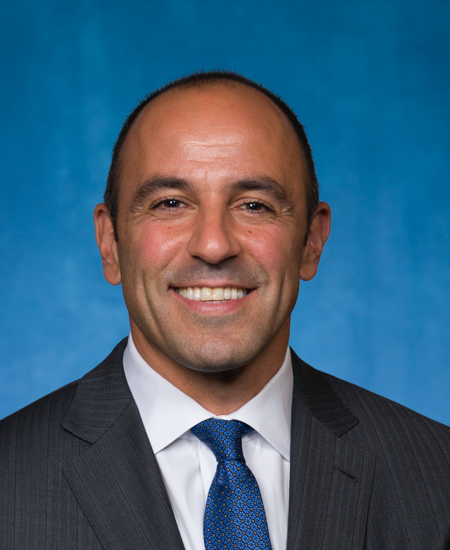
Rep. Jimmy Panetta
Sponsored bills
Maddy summaryHR 8652, the Veterans Border Patrol Training Act, creates a 5-year pilot program to train and hire transitioning U.S. military service members and veterans as U.S. Customs and Border Protection Border Patrol agents. The program, established within 180 days of enactment, uses the existing Department of Defense SkillBridge Program (under 10 U.S.C. § 1143) to transition service members into Border Patrol roles, requiring collaboration between Homeland Security, Defense, and Veterans Affairs. The bill mandates annual reports to Congress tracking participation statistics, including breakdowns by military status (active duty, reserve, officers, enlisted, veterans, spouses, dependents). It does not change existing hiring rules but provides a dedicated pathway for military-connected individuals to enter Border Patrol service. The program automatically terminates after five years.
Maddy summaryThe Counter Terrorgram Act of 2024 requires the Department of Homeland Security (DHS) and the Director of National Intelligence to produce annual assessments of terrorism threats posed by terrorist organizations using foreign messaging apps like Telegram, TikTok, and WeChat. The first assessment must be submitted within 180 days of enactment, followed by five annual reports analyzing past radicalization efforts, financial support through app features, and recommendations for addressing threats. These reports must be coordinated with privacy and civil liberties offices to ensure legal compliance and will be posted publicly online, with classified details limited to intelligence sources. DHS must also share threat information with state and local fusion centers and incorporate their input into national security efforts.
Maddy summaryThe NO BAN Act (HR 9244) prohibits U.S. immigration authorities from denying visas or entry based on national origin, religion, or sex. It amends immigration law to explicitly ban such discrimination in visa decisions and tightens restrictions on the president’s power to suspend entry of certain groups under Section 212(f). The bill requires specific evidence, narrow tailoring, time limits, and congressional notification for any entry restriction, while mandating public reports on visa denials and waivers. It directly affects nonimmigrant visa applicants (e.g., students, workers) and federal agencies administering immigration policy.
Maddy summaryThe Preserving Rural Housing Investments Act clarifies tax rules for Fannie Mae and Freddie Mac by amending the Internal Revenue Code. It specifies that the U.S. government and its agencies are excluded from the definition of "tax-exempt entity" when applying certain tax provisions to these two government-sponsored enterprises. This change ensures that federal entities are not treated as tax-exempt under the relevant tax rules, affecting how Fannie Mae and Freddie Mac manage their tax obligations. The amendment applies to taxable years ending after July 30, 2008.
Maddy summaryHR 9263 creates a new 30% federal tax credit for businesses investing in qualifying agricultural technology projects focused on specialty crops. It directly affects farmers and agribusinesses adopting precision agriculture (like GPS-guided equipment or soil sensors) or controlled environment agriculture (such as indoor vertical farms with climate control systems). The credit applies to qualified property like equipment, software, and infrastructure placed in service before 2035, with specific definitions for eligible technologies. Businesses cannot double-benefit by claiming this credit alongside certain existing grant programs for similar projects. The credit is available for investments completed after January 1, 2023, and integrates into the existing tax code via amendments to sections 48F and 6417.
Maddy summaryHRES 1394 is a non-binding resolution celebrating the U.S.-India partnership based on shared democratic values, religious pluralism, and human rights, while highlighting the contributions of the Indian diaspora in the United States. It specifically recognizes the 50th anniversary of BAPS Swaminarayan Sanstha's community work, including its spiritual centers (mandirs) and volunteer efforts across the country. The resolution does not create legal obligations but formally acknowledges these ties and achievements.
Maddy summaryThis bill makes it a federal crime to steal packages that have been delivered by private carriers (like FedEx or UPS) but not yet received by the recipient. It directly affects package recipients, carriers, and thieves who target unclaimed deliveries left on porches or in mailboxes. The key provision amends federal law to include these delivered-but-unclaimed packages under the same legal protections as mail in transit. This changes the law to treat stolen packages at the delivery stage as a federal offense, similar to theft of postal mail. The bill does not create new penalties but expands existing theft statutes to cover this specific scenario.
Maddy summaryThis bill expands the boundary of the Golden Gate National Recreation Area to include specific lands shown on a July 2024 map titled "Golden Gate National Recreation Area Proposed Boundary Addition" (map #641/193973). It directly affects the management of the recreation area by adding these newly designated lands to its existing boundaries. The key mechanism is a technical amendment to existing law, incorporating the map's depiction of the proposed addition without altering park management policies or creating new regulations.
Maddy summaryThe STAR Act of 2024 creates a new 25% tax credit for semiconductor companies in the United States, specifically for qualified semiconductor design expenditures. This credit applies to both in-house design costs (like employee wages for design work and supplies used in design) and contracted design work paid to external firms, all conducted within the U.S. The bill directly affects U.S.-based semiconductor manufacturers and design firms by reducing their tax liability for eligible design expenses. The credit is added to the existing advanced manufacturing investment credit, with specific exclusions for non-qualifying activities like cosmetic design or duplicating existing products.