

Maddy summaryThis bill amends the Disabled Veterans' Outreach Program to expand eligibility for career services to include Gold Star spouses (spouses of service members who died while on active duty) and surviving spouses (spouses of veterans who died from service-connected causes). It updates existing program language to replace references to "veterans" with "veterans or eligible persons" and adds a new definition clarifying that "eligible person" includes these spouses. The change directly affects spouses who lost their partners in military service, allowing them to access the same career counseling and job placement services previously available only to veterans. The bill modifies existing program provisions without creating new services or funding.
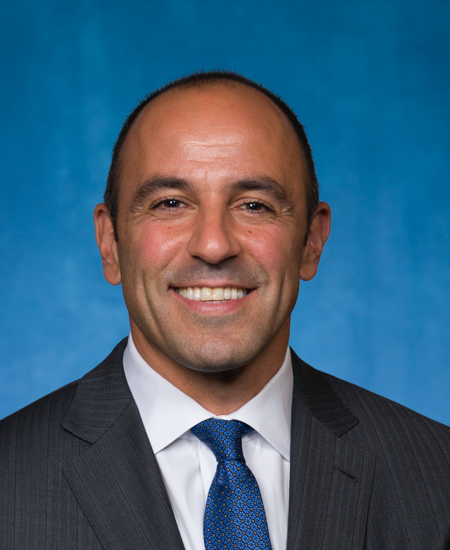
Rep. Jimmy Panetta
Sponsored bills
Maddy summaryThis bill requires the Council on Environmental Quality to annually publish detailed reports starting in 2024, tracking how the National Environmental Policy Act (NEPA) impacts federal projects. The reports will include data on lawsuits challenging NEPA compliance (listing agencies and case outcomes), the length of environmental impact statements (page counts over 5 years), and timelines for completing environmental reviews (over 10 years). These reports must be publicly available with underlying data, directly affecting federal agencies that manage NEPA reviews and providing transparency for Congress and the public. The bill focuses on collecting factual data about NEPA's implementation, not changing the law itself.
Maddy summaryThis bill extends survivor benefits to spouses of veterans who die from amyotrophic lateral sclerosis (ALS). It revises eligibility rules so that veterans who die from ALS are treated as having met the required service duration for benefits, and surviving spouses must have been married for at least eight years prior to the veteran's death. The bill also requires the Department of Veterans Affairs to submit a report within 180 days identifying other service-connected disabilities with high mortality rates that might qualify for similar treatment. These changes apply to veterans dying from ALS on or after October 1, 2023.
Maddy summaryThe Stand with Ukraine Act of 2024 establishes a framework for sustained U.S. security assistance to Ukraine in response to Russia's invasion. It endorses a 10-year bilateral security agreement and directs the U.S. government to provide military equipment, training, and security assistance to strengthen Ukraine's defense capabilities against Russian aggression. Key provisions include treating Ukraine as a major non-NATO ally for defense transfers, fast-tracking military sales through the Foreign Military Sales program, and creating mechanisms to prioritize defense article transfers. The bill also includes specific support for Ukraine's recovery, reconstruction, and demining efforts following the conflict. This legislation directly affects U.S. foreign policy implementation, military assistance programs, and Ukraine's ability to build a credible defense against Russian threats.
Maddy summaryHR 8656, the Modernizing Wildfire Safety and Prevention Act of 2024, creates new training programs for wildland firefighters including a Middle Fire Leaders Academy and wildfire workforce grants to improve response capabilities. It establishes a Wildland Fire Management Casualty Assistance Program to support families of injured or deceased firefighters and develops a National Smoke Monitoring and Alert System to improve public health responses to wildfire smoke. The bill creates a Joint Office of the Fire Environment Center to coordinate wildfire data and technology across federal agencies and requires federal agencies to process wildfire-related assistance payments within 90 days of approval. This legislation directly affects federal wildland firefighters, wildfire response organizations, communities in wildfire-prone areas, and public health agencies.
Maddy summaryThis bill establishes a new pilot loan program to help beginning farmers and ranchers make long-term business investments. It directly affects new agricultural producers (defined as those with less than 10 years of experience) by providing loans for specific "development expenditures" like equipment, soil health improvements, branding, and business systems - items currently excluded from standard operating loans. Key provisions include loans up to $100,000 with repayment terms of 3-10 years, interest rates between 0-3%, and mandatory business management training covering bookkeeping, risk management, and compliance. The program requires annual interest payments but offers flexible principal repayment and aims to reduce under-investment in critical startup capacities.
Maddy summaryHR 8055, the Ensuring Access to Risk Management Act of 2024, sets minimum reimbursement rates for crop insurance providers selling specialty crop insurance (such as fruits, vegetables, and nuts). It requires that at least 17% of premiums cover administrative costs, or the current rate - whichever is higher - starting with the 2022 reinsurance year. Beginning in 2024, it also mandates annual adjustments to these reimbursements based on inflation, tied to the Consumer Price Index. This directly affects insurance providers and agents who sell crop insurance for specialty crops under federal programs.
This resolution supports the designation of National FFA Week. It also (1) recognizes the important role of the National FFA Organization (Future Farmers of America) in developing the next generation of globally conscious leaders who will change the world; and (2) celebrates the 10th anniversary of the Give the Gift of Blue program, which has donated more than 17,000 FFA blue jackets to FFA members in need.
Maddy summaryHR 7015, the CAREERS Act, expands federal funding for workforce training programs to better serve rural communities. It modifies eligibility to include career and technical education schools and requires training programs to align with specific rural industry sectors like broadband, healthcare, agriculture, manufacturing, and water services. The bill mandates grantees to report on employment outcomes for participants and addresses rural workforce challenges such as worker displacement and youth migration. This directly affects rural workforce development boards, training providers, and workers in designated rural industries seeking job skills and career pathways.
Maddy summaryThe Summer Meals Act of 2024 amends the National School Lunch Act to improve access to summer meals for children, primarily affecting public schools, community organizations, and low-income families. Key changes include reducing the required integration of summer education and meals from 50% to 40%, expanding meal service to include after-school hours, weekends, and school holidays for non-school sites, and creating a $10 million annual grant program to support mobile meal trucks and transportation in underserved areas. The bill authorizes grants for service institutions that serve both breakfast and lunch or offer educational programs, with priority given to those increasing participation at congregate feeding sites. These provisions aim to simplify program administration and reach more children during summer breaks in hard-to-access communities.