

Maddy summaryHR 953 establishes a new Indo-Pacific Trade Strategy Commission to develop a comprehensive US trade strategy for the region. The bill directs the US International Trade Commission to study how existing agreements like RCEP and CPTPP affect US exports, supply chains, and competitiveness, and requires the Commission to submit recommendations within 18 months. The Commission, composed of 12 non-congressional experts, will focus on countering China's trade influence, promoting US economic leadership, and addressing supply chain vulnerabilities. This legislation directly affects US businesses, workers, and government policymakers by shaping future trade policy in a region critical to global economic growth.
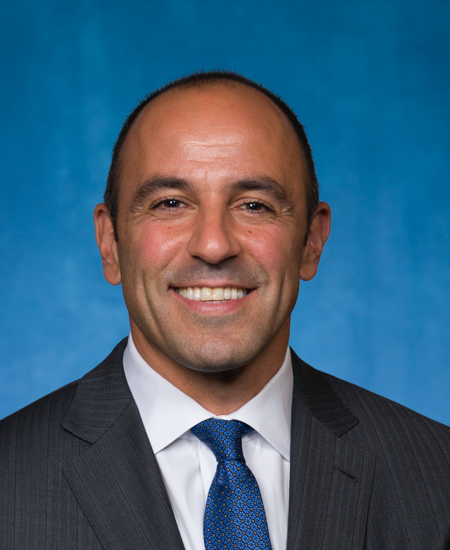
Rep. Jimmy Panetta
Sponsored bills
Maddy summaryThe HOPE Act of 2025 creates tax-advantaged "HOPE Accounts" for individuals to pay qualified medical expenses. These accounts allow tax-free savings with annual contribution limits of $4,000 for self-only coverage or $8,000 for family coverage, and employers can contribute up to 50% of these limits. Distributions for qualified medical expenses are tax-free, but amounts used for non-medical purposes are taxed at ordinary rates plus a 30% penalty. The bill would take effect for taxable years beginning after December 31, 2025, and applies to individuals with minimum essential health coverage who don't participate in other similar accounts like HSAs or FSAs.
National Origin-Based Antidiscrimination for Nonimmigrants Act or the NO BAN Act This bill imposes limitations on the President's authority to suspend or restrict aliens from entering the United States. It also prohibits religious discrimination in various immigration-related decisions, such as whether to issue an immigrant or nonimmigrant visa, unless there is a statutory basis for such discrimination. The President may temporarily restrict the entry of any aliens or class of aliens after the Department of State determines that the restriction would address specific and credible facts that threaten U.S. interests such as public safety. The bill also imposes limitations on such restrictions, such as requiring the President, State Department, and the Department of Homeland Security (DHS) to (1) only issue a restriction when required to address a compelling government interest, and (2) narrowly tailor the suspension to use the least restrictive means to achieve such an interest. Before imposing a restriction, the State Department and DHS shall consult with Congress. The State Department and DHS shall report to Congress about the restriction within 48 hours of the restriction's imposition. If such a report is not made, the restriction shall immediately terminate. Individuals or entities present in the United States and unlawfully harmed by such a restriction may sue in federal court. The bill transfers the authority to suspend the entry of aliens traveling to the United States on a commercial airline that failed to comply with regulations related to detecting fraudulent travel documents from the Department of Justice to DHS.
This bill provides for the presentation of a Congressional Gold Medal to the Freedom Riders, in recognition of their contribution to civil rights by fighting for equality in interstate travel.
Maddy summaryHR 898 establishes two grant programs to address aviation noise and pollution impacts on communities near airports. First, it creates a 3-year EPA-funded research initiative (with $2.5-$5 million grants) to measure noise and emissions using advanced technology, producing neighborhood-level data to identify disproportionately affected areas. Second, it launches a mitigation grant program prioritizing communities identified in the research, funding projects like noise-reducing home retrofits, health services, and environmental programs for disadvantaged groups. The bill requires grantees to collaborate with local communities and report annually on services provided, demographic impacts, and how the work addresses environmental justice concerns.
Maddy summaryHJRES 32 is a symbolic congressional resolution expressing support for designating February 3-7, 2025, as "National School Counseling Week." It does not create new laws or funding but honors school counselors' roles in supporting students' academic, social-emotional, and career development. The resolution encourages public recognition of counselors' contributions, including helping students navigate challenges like mental health, bullying, and college readiness. It specifically references the American School Counselor Association's designation of this week and aims to raise awareness about the importance of school counseling services. The resolution has no binding effect on schools or budgets.
Maddy summaryHRES 88 is a symbolic House resolution designating January 31, 2025, as "Earned Income Tax Credit Awareness Day." It supports raising public awareness about the EITC - a refundable federal tax credit for low- and moderate-income workers - and calls on government agencies, nonprofits, and employers to promote access to the credit and free tax filing assistance. The resolution does not create new law or change eligibility; it solely aims to encourage more eligible workers to claim the credit they qualify for. Approximately 20% of eligible individuals currently do not claim the EITC, per the resolution’s background statements.
Medicare Patient Access and Practice Stabilization Act of 2025 This bill increases certain payment adjustments under the Medicare physician fee schedule for services furnished between April 1, 2025, and January 1, 2026.
Maddy summaryHR 903, the Smoke and Heat Ready Communities Act of 2025, creates federal grant programs to help communities prepare for wildfire smoke and extreme heat events. It funds air pollution control agencies to monitor air quality, deploy monitoring equipment, equip public buildings with air filtration, and distribute protective gear like N95 masks. The bill also establishes university research centers to study health impacts and develop community response strategies, and provides competitive grants for local governments, tribes, and Native Hawaiian organizations to create collaborative community plans. These programs target communities most vulnerable to poor air quality from wildfire smoke and extreme heat, with priority given to areas impacted by these events.
Maddy summaryHCONRES 4 is a symbolic resolution expressing Congress's support for tax-exempt fraternal benefit societies (like mutual aid organizations). It recognizes these groups, which have over 7 million members nationwide, as historically and currently providing critical community benefits - including life/health insurance, charitable work, and volunteer services - valued at over $3.8 billion annually. The resolution affirms that their tax-exempt status under Section 501(c)(8) of the Internal Revenue Code remains beneficial and should continue to be promoted. This is a non-binding expression of congressional sentiment, not a policy change.