

Maddy summaryThe HIRRE Prosecutors Act of 2025 establishes a federal grant program to help state, local, tribal, and territorial prosecutor offices hire, retain, and train prosecutors and support staff. It authorizes $10 million annually (2026-2030) for competitive grants, covering up to 75% of eligible costs, with preference given to rural, tribal, and areas rehiring laid-off prosecutors. Grantees must cover the remaining 25% of costs (or qualify for a waiver), and funds cannot replace existing state/local funding but must supplement it. All funded projects require data tracking and annual performance evaluations by the Attorney General.
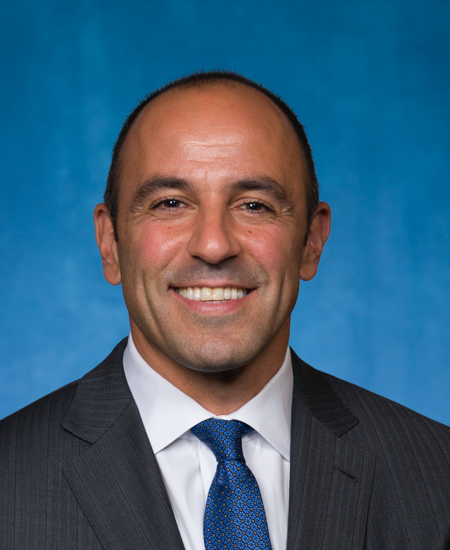
Rep. Jimmy Panetta
Sponsored bills
Maddy summaryHR 6670 creates a new nonimmigrant visa category ("family purpose visas") allowing relatives of U.S. citizens or lawful permanent residents to visit temporarily for family events. It requires applicants to provide proof of financial support, short-term medical insurance covering U.S. travel, and a sworn statement to depart within 90 days per calendar year. The bill restricts petitioners from previously sponsoring relatives who overstayed their visas, and explicitly states that these visits do not count toward permanent residency eligibility. This directly affects extended family members (including grandparents, siblings, and nieces/nephews) seeking short-term U.S. visits for social or major life events.
Maddy summaryHR 6651 requires federal agencies (including the FBI, Homeland Security, and USPS) to develop a coordination strategy within 180 days to improve information sharing on organized retail crime networks. The strategy must help state/local law enforcement gather evidence for prosecutions and boost collaboration between agencies, retailers, and crime task forces. Agencies must submit a joint report within 180 days, and the Comptroller General will publish a separate report on private-sector law enforcement cooperation within one year. The bill defines "organized retail crime" as coordinated theft or fraud for interstate distribution of stolen goods, directly affecting federal agencies, law enforcement, and the retail industry.
Maddy summaryThe Safer Schools Act of 2025 establishes a 5-year federal pilot program providing grants to public schools for security risk assessments and physical security upgrades. Public schools that have experienced violent incidents involving multiple people are prioritized for both types of grants. Schools receiving assessment grants must first identify vulnerabilities, while improvement grants fund specific security measures like panic alarms linked to local police, with federal funds covering up to 50% of costs. The program allocates $600 million total ($100M-$300M annually), requiring schools to submit financial reports and post-implementation safety surveys, with annual congressional reports tracking outcomes.
Maddy summaryHR 6575, the CommonGround for Affordable Health Care Act, extends enhanced premium tax credits for health insurance through 2026, directly benefiting millions of lower and middle-income Americans purchasing coverage through the ACA marketplace. The bill modifies income thresholds for premium subsidies, creating new income tiers that maintain or increase financial assistance for households earning up to 1,000% of the poverty level. It includes provisions to prevent fraud in health insurance exchanges by imposing civil penalties on agents and brokers who provide false information, and requires transparency in pharmacy benefit manager contracts to improve drug pricing accountability. The legislation also extends the annual open enrollment period for health insurance exchanges for the 2026 plan year, allowing more time for people to enroll or change coverage.
Maddy summaryHR 6586 authorizes a one-year pilot program testing monthly coupons for junior enlisted military members living in government-provided housing without families, allowing them to buy food at military commissaries. The coupons must be used only for food (not alcohol or tobacco) and supplement, not replace, existing food benefits like the basic subsistence allowance. The program will run at two selected military installations and require a report on coupon usage, member satisfaction, and impacts on commissary vs. dining facility use after the pilot ends. This aims to address food access challenges for this specific group, focusing on concrete policy changes rather than outcomes.
Maddy summaryHR 6567 creates a new Federal Food Administration within the Department of Health and Human Services to oversee food safety and regulation, replacing the Food and Drug Administration's food-related responsibilities. It transfers all FDA functions related to food (including inspections, labeling, and enforcement under the Federal Food, Drug, and Cosmetic Act) to this new agency, headed by a presidentially appointed Commissioner of Foods. The bill establishes risk-based inspection schedules: high-risk facilities (like meat processors) must be inspected annually, intermediate-risk facilities every two years, and low-risk facilities (such as warehouses) every three years, with infant formula facilities inspected every six months. This reorganization directly affects food manufacturers, distributors, and retailers by shifting oversight from the FDA to a dedicated agency focused solely on food safety.
Maddy summaryHR 573, the "Studying NEPA’s Impact on Projects Act," requires the Council on Environmental Quality (CEQ) to annually publish detailed reports starting July 2025 on how the National Environmental Policy Act (NEPA) affects federal projects. The reports will track NEPA-related lawsuits (including outcomes and costs), the length and cost of environmental reviews (like impact statements), and timelines for completing key review steps over 5- to 10-year periods. Data must be broken down by project type (e.g., energy, transportation) and sector (e.g., renewable energy, pipelines) to show trends in compliance, delays, and expenses. This information will be made publicly available online and submitted to relevant congressional committees, providing transparency on NEPA’s practical implementation without changing the law itself.
Maddy summaryThis bill establishes a direct payment program to compensate specialty crop growers and wine producers for financial losses caused by increased tariffs on U.S. exports after January 20, 2025. Covered losses include higher handling costs for perishable crops, reduced export revenue, canceled contracts, and lost market access due to foreign tariffs. The USDA may also purchase surplus non-wine specialty crops for nutrition programs like school meals. Payments and surplus crop purchases require annual reporting to Congress until 2030, with funding authorized for fiscal years 2026-2030.
Maddy summaryHR 6493, the NOEM Act, amends Section 1983 of federal law to explicitly allow civil lawsuits against individuals acting under federal immigration enforcement authority. The bill adds "or of any Federal immigration enforcement authority" to the existing language, expanding the scope of Section 1983 to include federal immigration officers. This change directly affects federal immigration enforcement personnel by enabling individuals to sue them under this civil rights provision for misconduct. The bill focuses solely on clarifying the legal pathway for such lawsuits, with no additional provisions or mechanisms described in the provided text.