

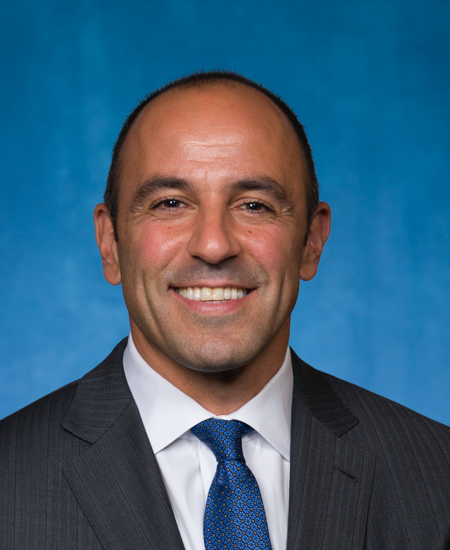
Photo of Jimmy Panetta
D United States House · District 19 · California On the 2026 ballot

Rep. Jimmy Panetta

Compare
Total votes
2,837
all sessions
Attendance
100%
5 missed
Higher than 96% of chamber peers
With party
95%
of cast votes
Lower than 86% of chamber peers
Bipartisan score
3%
crosses aisle rarely
Higher than 84% of chamber peers
Sponsored
2,210
bills & resolutions
Higher than 94% of chamber peers
Committees
3
assignments
2,210 bills and resolutions

Sponsored bills

Total
2,210
Primary
159
Co-sponsor
2,051
This page
2,210
matching current filters
Co-sponsor HRES 460
In committee · United States House · Co-sponsor
Expressing the sense of the House of Representatives that the Congress should enact the Older Americans Bill of Rights to establish that older Americans should have the right to live with dignity and with independence.

Maddy summaryH.Res. 460 is a non-binding resolution expressing the House of Representatives' support for Congress to enact the Older Americans Bill of Rights. This resolution does not create new laws but calls for a proposed bill that would establish specific rights for older Americans, including access to affordable health care, financial security, and community participation. It highlights challenges like high prescription drug costs, retirement insecurity, and barriers to care, urging Congress to address these through legislative action. The resolution directly affects older Americans (ages 65+) and their families by advocating for policy changes to ensure dignity and independence.

In committee Jun 2, 2023 1 co-sponsor
Co-sponsor HR 3204
In committee · United States House · Co-sponsor
Universal School Meals Program Act of 2023

Maddy summaryThe Universal School Meals Program Act of 2023 would establish a universal school meals program providing free breakfast and lunch to all children enrolled in participating schools, regardless of family income. Key provisions include eliminating income-based eligibility requirements for school breakfast and lunch programs, setting specific reimbursement rates ($2.80 for breakfast and $4.63 for lunch with annual inflation adjustments), and prohibiting schools from collecting debt for unpaid meals or "shaming" students. The bill also replaces references to "free or reduced price" with "economically disadvantaged students" in related laws and establishes new methods for identifying children from low-income backgrounds. This legislation would directly affect all public schools participating in the National School Lunch Program and School Breakfast Program.

In committee Jun 1, 2023 1 co-sponsor
Co-sponsor HR 3183
In committee · United States House · Co-sponsor
EATS Act of 2023

Maddy summaryThis bill removes a barrier for college students seeking food assistance by amending the SNAP program rules. It directly affects students enrolled at least half-time in recognized colleges or training programs, who were previously automatically ineligible unless they met separate requirements. The key change eliminates the prior restriction (in section 6(e)) that barred most higher education students from SNAP, allowing them to qualify under the new provision in section 3(m)(5)(F). The changes take effect January 2, 2024.

In committee Jun 1, 2023 1 co-sponsor
Co-sponsor HR 3159
In committee · United States House · Co-sponsor
Food Date Labeling Act of 2023

Maddy summaryThis bill standardizes voluntary date labels on most packaged foods by requiring uniform phrases: "BEST If Used By" for quality dates (indicating quality may decline) and "USE By" for discard dates (indicating when food should be discarded). It applies to manufacturers of non-infant formula foods who choose to include dates, with no requirement to use them. The law mandates clear, conspicuous placement of these phrases and prohibits states from creating conflicting labeling rules. It excludes infant formula and takes effect two years after enactment, with federal agencies required to educate consumers about the new labels.

In committee Jun 1, 2023 1 co-sponsor
Co-sponsor HR 3037
In committee · United States House · Co-sponsor
Closing the Meal Gap Act of 2023

Maddy summaryThe Closing the Meal Gap Act of 2023 amends the Food and Nutrition Act to update how SNAP (Supplemental Nutrition Assistance Program) benefits are calculated. It replaces the "thrifty food plan" with a "low-cost food plan" based on a specific 4-person family diet, requiring the government to reevaluate this plan by 2029 and every 5 years after. The bill also updates medical expense deductions, eliminates time limits on benefits, and allows Puerto Rico to join SNAP with specific transition requirements. These changes directly affect SNAP recipients, particularly in Puerto Rico, Hawaii, and Alaska, by adjusting benefit calculations to better reflect current food costs.

In committee Jun 1, 2023 1 co-sponsor
Co-sponsor HR 3749
In committee · United States House · Co-sponsor
Retail Revitalization Act of 2023

Retail Revitalization Act of 2023 This bill amends tax rules for real estate investment trusts (REITs). It increases (1) the share of equity investments a distressed retail tenant may receive from a REIT from 10% to 50%, and (2) the equity share for regular tenants from 10% to 30%. The bill also allows taxable REIT subsidiaries to accept equity in a retail tenant's businesses as a form of rent, subject to certain restrictions.

In committee May 30, 2023 1 co-sponsor
Co-sponsor HRES 434
In committee · United States House · Co-sponsor
Declaring a mental health crisis among youth in the United States, and expressing the pressing need for historic investments in mental health care for students.

Maddy summaryHRES 434 is a non-binding resolution declaring a mental health crisis among U.S. youth, citing statistics like 49.5% of adolescents experiencing mental health disorders and a 30% rise in emergency visits for youth during the pandemic. It urges states and schools to improve educator training, expand on-campus mental health resources, remove harmful practices (such as risk assessment teams disproportionately affecting students of color), and address barriers for undocumented and low-income students. The resolution also emphasizes combating stigma, integrating mental and physical health care, and reaching high-risk communities with better resources. As a declaration - not a law - it expresses congressional support for historic federal investments in youth mental health care but does not create new policy.

In committee May 26, 2023 1 co-sponsor
Co-sponsor HR 3702
In committee · United States House · Co-sponsor
Access Technology Affordability Act of 2023

Maddy summaryThis bill creates a new tax credit for expenses related to "qualified access technology for the blind" under the Internal Revenue Code. It allows taxpayers to claim a credit of up to $2,000 per year (adjusted for inflation) for costs paid for hardware, software, or IT that converts visual information into formats usable by blind individuals, covering the taxpayer, their spouse, or a dependent who is blind. The credit is limited to $2,000 over any three consecutive tax years per blind individual and expires after 2028. It directly affects blind individuals and their families who purchase qualifying assistive technology. The credit cannot be claimed for expenses already covered by other tax deductions or credits.

In committee May 25, 2023 1 co-sponsor
Co-sponsor HR 3655
In committee · United States House · Co-sponsor
Preventing Our Next Natural Disaster Act

Preventing Our Next Natural Disaster Act This bill modifies the pre-disaster mitigation grant program of the Federal Emergency Management Agency (FEMA). Specifically, the bill increases FEMA's set-aside for pre-disaster mitigation assistance from 6% to 15% of certain grant amounts; provides for a 2% set-aside for community planning and capacity building assistance; and authorizes FEMA to develop guidance regarding how to incorporate climate change into the National Risk Index, cost-benefit analyses, and improved codes, specifications, and standards to address natural hazards. FEMA must prioritize applicants for assistance with the highest hazard risk in coordination with FEMA's National Risk Index, environmental justice communities, and low-income communities (current law covers the latter though this bill modifies the number of individuals in such communities); provide community outreach; and establish a central federal database to consolidate funding data collected by all local, state, and federal agencies involved in post-disaster response and pre-disaster mitigation spending and categorize the data by type of project, funding source, and hazard types using a user-friendly database and interactive map.

In committee May 25, 2023 1 co-sponsor
Co-sponsor HR 3625
In committee · United States House · Co-sponsor
Ruthie and Connie LGBTQI Elder Americans Act of 2023

Maddy summaryThis bill amends the Older Americans Act to better serve LGBTQI older adults (defined as lesbian, gay, bisexual, transgender, queer, intersex individuals, and those living with HIV) by adding specific definitions and creating new support structures. It establishes an Office of LGBTQI Inclusion within the Administration on Aging, led by a Director and Assistant Director, to coordinate services, advocate for this community, and collect data on their challenges. The bill also creates a National Resource Center on LGBTQI Aging to provide training and resources to organizations serving LGBTQI older adults and requires data collection on discrimination against them in long-term care settings. These changes aim to improve access to culturally competent services and address the unique needs of LGBTQI older adults through concrete policy updates.

In committee May 24, 2023 1 co-sponsor
Showing 1,191 to 1,200 of 2,210 bills