

This bill includes phosphate and potash on the Department of the Interior's final list of critical minerals. (Under current law, Interior and other departments are required to conduct a variety of efforts to ensure a secure and reliable supply chain of critical minerals.) Interior must evaluate current policies relating to permitting and leasing of projects to develop critical minerals and issue recommendations to Congress to support domestic production of such commodities.
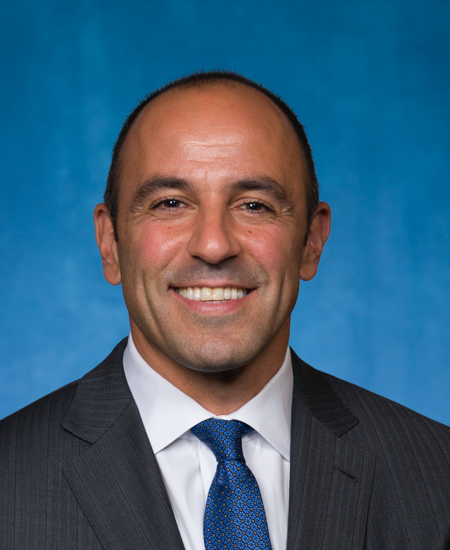
Rep. Jimmy Panetta
Sponsored bills
Maddy summaryThe GLOBE Act of 2023 requires the U.S. Department of State to document and report on violence and discrimination against LGBTQI people worldwide in annual country reports, with specific requirements to identify countries criminalizing LGBTQI status. It establishes a Special Envoy for LGBTQI Human Rights to coordinate U.S. government efforts internationally and creates targeted sanctions against foreign officials responsible for human rights violations against LGBTQI individuals, including denying visas and imposing financial penalties. The bill also includes provisions to improve U.S. foreign assistance programs to better support LGBTQI communities, reform immigration processes to better protect LGBTQI asylum seekers, and ensure inclusive policies in diplomatic and consular settings. These measures aim to advance LGBTQI rights globally through diplomatic, financial, and policy mechanisms.
Maddy summaryHRES 486 is a symbolic House resolution recognizing June 8 as World Oceans Day. It affirms the U.S. duty to protect, conserve, and rebuild ocean resources, highlights ocean health as critical to climate, food security, and coastal economies, and cites specific threats like plastic pollution, ocean acidification, and climate impacts. The resolution commits the House to increasing federal investment in ocean science research and monitoring to address these challenges. As a procedural resolution, it does not create new laws or allocate funds but serves to raise awareness and encourage coordinated action on ocean conservation.
Maddy summaryThis bill requires federal agencies collecting demographic survey data to begin including questions on sexual orientation, gender identity, and variations in sex characteristics (intersex traits) within 360 days of enactment. Agencies must review existing surveys to identify gaps, develop privacy-protective methods for collecting this data (including anonymization and data destruction protocols), and incorporate it into relevant reports within three years. The law applies to all federal surveys that collect standard demographic data (like race, ethnicity, and age), such as the census or health surveys, but does not compel individuals to disclose their status. It emphasizes maintaining confidentiality, allows limited agency waivers if standards can't be met, and mandates a congressional report on implementation within two years.
Maddy summaryThe Neighborhood Homes Investment Act creates a new tax credit for developers who rehabilitate or build affordable homes in distressed communities. The credit is calculated based on the difference between rehabilitation costs and the sale price, with homes required to be sold at affordable prices to qualified homeowners with incomes up to 140% of the local median family income. The bill targets specific "qualified census tracts" defined by high poverty rates, low homeownership, and below-average home values. Developers must ensure homes are sold to qualified homeowners who use them as primary residences for at least five years, with additional safeguards to prevent program abuse and ensure fair housing practices.
Maddy summaryHR 3850, the Pride In Mental Health Act of 2023, establishes a federal grant program to improve mental health and substance abuse services for LGBTQ+ youth (including nonbinary, intersex, and Two Spirit individuals). The bill directs the Health and Human Services Secretary to fund eligible organizations to provide trauma-informed care, cultural competency training for caregivers, school bullying prevention guidelines, and family support resources. It explicitly prohibits grant funds from being used for conversion therapy or advertising related to such therapy. The bill also requires data collection on LGBTQ+ youth mental health and a federal survey to measure psychological distress.
Maddy summaryThe American Offshore Wind Opportunity Act (HR 3614) directs the Government Accountability Office (GAO) to study how to increase U.S. vessel manufacturing, crewing, and shipyard capacity for offshore wind projects. The GAO must analyze policy options to meet the 2030 goal of 30 gigawatts of offshore wind energy, including workforce needs, U.S. vessel rules (Jones Act), shipyard capabilities, and required investments. The study will assess training requirements, credential gaps, and strategies to leverage existing maritime skills for offshore wind jobs. The GAO will submit its findings to relevant congressional committees within 120 days of the bill's enactment.
Maddy summaryThe American Family Act establishes a monthly child tax credit of $250 per month for each child under age 6 and $300 per month for each child aged 6-18, with income limits of $150,000 for joint filers and $112,500 for other filers. The credit is refundable, meaning it can be paid even if the taxpayer owes no income tax, and will be adjusted annually for inflation. The bill includes detailed rules for determining eligibility, including requirements that the child resides with the taxpayer for more than half the month and provisions to prevent fraud through recapture of improperly received payments. The credit will be paid monthly in advance rather than as a single annual payment, with specific mechanisms for calculating and distributing the payments.
Maddy summaryThis bill requires the Defense Secretary to reimburse states for costs incurred fighting certain wildfires (replacing a discretionary "may" with a mandatory "shall"). It creates the FireGuard Program, authorizing the National Guard to use remote sensing data for wildfire detection, monitoring, and emergency response through interagency partnerships. The bill also mandates transferring at least seven demilitarized military aircraft to federal agencies for wildfire suppression and removes reimbursement requirements for geospatial resources used in wildfire response. Additional provisions update drone usage rules for National Guard operations during emergencies and direct a study on using Chinook helicopters for wildfire and search-and-rescue missions. These changes directly affect state firefighting budgets, federal agencies (like FEMA and land management departments), and National Guard operations.
Maddy summaryHR 698, the Assault Weapons Ban of 2023, prohibits the sale, manufacture, transfer, and possession of specific firearms and ammunition devices commonly referred to as "assault weapons" and "large capacity magazines" in interstate commerce. The bill defines "semiautomatic assault weapons" to include rifles like AR-15s and AK-47s, as well as firearms with specific features such as folding stocks, pistol grips, threaded barrels, and detachable magazines holding more than 15 rounds. It exempts law enforcement, military, antique firearms, and weapons already lawfully owned before the law's enactment (known as "grandfathered" weapons). The bill also requires new identification markings on these weapons and large capacity magazines, and adds background check requirements for transfers of grandfathered weapons.