

Advancing Automation Research and Development in Agriculture Act This bill directs the Department of Agriculture (USDA) to establish within USDA a stand-alone competitive research and extension grant program to increase the competitiveness of specialty crops in the United States through the advancement and acceleration of mechanization and automation. Specialty crops are fruits and vegetables, tree nuts, dried fruits, and horticulture and nursery crops (including floriculture). The bill provides specified funds for FY2024 and each succeeding year to carry out the program. The grant program includes projects that create or improve cost-effective technologies to reduce a specialty crop grower's manual labor requirements and increase the efficiency of crop production, resource management, harvesting, processing, post-harvest technologies, and packaging; increase adoption of mechanization and automation technologies; and accelerate automation and mechanization through prototype development, in-field trial testing, ongoing industry engagement, and rapid commercialization. Entities eligible for the grant program are federal agencies, national laboratories, colleges and universities, research institutions and organizations, private organizations and corporations, state agricultural experiment stations, individuals, and organizations representing specialty crop growers.
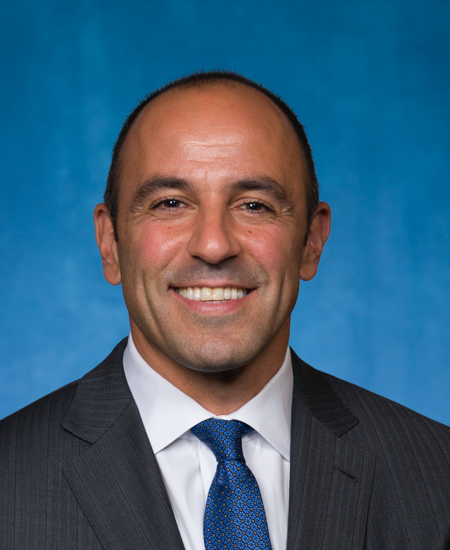
Rep. Jimmy Panetta
Sponsored bills
Maddy summaryThis bill, HR 5210 (MOTOR Act), revises EPA regulations to automatically exempt certain small engines used by emergency responders. It requires the EPA to amend rules so that marine vessels with engines under 60 horsepower, owned by federal, state, or local emergency response or public safety agencies, are exempt from standard engine regulations without needing a separate request. The key change eliminates a bureaucratic step for agencies responding to domestic emergencies or homeland security threats. This directly affects fire departments, police, and other public safety agencies using small marine equipment for emergency operations.
Maddy summaryHRES 645 is a non-binding House resolution recognizing August as "Chicano Heritage Month" to celebrate the contributions of Mexican Americans to U.S. history. It highlights historical figures like labor leaders Cesar Chavez and Dolores Huerta, landmark court cases (e.g., *Mendez v. Westminster* ending school segregation), and cultural impacts such as Selena's influence on music. The resolution does not create new laws or policies but serves as a symbolic acknowledgment by the House to honor this heritage. It encourages the public and institutions to observe the month with events celebrating Mexican American contributions.
Maddy summaryThe ACES Act directs the Department of Veterans Affairs to fund a National Academies study examining cancer rates among active-duty military aircrew members (including pilots and navigators in fixed-wing aircraft). The study will identify potential military-related exposures linked to specific cancers - such as lung, prostate, melanoma, and others - and analyze existing VA, Defense, and CDC health data. It requires the National Academies to report findings to Congress on cancer prevalence and mortality among these service members. This bill focuses on gathering scientific data to inform future policy, not on immediate benefits or changes.
Maddy summaryThis bill amends the Exceptional Family Member Program (EFMP) to protect transgender dependents of military members. It prohibits assigning service members to locations where local laws restrict medically necessary treatment for transgender dependents, including gender dysphoria, and allows members to request reassignment within 30 days of such a law taking effect. The bill explicitly adds "gender dysphoria" to the list of conditions qualifying as a "medical special need" under the EFMP. This directly affects transgender dependents (spouses or children) and their military-affiliated service members, ensuring access to required care without forced relocation to restrictive jurisdictions.
Maddy summaryThis bill approves and implements a new trade agreement between the United States and Taiwan, negotiated by the American Institute in Taiwan and Taiwan's Taipei Economic and Cultural Representative Office. The agreement aims to strengthen economic ties by addressing areas like supply chain security, investment screening, health, science, technology, and the digital economy. The bill establishes requirements for the President to consult with Congress before implementation, submit reports on how the agreement benefits US workers and businesses, and provide transparency about future trade negotiations. It also clarifies that the agreement doesn't override US or state laws and requires any future agreements to follow a similar approval process with congressional review.
Maddy summaryThis bill authorizes increased federal funding for early childhood special education programs under the Individuals with Disabilities Education Act (IDEA). It specifically restores funding for Part C (services for infants and toddlers with disabilities) and Section 619 (preschool programs for children with disabilities ages 3-5) by setting annual appropriations from $503 million to $1.22 billion for Section 619 and $932 million to $1.73 billion for Part C through 2028. These funds would directly support states in delivering high-quality early intervention and preschool services to children with disabilities and their families. The bill aims to reverse decades of reduced per-child funding, which had fallen significantly from historical highs.
Maddy summaryHR 5155 creates a new temporary visitor visa category specifically for family visits to the U.S. It directly affects U.S. citizens and lawful permanent residents wanting to host relatives for short stays, and their eligible relatives (including parents, children, siblings, and extended family). The bill requires visitors to have a financial sponsor, short-term medical insurance covering U.S. expenses, and proof of intent to leave within 90 days per year - reducing the previous 180-day limit. It explicitly states this visa does not count as immigrant status, and applicants who previously overstayed a similar visa face additional restrictions unless extraordinary circumstances apply.
Erie Canal Bicentennial Commemorative Coin Act This bill directs the Department of the Treasury to mint and issue 50,000 $5 gold coins, 400,000 $1 silver coins, and 750,000 half-dollar clad coins in recognition of the bicentennial of the Erie Canal. The designs of the coins must be emblematic of the Erie Canal and its impact on the development of the United States and New York. All sales of coins issued under this bill must include a surcharge to be paid to the Erie Canalway Heritage Fund, Inc., to support the historic preservation and community development of the Erie Canalway National Heritage Corridor in New York and for educational and commemorative programs.
Maddy summary# Summary of the "Protecting Our Democracy Act" This comprehensive legislation aims to strengthen democratic processes, increase government transparency, and prevent foreign interference in elections. Key provisions include: ## Ethics and Transparency - **Ethics Pledge**: Requires all appointees to sign an ethics pledge committing to: - Ban on gifts from registered lobbyists - 2-year revolving door ban (prohibiting participation in matters related to former employers) - Golden parachute ban (no special payments from former employers) - Commitment to decision-making based on public interest - **Tax Transparency**: Requires presidential and vice presidential candidates to disclose 10 years of tax returns, with sitting presidents submitting returns within 30 days of enactment ## Campaign Finance and Foreign Interference - **Foreign Contact Reporting**: Requires political committees to report any contact with "covered foreign nationals" within 1 week - **Enhanced Penalties**: Criminal penalties of up to $1 million and 5 years in prison for violations - **Online Advertising Rules** ("Honest Ads Act"): - Requires clear disclosure of who paid for political ads online - Mandates machine-readable public databases of political ads - Requires visible sponsor identification that remains when ads are shared - Defines "qualified political advertisements" to include various online formats ## Preventing Patronage Systems - Limits exceptions to competitive service for federal positions - Restricts transferring positions between competitive and excepted service - Requires employee consent for position transfers ## Use of Federal Property - Prohibits holding national political conventions on federal property - Requires publicly available visitor records at White House and other official locations (with privacy exceptions) The legislation establishes detailed definitions, reporting requirements, and enforcement mechanisms across multiple agencies, with the goal of increasing transparency, preventing foreign interference, and ensuring ethical conduct in government service.