

Maddy summaryHR 5483 establishes a Water Infrastructure and Drought Solutions Fund that will provide $750 million annually from 2032-2062 for water storage, reclamation, and reuse projects in Western states. The bill directs 50% of these funds to new water storage projects (with federal funding capped at 50% of project costs), 25% to water reclamation projects, and 25% to WaterSMART grants. It requires the Secretary of the Interior to evaluate groundwater storage opportunities in Western states, particularly in critically overdrafted basins, and creates a pilot program to provide financial assistance for water infrastructure projects in eligible states. The bill also increases funding for water recycling projects from $50 million to $500 million annually through 2027.
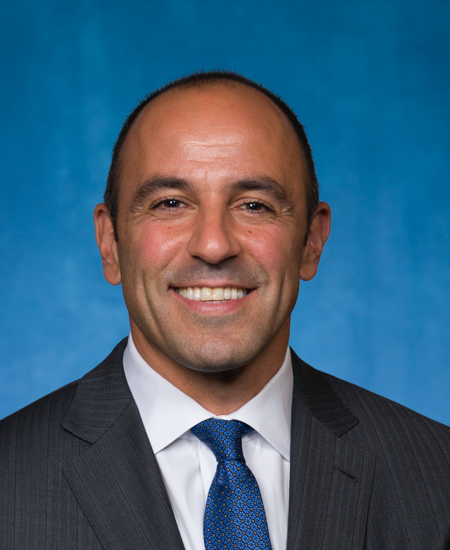
Rep. Jimmy Panetta
Sponsored bills
Maddy summaryThis bill creates a new grant program to fund partnerships between Hispanic-serving institutions (HSIs) and local school districts with high Hispanic/Latino enrollment (at least 25% Hispanic/Latino students and 50% poverty rate). It authorizes $150 million for fiscal year 2024 to support specific activities like aligning high school coursework with college requirements, providing college application assistance, addressing non-academic barriers (such as housing and food insecurity), and developing teacher pipeline programs. The grants require eligible partnerships to report on outcomes, disaggregating data by student demographics to measure impact on Hispanic/Latino students' college enrollment, persistence, and completion rates. The program directly affects HSIs, qualifying school districts, and the Hispanic/Latino students they serve, aiming to close educational gaps through targeted collaboration.
Maddy summaryHRES 682 is a symbolic resolution designating the week beginning September 11, 2023, as "National Hispanic-Serving Institutions Week." It does not create new programs or funding but formally recognizes Hispanic-Serving Institutions (HSIs) for their role in educating Hispanic students and underserved communities. The resolution calls for the public to observe the week with ceremonies during Hispanic Heritage Month, highlighting HSIs' contributions to higher education access and economic mobility. This resolution affects no specific entities or policies, as it is purely commemorative.
Maddy summaryHR 5428, the No Tax Breaks for Union Busting (NTBUB) Act, prevents employers from deducting certain expenses related to influencing workers' decisions about union representation. It targets spending on tactics like anti-union meetings, workplace surveillance, or consultants during organizing campaigns, making these costs non-deductible for tax purposes. Employers must report such expenses on their tax returns, including details about the activities and amounts spent. The bill aims to remove tax incentives for employer interference in union elections, aligning with federal labor law protections for workers' collective bargaining rights.
Maddy summaryHR 3152, the "Fight CRIME Act," aims to maintain international restrictions on Iran's missile-related activities by requiring diplomatic efforts to extend these restrictions before they expire in October 2023. The bill mandates annual reports detailing U.S. diplomatic strategies, potential impacts of expiration, and measures to deter missile technology transfers to Iran. It establishes sanctions against foreign individuals or entities that knowingly support Iran's missile or drone programs, including asset freezes and visa restrictions. These sanctions apply regardless of whether UN restrictions remain in effect after their expiration, directly affecting foreign entities involved in these activities.
Maddy summaryThis resolution symbolically designates October 8, 2023, as "National Hydrogen and Fuel Cell Day" to recognize advancements in hydrogen and fuel cell technologies. It does not create new laws or policies but highlights the U.S. role in developing these energy solutions for transportation, power generation, and environmental benefits. The resolution cites hydrogen's historical use in space exploration and current applications in zero-emission vehicles and grid resilience. It is a non-binding gesture expressing support for the industry, with no direct impact on individuals or regulations.
Maddy summaryHRES 679 is a symbolic House resolution supporting the designation of September 10-16, 2023, as "Celebrate Community Week." It recognizes four international service organizations - Kiwanis International, Lions Clubs International, Optimist International, and Rotary International - for their community service efforts. The resolution encourages these groups to continue promoting community service, especially for youth, and applauds their annual projects addressing needs like youth development, health, education, and humanitarian challenges. It has no funding or policy changes; it simply expresses congressional support for their volunteer work.
Maddy summaryHR 5351, the Nationwide Right to Unionize Act, repeals a federal law (Section 14(b) of the National Labor Relations Act) that currently allows states to enact "right-to-work" laws. This would prevent states from banning agreements requiring workers to pay union dues as a condition of employment, directly affecting workers in states with such laws. The bill's key mechanism is overriding state right-to-work statutes with federal law, ensuring union security agreements remain enforceable nationwide.
Maddy summaryThis bill expands the Gus Schumacher Nutrition Incentive Program (GusNIP) to increase access to healthy food for low-income SNAP participants. It raises the incentive funding percentage from 50% to 80% for eligible purchases, creates new cooperative agreements to scale state programs (requiring 90% of funds to be used for redeemed incentives at retailers), and expands a produce prescription program where healthcare providers can refer patients to buy fresh produce. The bill allocates increased annual funding through 2029, including $57.5 million annually for 2024-2028, and requires a study on transitioning produce prescription costs to health insurance within 10 years. It directly affects SNAP recipients, participating retailers (including farmers markets), and community health centers.
Maddy summaryThe America Grows Act of 2023 sets automatic annual funding increases for four specific USDA agencies: the Agricultural Research Service, Economic Research Service, National Agricultural Statistics Service, and National Institute of Food and Agriculture. It requires each agency to receive 105% of its prior year's funding, adjusted annually for inflation based on the Consumer Price Index. This funding is exempt from automatic budget cuts (sequestration) and remains available for the full fiscal year. The bill directly affects these agencies' budgets but does not create new programs or alter their core functions.