

Maddy summaryThe Workforce Housing Tax Credit Act creates a new tax credit for developers of middle-income housing projects. It allows taxpayers to claim a tax credit equal to a percentage of the building's qualified basis, with higher rates for projects in rural or high-cost areas. To qualify, projects must have at least 60% of units rent-restricted for tenants earning up to 100% of area median income. Developers must maintain middle-income status for 15 years through binding agreements with housing credit agencies. This credit aims to incentivize the development of affordable housing for middle-income households.
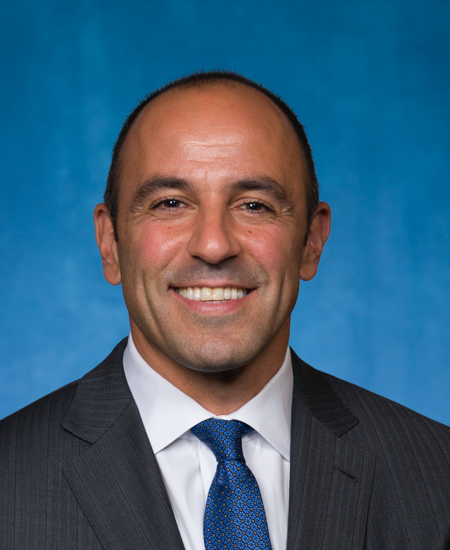
Rep. Jimmy Panetta
Sponsored bills
Maddy summaryThe Main Street Growth Act (HR 6623) creates a new type of securities exchange called a "venture exchange" to facilitate trading of stocks from early-stage companies. It allows companies that haven't had an initial public offering (IPO) and have a small public float (under $2 billion) to list their shares on these specialized exchanges, where they can trade under modified rules. The bill requires specific disclosures about the unique risks of these "venture securities" and prohibits trading them on regular exchanges while they're listed on a venture exchange. This primarily affects early-stage startups seeking capital and investors buying their shares, with the goal of improving access to capital markets for smaller businesses.
Maddy summaryThe BOOST Act creates a 75% tax credit (up to $400) for individuals who purchase qualified signal boosters or related equipment for their principal residence in an area designated as "unserved" by the FCC's Rural Digital Opportunity Fund. It specifically covers devices that strengthen wireless signals for broadband internet access in homes located in these underserved areas. The credit is limited to one taxable year per individual and expires after 2027. The bill also requires the IRS and FCC to establish guidelines for reporting qualifying sales.
Maddy summaryThe Immigration Visa Efficiency and Security Act of 2023 caps family-based immigrant visas for any single country at 15% (2% for dependent areas) of total visas annually, addressing longstanding visa backlogs for certain nations. It establishes new requirements for H-1B employers, including posting job openings on a Department of Labor website, meeting specific wage requirements (minimum $90,000 or prevailing wage), and preventing discrimination against workers. The bill also creates enhanced procedures for investigating H-1B violations, increases penalties for noncompliance, prohibits certain visas for nationals of "foreign adversary countries," and establishes a new pathway for employment-based immigrants to adjust their status with specific job requirements during the process.
Maddy summaryHRES 793 is a resolution passed by the U.S. House of Representatives calling on Hamas to immediately release all 199 hostages taken during Hamas' October 7, 2023 attack on Israel. The resolution condemns Hamas for the attack, the taking of hostages, and threats against hostages, while stating that holding hostages violates international humanitarian law under the Geneva Conventions. It demands the immediate release of all hostages and expresses sympathy for victims and their families. As a symbolic resolution, it does not create legal obligations but formally expresses the House's position.
Maddy summaryHR 3601, the Student Veteran Work Study Modernization Act, expands eligibility for a Veterans Affairs work-study allowance to veterans enrolled at least half-time in rehabilitation, education, or training programs - lowering the previous requirement from three-quarter-time. The bill establishes a five-year pilot program to test this change, requiring the VA to apply the same allowance rules to these veterans as to other participants, except for the enrollment threshold. It also mandates annual reports to Congress tracking participation numbers, four-year degree completion rates, and full-time VA employment outcomes for participants. The policy directly affects veterans seeking education benefits while balancing academic and personal responsibilities.
Maddy summaryHR 6404, the Disarming Cartels Act, requires the Department of Homeland Security to enhance border security efforts to disrupt the smuggling of U.S.-sourced firearms and related munitions into Mexico. Key provisions mandate increased collaboration between U.S. Customs and Border Protection, Immigration and Customs Enforcement, and Mexican authorities; establishing information-sharing mechanisms for firearm interdictions; analyzing recovered firearms in Mexico to trace U.S. sources; and expanding outbound inspections at the U.S.-Mexico border. The bill also requires annual reports to Congress detailing implementation progress, joint operations, and performance metrics for these efforts. This legislation directly affects DHS agencies, Mexican government partners, and aims to address cross-border firearm trafficking through concrete operational changes.
Maddy summaryHJRES 99 would exempt "premium cigars" from federal tobacco regulations under the Federal Food, Drug, and Cosmetic Act. It defines premium cigars by eight specific criteria, including being handmade, containing only tobacco/water/gum, having no filters, and meeting weight requirements. This exemption directly affects manufacturers of cigars meeting this definition, primarily small family-owned businesses. The bill cites a 2022 National Academies report finding premium cigars are used by only 1% of U.S. adults, mainly by non-daily adult users with lower health risks than other tobacco products. If enacted, it would remove federal FDA oversight for these cigars, shifting regulation to states.
Maddy summaryThis bill requires military commanders to approve leave for active-duty service members and their dependents seeking abortion care without needing to disclose the specific procedure. It mandates reimbursement for travel costs to clinics providing abortion services when local access is unavailable and protects the privacy of those using this leave. The bill explicitly prohibits any negative consequences for service members who request or take such leave. It directly affects military personnel and their families by ensuring timely, private, and accessible abortion care without command interference.
Maddy summaryHR 5883, the "Honoring Civil Servants Killed in the Line of Duty Act," increases death gratuity payments for federal employees who die while performing their duties. The bill establishes a $100,000 base payment (adjusted annually for inflation) to be paid to designated beneficiaries, spouses, children, or parents in a specific order of precedence. It also raises funeral expense payments from $800 to $8,800, with annual inflation adjustments, and ensures death gratuity payments are not taxable. The bill applies to various federal employees including those in the Foreign Service, Transportation Security Administration, and Veterans Health Administration.