

Maddy summaryThis bill establishes a federal system to coordinate efforts across agencies to address health risks from extreme heat. It creates a National Integrated Heat Health Information System (NIHHIS) and an interagency committee to develop a strategic plan for heat health planning and response. The bill authorizes funding for community resilience projects that prioritize historically disadvantaged communities and those with environmental justice concerns. It mandates a study to identify gaps in heat information and response systems across the country. The legislation aims to reduce health impacts of extreme heat, particularly for vulnerable populations including the elderly, low-income communities, and communities of color.
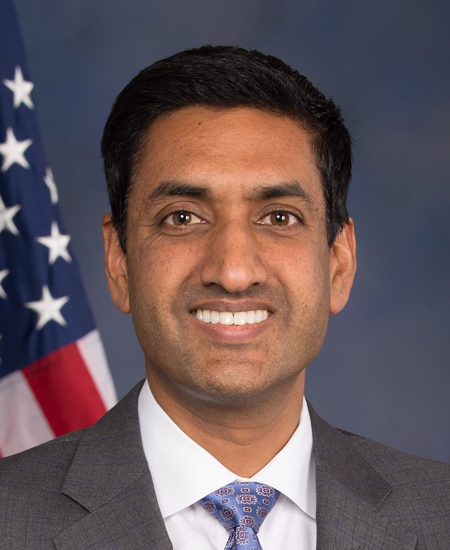
Rep. Ro Khanna
Sponsored bills
Maddy summaryHR 4914, the South Asian Heart Health Awareness and Research Act of 2023, provides $2 million annually from 2024-2028 to fund grants for states to address heart disease disparities in communities disproportionately affected by it, specifically targeting South Asian populations in the U.S. The grants require states to develop culturally tailored heart health materials (like nutrition and exercise programs), support community organizations serving these groups, improve research methodologies to better include South Asian participants, and conduct studies on cardiovascular disease and type 2 diabetes in at-risk communities. States must report on these activities and heart disease data to Congress within two years of the bill's enactment. The legislation directly affects South Asian communities by aiming to reduce health disparities through targeted awareness, community support, and inclusive research.
Maddy summaryHR 4901, the Reproductive Health Care Accessibility Act, aims to improve reproductive health care access for people with disabilities by addressing systemic barriers they face. The bill funds training for health care professionals on providing culturally competent care, creates initiatives to increase the number of health care providers with disabilities in reproductive health fields, and establishes a National Technical Assistance Center to help providers improve services. It allocates $10 million annually for these programs from fiscal years 2024 through 2028, with additional funding for a research study on effective reproductive health care approaches. The bill directly affects people with disabilities seeking reproductive health services, health care providers, and educational institutions training health care professionals.
Maddy summaryHR 4832, the Indian Programs Advance Appropriations Act of 2023, changes how funding is allocated for key Native American programs. It requires that starting in fiscal year 2024, new budget authority for specific accounts under the Bureau of Indian Affairs, Bureau of Indian Education, and Indian Health Service must be made available immediately for the current fiscal year *and* include advance funding for the next fiscal year. The bill mandates annual reports by July 31 each year, including workload estimates and resource sufficiency assessments developed with tribal consultation. This affects tribal programs funded through accounts like Operation of Indian Programs, Contract Support Costs, and Indian Health Services, aiming to improve budget planning predictability.
Animal Welfare Enforcement Improvement Act This bill revises the licensing process of the Department of Agriculture (USDA) for animal dealers and exhibitors to expand USDA's oversight and enforcement of animal welfare requirements. Dealers and exhibitors must apply to USDA for licenses or renewal licenses each year. In order to obtain the licenses or renewals, dealers and exhibitors must meet certain standards for the humane treatment of animals and pass inspections as specified by this bill. USDA may not issue or renew such licenses if the dealers or exhibitors have violated laws relating to animals or if the issuance of the licenses would facilitate the circumvention of state or local laws that prohibit the private ownership of certain animals. Further, USDA must suspend the licenses of dealers or exhibitors whose violations present a risk to animal welfare. USDA must revoke the licenses if the violations persist or if the licensees commit multiple violations. Dealers and exhibitors with suspended or revoked licenses may not be (1) granted another license, (2) granted another license through another person or entity, or (3) employed by another licensee to work with animals during the period of the suspension or revocation.
This concurrent resolution opposes actions that undermine Israel's future as a Jewish, democratic state. The resolution expresses that democracy is at the core of the special relationship between the United States and Israel, and that Congress stands with all Israelis seeking to defend liberal democracy, judicial review, and independent political institutions.
Maddy summaryHR 4987, the Democracy Restoration Act of 2023, would restore voting rights for people with felony convictions who are living in their communities (not incarcerated), directly affecting approximately 4.6 million disenfranchised Americans. The bill requires states to automatically restore voting rights upon completion of sentences, including probation or parole, without requiring payment of fines or fees. It mandates notification to individuals about their restored voting rights and prohibits states from conditioning voting rights on payment of legal financial obligations. The legislation addresses the disproportionate impact of voting restrictions on racial minorities, particularly Black and Latino communities, who face significantly higher rates of disenfranchisement. This bill would apply to all federal elections held on or after its enactment date.
Maddy summaryHR 4963, the Tax Fairness for Workers Act, would restore tax deductions for certain employee expenses. It creates an above-the-line deduction for union dues and expenses paid by wage-earning employees, and allows miscellaneous itemized deductions for other work-related expenses (like uniforms or supplies) that were previously disallowed after 2017 tax law changes. These provisions directly affect employees who pay union dues or incur qualifying job-related costs. The bill amends specific sections of the Internal Revenue Code to make these deductions available for taxable years beginning after December 31, 2022. It does not change tax rates or provide new benefits, only reinstating previously eliminated deductions for eligible workers.
Maddy summaryHR 4986, the Student Loan Interest Elimination Act, would eliminate interest accrual on most existing Federal student loans starting July 1, 2024, without requiring borrower action, while allowing borrowers to opt out if desired. The bill would also enable refinancing of non-Federal direct loans into Federal Direct Consolidation Loans with no interest, no origination fees, and preservation of previous loan forgiveness benefits. New loans made on or after July 1, 2024, would have interest rates based on borrower income relative to area median income (0-4%), and the bill terminates interest-subsidized loans after June 30, 2024. The bill establishes an Education Affordability Trust Fund, financed by loan repayments, to support these changes and fund additional Pell Grants and college affordability programs.
Maddy summaryHRES 578 is a non-binding House resolution calling for the immediate release of Eyvin Hernandez, a U.S. citizen and Los Angeles County public defender wrongfully detained by Venezuela since March 2022. The resolution urges U.S. officials, including the President and Secretary of State, to press Venezuela for his release and condemns Venezuela’s practice of detaining U.S. citizens for political purposes. It specifically references Hernandez’s wrongful detention without evidence or fair trial, noting his status as a Department of State-designated wrongfully detained individual. The resolution expresses support for Hernandez and other Americans detained abroad, without creating new legal requirements or funding.