

Maddy summaryThe STAR Act of 2024 creates a new 25% tax credit for semiconductor companies in the United States, specifically for qualified semiconductor design expenditures. This credit applies to both in-house design costs (like employee wages for design work and supplies used in design) and contracted design work paid to external firms, all conducted within the U.S. The bill directly affects U.S.-based semiconductor manufacturers and design firms by reducing their tax liability for eligible design expenses. The credit is added to the existing advanced manufacturing investment credit, with specific exclusions for non-qualifying activities like cosmetic design or duplicating existing products.
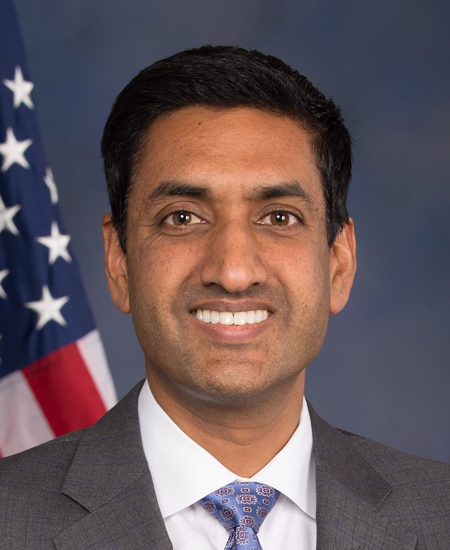
Rep. Ro Khanna
Sponsored bills
Maddy summaryHR 9181, the Eleanor Smith Inclusive Home Design Act of 2024, requires new single-family homes, townhouses, and ground-floor units in small buildings (max 3 units) to include basic accessibility features if they receive federal funding for design or construction. It mandates that these "covered dwelling units" meet ANSI visitability standards - such as zero-step entries, wide doorways, and accessible bathroom doors - ensuring they are usable for people with mobility challenges. Developers must submit plans for approval to state or local agencies to verify compliance before construction begins. The law applies only to homes first occupied more than one year after the bill's enactment and does not override stricter state accessibility laws.
Maddy summaryThis bill permanently removes a 2026 expiration date for a tax exclusion allowing employers to pay employees' student loans through educational assistance programs without those payments being counted as taxable income. It directly affects employees who receive employer-sponsored student loan repayment assistance and employers offering such programs. The key provision amends the Internal Revenue Code to make this tax exclusion permanent, applying to all future payments made after the bill's enactment. This change simplifies the tax treatment for both employers and employees participating in these student loan repayment programs.
Maddy summaryH.J. Res. 193 proposes a constitutional amendment to eliminate legal immunity for federal officials, including the President, from criminal prosecution for actions taken while performing official duties. It also prohibits the President from granting a pardon to themselves. The amendment would apply to all federal officers (such as the President, Vice President, and members of Congress) except for Congress members acting in their legislative role as defined in the Constitution. If ratified by 38 states, this change would become part of the U.S. Constitution, requiring no further congressional action.
Maddy summaryThe GOOD Act requires all federal agencies to publish their non-binding policy guidance documents (like memos, letters, or blog posts) on a single, centralized online repository within 180 days of enactment. It directly affects every federal agency by mandating that all such documents - excluding those already exempt under the Freedom of Information Act - be organized into clear categories on agency websites. Key provisions include designating a central website by the Office of Management Budget Director, maintaining rescinded guidance with clear disclaimers, and ensuring public access to all published guidance. The bill focuses solely on improving transparency in how agencies share interpretive guidance, not on changing policy substance.
Maddy summaryThis bill requires major U.S. mortgage regulators (HUD, USDA, VA, and FHFA) to update their underwriting systems within 24 months to mandate that lenders include the U.S. dollar value of cryptocurrency held in brokerage accounts when evaluating mortgage applications. It directly affects homebuyers who hold cryptocurrency assets, allowing those balances to count toward their mortgage eligibility. The key mechanism is updating automated underwriting programs to treat crypto brokerage account balances as liquid assets equivalent to cash in dollar terms. The bill does not change crypto regulations or tax treatment but modifies how lenders assess borrower assets for mortgage approval.
Maddy summaryThe Revitalizing Downtowns and Main Streets Act creates a 20% tax credit for converting non-residential buildings into affordable housing. To qualify, buildings must be at least 20 years old and nonresidential, with conversion costs exceeding 50% of the building's adjusted basis or $100,000. The converted housing must be rent-restricted for 30 years for residents earning 80% or less of area median income (60% in certain designated areas), with a $12 billion national credit limit. Special provisions apply for economically distressed areas and rural historic preservation projects, primarily affecting developers who convert vacant commercial buildings in downtown or main street areas into affordable housing.
Maddy summaryThe Rohingya GAP Act establishes a U.S. Special Coordinator for Rohingya Atrocities Prevention and Response to coordinate U.S. government efforts on Rohingya issues. It authorizes $10 million annually for atrocity investigations and $8 million for a Burma-focused conflict observatory to document human rights violations. The bill directs U.S. agencies to support Rohingya refugees' protection, education, and livelihoods in Bangladesh while promoting durable solutions including safe return to Myanmar with full citizenship rights when conditions allow. It requires annual reporting on U.S. efforts to address atrocity risks, protect Rohingya, and advance accountability for crimes against them. The legislation aims to address root causes of violence against Rohingya through empowerment, inclusion in decision-making, and support for transitional justice mechanisms.
Maddy summaryHRES 1355 is a non-binding resolution supporting the designation of July 10 as Journeyman Lineworkers Recognition Day. It honors lineworkers who maintain electrical infrastructure under hazardous conditions, including during disasters, and commemorates Henry Miller, the first president of the International Brotherhood of Electrical Workers, who died on July 10, 1896, while troubleshooting an electrical outage. The resolution encourages public recognition of these workers' contributions but does not create new laws or policies.
Maddy summaryHR 8891 amends the Federal Water Pollution Control Act to establish a formal San Francisco Bay Restoration Program. It allows federal funding through grants, cooperative agreements, or contracts for projects on an annual priority list, requiring at least 25% non-federal funding for grants (capping federal share at 75%) while permitting full federal coverage for other agreements. The bill directly affects federal, state, local, and nonprofit organizations, including the Estuary Partnership, working on Bay restoration projects. Key provisions define funding mechanisms and cost-sharing requirements to support specific restoration activities and studies.