

Maddy summaryHR 3656 amends the Agricultural Research, Extension, and Education Reform Act of 1998 to allow the Secretary of Agriculture to waive the matching funds requirement for grants under the Specialty Crop Research Initiative. This directly affects specialty crop researchers and institutions applying for these grants, as they would no longer be required to provide their own matching funds for awards made after the bill's enactment. The key provision adds a new subsection (C) to Section 412(g)(3), authorizing the Secretary to grant waivers for matching funds on a case-by-case basis. The change simplifies funding access for specialty crop research projects without altering the initiative's core purpose. This is a procedural adjustment to grant administration, not a policy change to research priorities.
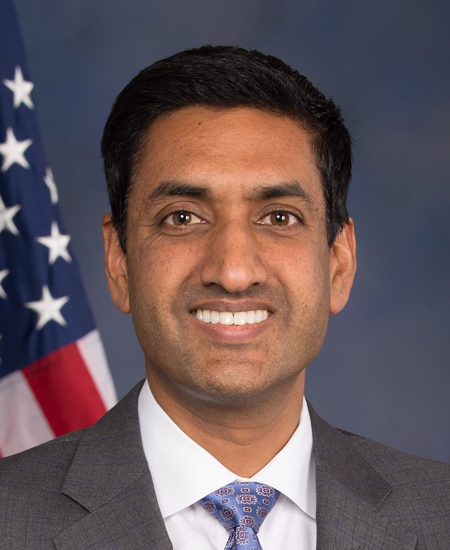
Rep. Ro Khanna
Sponsored bills
Maddy summaryHR 3658, the 911 Community Crisis Responders Act of 2025, provides federal grants to states, tribes, and local governments to create unarmed mobile crisis response teams. These teams would handle nonviolent 911 calls related to mental health, substance use, homelessness, or disabilities - instead of sending police - by dispatching trained professionals like social workers or nurses. The bill requires grantees to update 911 systems for call triage, train dispatchers to identify appropriate referrals, and collect data on demographics, outcomes (like reduced ER visits), and program costs. It directly affects communities experiencing mental health or substance use crises by offering an alternative to law enforcement responses.
Maddy summaryThis bill reorganizes collective bargaining rules for Veterans Health Administration (VHA) employees by removing existing subsections (b), (c), and (d) from Section 7422 of Title 38 and redesignating the current subsection (e) as (b). It directly affects VA health care employees by altering the structure of their collective bargaining framework. The bill explicitly states it does not change the Secretary of Veterans Affairs' existing authorities over incentive pay or expedited hiring under Section 706 of Title 38. The change is purely procedural, focusing on the internal organization of bargaining rules without introducing new employee benefits or obligations.
Maddy summaryHR 3609, the "Remove the Stain Act," would rescind 20 Medals of Honor awarded to U.S. Army soldiers for their actions during the 1890 Wounded Knee Massacre, where unarmed Native Americans (including women and children) were killed. The bill directly affects the official records of these 20 soldiers by removing their names from the Medal of Honor Roll maintained by the military branches. Key provisions include requiring the Secretary of Defense to update the official rolls without requiring recipients to return their medals, and clarifying that this change does not deny any benefits to those individuals. The bill is based on findings that the massacre involved unarmed people and that awarding medals for it undermines the Medal of Honor's integrity.
Maddy summaryThis bill prohibits the U.S. military from discriminating against service members or applicants based on gender identity. It bans policies that would deny service, involuntarily separate members, deny medically necessary healthcare, or require service in a gender different from one's identity. The law defines "gender identity" broadly to include a person's internal sense of gender, appearance, and mannerisms, regardless of sex assigned at birth. It directly affects transgender and gender-diverse individuals currently serving or seeking to serve in the Armed Forces.
Maddy summaryHR 3564, the Nuclear First-Strike Security Act of 2025, requires the President to notify key congressional leaders at least seven days before authorizing a first-use nuclear strike (using nuclear weapons without prior attack on the U.S. or allies). This applies unless the strike occurs under a congressional declaration of war, in response to a nuclear attack on the U.S. or an ally (defined as NATO, Japan, South Korea, or Australia), or during a launch-on-warning scenario. The bill mandates the Secretary of Defense to certify the strike's legality and necessity to congressional leaders before execution. It directly affects the President and Defense Department, adding a formal congressional notification step to nuclear decision-making. The law aims to create a deliberate review period for the most extreme military action.
Maddy summaryThe DEFIANCE Act of 2025 creates a new civil legal remedy for victims of non-consensual intimate digital forgeries (synthetic images or videos manipulating real people into sexual contexts without consent). It allows affected individuals to sue perpetrators in federal court for damages up to $250,000, injunctions to remove content, and privacy protections like pseudonyms. The bill specifically covers cases where forgeries are created or shared with intent to disclose, including scenarios involving sexual assault or harassment. It expands existing federal protections under 15 U.S.C. 6851 to address digital forgeries while ensuring state laws remain in effect.
Maddy summaryThis bill amends federal education law to require K-12 schools to include Asian American, Native Hawaiian, and Pacific Islander (AANHPI) history in American history and civics education. It directs the Department of Education to update curriculum standards, teacher training programs, and national assessments to ensure AANHPI contributions and experiences are integrated into existing history lessons. The policy affects all public schools receiving federal education funding by mandating specific inclusion of AANHPI history alongside traditional American history content. This change aims to address historical gaps in curricula that have excluded these communities' diverse roles and experiences.
This bill prohibits the President from selling, transferring, or exporting certain defense articles or services to Israel, except in specified circumstances. Defense articles covered by the prohibition include BLU-109 bunker busting bombs, Joint Direct Attack Munition (JDAM) assemblies, and 155mm artillery ammunition. Defense services directly related to such articles are also covered. The President may sell, transfer, or export such defense articles or services to Israel if (1) a law is enacted specifying the purposes for which such articles or services may be used, and (2) Israel provides written assurances that the defense articles or services will be used for those specific statutory purposes and in a manner consistent with certain other laws, including international human rights laws.
Maddy summaryThe College for All Act of 2025 would eliminate tuition and required fees for eligible students at public community colleges and 4-year institutions through a federal-state partnership. The federal government would cover 100% of costs in the first year (2026-2027), gradually decreasing to 80% by 2030-2031, while states would start with 0% and increase to 20% by 2030-2031. Eligible students would include those with family income below $150,000 for single parents or $300,000 for married parents, regardless of immigration status. The bill also includes requirements to maintain instruction funding, improve transfer pathways between community colleges and 4-year institutions, and provide additional support for students after tuition elimination.