

Aviation-Impacted Communities Act This bill addresses noise mitigation for aviation-impacted communities. ( Aviation-impacted community is defined as a community that is located not more than one mile from any point at which a commercial or cargo jet route is 3,000 feet or less above ground level.) Specifically, the bill expands Airport Improvement Program noise mitigation program funding for aviation-impacted communities that are not currently within the 65 day-night average sound level (DNL) standard; requires the Federal Aviation Administration (FAA) to enter into an agreement with the National Academy of Sciences to conduct a study that summarizes the relevant literature and studies done on aviation impacts worldwide and focuses on large hub commercial airports and surrounding communities, including communities currently outside of the 65 DNL contour; directs the FAA to conduct outreach to aviation-impacted communities to inform them of the opportunity to be a designated community; requires the FAA to devise an action plan that alleviates or addresses the concerns of a designated community; and provides grants for necessary noise mitigation in a designated community for residences, hospitals, nursing homes, adult or child day care centers, schools, and places of worship.
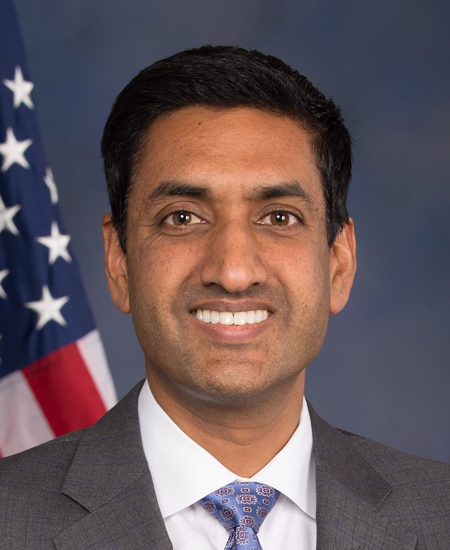
Rep. Ro Khanna
Sponsored bills
Maddy summaryHR 1014, the Big Oil Windfall Profits Tax Act, imposes a tax on major oil companies (defined as those averaging over 300,000 barrels of crude oil daily in 2019) based on the difference between current Brent crude oil prices and the 2015-2019 average, calculated at 50% of that excess. The tax revenue funds the "Protect Consumers from Gas Hikes Fund," which provides quarterly rebates to eligible individuals (with income limits of $75,000-$150,000 depending on filing status) via refundable tax credits. The bill directly affects large oil producers through the new excise tax and eligible U.S. residents through the rebate program. Key mechanisms include the price-based tax calculation, automatic fund transfers for rebates, and income-adjusted credit limits. The tax applies to crude oil extracted or imported in the U.S., with rebates distributed starting in 2022.
Maddy summaryThis bill expands health care coverage under TRICARE for military dependents. It eliminates a separate premium for young adults aged 21-26 enrolled in the TRICARE Young Adult Program, meaning they will no longer pay an extra fee for coverage. The bill also removes an eligibility restriction that previously limited coverage for some dependents in this age group. These changes directly affect military service members' adult children and spouses who rely on TRICARE Young Adult coverage. The policy update simplifies enrollment and reduces out-of-pocket costs for these beneficiaries.
Maddy summaryThis bill authorizes a single Congressional Gold Medal to honor all U.S. Army Dustoff crews who served during the Vietnam War (1962-1973). It recognizes their critical role in evacuating nearly 900,000 wounded personnel, including U.S., South Vietnamese, and allied forces, under extreme combat conditions. The medal, designed with input from the Secretary of Defense, will be presented to the U.S. Army Medical Department Museum for permanent display. Duplicate bronze medals may be sold to cover costs, but the primary action is the commemorative recognition of these crews' service.
Maddy summaryThe Pregnant Women in Custody Act establishes new standards for care of pregnant women in correctional facilities across federal, state, tribal, and local systems. It prohibits using restrictive housing for pregnant women from confirmed pregnancy through 12 weeks after delivery (with limited exceptions), requires facilities to provide comprehensive healthcare services including prenatal and postpartum care, and mandates data collection about the health needs of incarcerated pregnant women. The bill also requires staff training on proper treatment, establishes protocols for unexpected childbirth, and mandates transfer of women with high-risk pregnancies to facilities with appropriate medical care. These provisions aim to improve health outcomes for both mothers and infants by addressing gaps in care for incarcerated pregnant women.
Maddy summaryHR 782 prohibits state officials from interfering with abortion services provided across state lines. It specifically blocks states from restricting: (1) out-of-state patients traveling for legal abortions, (2) providers offering such services, (3) assistance for travel or care, or (4) the interstate shipment of FDA-approved abortion drugs. The bill allows the federal Attorney General or affected individuals to sue violators for injunctions, damages, and attorney fees. It directly affects patients seeking care in other states, healthcare providers, transportation services, and pharmacies handling FDA-approved abortion medications. The law focuses on preventing state laws from blocking access to legally permitted abortion services.
Maddy summaryThis resolution (HRES 120) supports designating February 2023 as "National Teen Dating Violence Awareness and Prevention Month." It urges schools, communities, and families to use this month for educational activities promoting healthy relationships and preventing teen dating violence, which affects many young people (e.g., 44.3% of teens experienced violence per CDC data). As a symbolic resolution, it does not create new laws or funding but aims to raise public awareness about a public health issue impacting teens nationwide.
Equal Access to Contraception for Veterans Act This bill prohibits the Department of Veterans Affairs from requiring payment from a veteran for any contraceptive item that is required to be covered by health insurance plans without a cost-sharing requirement.
Maddy summaryThe Child Care for Every Community Act establishes a federal program to provide universal, high-quality child care and early learning services for all young children not yet required to attend school. It provides 90% federal funding for most programs (100% for migrant/seasonal farmworkers and Native American children) with a sliding fee scale based on family income (maximum 7% of income). The bill requires states, tribes, and localities to develop comprehensive plans ensuring services are accessible, culturally appropriate, and meet national quality standards. It specifically focuses on serving low-income children, children with disabilities, dual language learners, homeless children, and children in foster care. The program emphasizes coordination with schools and other community services to support children's development and school readiness.
Maddy summaryThis bill makes significant changes to US corporate tax rules to prevent tax avoidance through foreign operations. It requires corporations to calculate foreign income tax liabilities country-by-country, limits interest deductions for large international financial reporting groups, and modifies rules for "inverted corporations" (where US companies move tax residence abroad). The bill also creates new rules treating foreign corporations managed primarily in the US as domestic corporations for tax purposes. These changes aim to close tax loopholes related to outsourcing and foreign tax planning.