

Maddy summaryHR 1510, the Improving Access to Nutrition Act of 2023, removes work requirements for Supplemental Nutrition Assistance Program (SNAP) recipients. It directly affects approximately 6.1 million people, including many Black, Hispanic, and Native American households disproportionately impacted by food insecurity (with rates 2-4x higher than White households), as well as families with children and individuals with health barriers to employment. The bill amends the Food and Nutrition Act by striking provisions requiring work for SNAP eligibility and related administrative requirements. This change aims to prevent vulnerable households from losing critical food assistance during the pandemic and beyond.
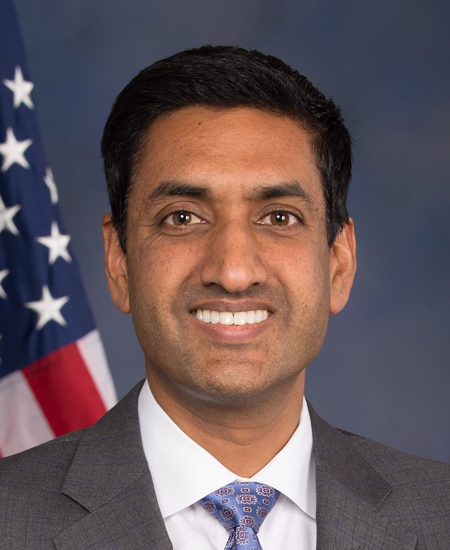
Rep. Ro Khanna
Sponsored bills
Maddy summaryHR 1483 repeals multiple tax provisions benefiting oil and gas companies, effective for taxable years beginning after December 31, 2022. It eliminates credits for marginal wells, enhanced oil recovery, and intangible drilling costs; ends percentage depletion allowances for oil/gas; and prohibits LIFO accounting for major integrated oil producers (defined as companies with >500,000 barrels daily crude production). The bill also removes deductions for tertiary injectants, special passive loss rules, and qualified business income deductions for oil/gas activities. These changes directly affect oil and gas producers by reducing their tax advantages, without creating new taxes or subsidies.
Maddy summaryHR 1511 amends Section 249 of the Immigration and Nationality Act to change eligibility criteria for certain immigration provisions. The bill replaces outdated language about entry dates (prior to July 1, 1924, or January 1, 1972) with a requirement that applicants must have been long-term residents of the United States for at least seven years before applying. This change would directly affect individuals seeking immigration status under the amended provisions who meet the new residency timeline. The bill is procedural in nature, updating the legal definition of qualifying residency without creating new benefits or restrictions. (Note: The bill's title incorrectly references the "Immigration Act of 1929," which never existed; the actual law amended is part of the 1952 Immigration and Nationality Act.)
This resolution supports the goals of a feminist foreign policy (i.e., a foreign policy that requires analysis of and challenges to power structures and inequalities that are based on systems of discrimination). The resolution also supports the adoption of policies that promote gender equity and the participation of women and girls in public life.
Maddy summaryThe WRCR Act of 2023 would expand the Earned Income Tax Credit (EITC) to include more low-income workers and students, lowering the minimum age requirement from 25 to 18 and allowing students receiving Federal Pell Grants or meeting specific income requirements to qualify. It would create a new program for monthly advance payments of the credit instead of a single annual payment, with taxpayers needing to report changes in circumstances to avoid overpayment. The bill also modifies income thresholds and credit percentages to increase access for more workers, with these changes taking effect for tax years beginning after December 31, 2022.
Maddy summaryHRES 200 is a non-binding House resolution condemning two mass shootings in California: 11 victims in Monterey Park (January 21, 2023) at a Lunar New Year celebration and 7 victims in Half Moon Bay (January 23, 2023) at a farm. It honors all victims - primarily Asian-American seniors and immigrant farmworkers - expresses condolences to their families, and reaffirms the House’s commitment to supporting Asian-American and Pacific Islander communities. The resolution specifically addresses the rise in anti-Asian hate crimes during the pandemic and recognizes the vulnerability of immigrant communities. As a symbolic gesture, it does not create new laws or allocate funding but formally condemns the violence and affirms solidarity.
Maddy summaryHR 1414, the Keep Innovation in America Act, clarifies the definition of "broker" under tax law to include entities facilitating digital asset sales at customer direction, directly affecting digital asset exchanges and platforms. It defines "digital asset" as value recorded on a secure ledger and requires brokers to report certain transactions involving digital assets starting in 2025. The bill also mandates a Treasury study on treating digital assets as "cash" under specific tax rules, analyzing privacy, innovation, and competitiveness impacts. These changes aim to align tax reporting with digital asset technology while avoiding burdens on non-broker developers like miners or validators.
Maddy summaryThe Farm System Reform Act of 2023 establishes a moratorium on new large concentrated animal feeding operations (CAFOs) and requires existing large CAFOs to cease operations by January 1, 2040. It creates a voluntary debt forgiveness and transition assistance program to help AFO owners pay off construction and operational debts while transitioning to alternative agricultural activities. The bill also amends the Packers and Stockyards Act to require packers to purchase 50% of livestock through spot market sales from nonaffiliated producers and prohibits certain unfair pricing practices. Additionally, it restores mandatory country of origin labeling for beef and pork and expands labeling requirements to include dairy products, requiring "Product of U.S.A." labels only when meat is exclusively derived from animals born, raised, and slaughtered in the United States.
Maddy summaryThis bill establishes requirements for large industrial agricultural operations (defined as those owning or controlling significant numbers of livestock) to create disaster mitigation plans, register with a new Office of High-Risk AFO Disaster Mitigation and Enforcement, and report depopulation activities. It prohibits certain inhumane depopulation methods like ventilation shutdown and sodium nitrite poisoning, and requires covered operators to cover costs of depopulation, disposal, and compensation for workers and neighboring communities affected by disasters. The bill also sets new labor standards including health insurance coverage and severance pay for workers involved in disaster mitigation events, improves transport standards for livestock, and requires humane treatment of nonambulatory animals. It includes funding for additional OSHA and FSIS inspectors to enforce these requirements, directly affecting large industrial agricultural operators, their workers, and neighboring communities.
This resolution calls for the federal government to establish a national biodiversity strategy, which must include a goal of conserving at least 30% of U.S. lands and waters to protect biodiversity and address climate change by 2030 and other goals necessary to reduce the threats to biodiversity.