

Housing for All Act of 2022 This bill modifies existing, and creates new, grants and programs concerning affordable housing and homelessness. In particular, the bill authorizes federal funding of the Housing Trust Fund, which supports affordable housing activities. Currently, contributions to the fund come from the earnings of Fannie Mae and Freddie Mac. Additionally, the bill (1) expands eligibility for housing choice vouchers, which provide rental assistance to low-income individuals; and (2) entitles certain individuals to the vouchers. Other matters addressed in the bill include permanently authorizing the U.S. Interagency Council on Homelessness (which terminates on October 1, 2028) and modifying existing programs that support housing for the elderly, individuals with disabilities, and individuals experiencing homelessness or at risk of homelessness. The bill also creates various housing-related grant programs to, for example, support overnight parking for individuals who live in vehicles and no-cost legal assistance with evictions for low-income individuals. The bill also incorporates housing into certain transportation grants and programs.
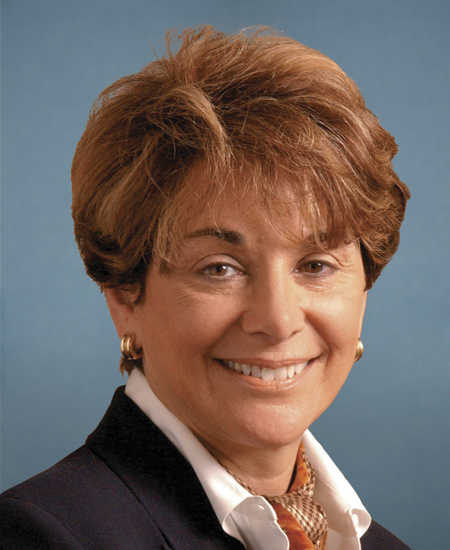
Rep. Anna G. Eshoo
Sponsored bills
Schedules That Work Act This bill provides employees with the right to request changes to their work schedules related to the number of hours they are required to work or be on call, the location of the work, the amount of notification about work schedule assignments, and fluctuations in work hours. Employers must negotiate in good faith with employees who make such requests and comply with certain work schedule notice and split shift pay requirements for retail, food service, cleaning, hospitality, or warehouse employees.
Ethiopia Stabilization, Peace, and Democracy Act This bill imposes sanctions and addresses other issues related to the conflict in Ethiopia. The President must impose property-blocking sanctions (and visa-blocking sanctions in the case of an individual) against a foreign entity or individual that has taken certain actions to expand or extend the civil war or other conflicts in Ethiopia. The bill prohibits assistance, with certain exceptions, to Ethiopia's security forces unless the Department of State certifies to Congress that Ethiopia's government has ceased all military operations associated with the civil war and met other specified conditions. The Department of the Treasury must instruct U.S. representatives at international financial institutions to oppose, with some exceptions, such institutions providing loans or assistance to the governments of Ethiopia or Eritrea. Furthermore, the U.S. International Development Finance Corporation may not provide certain support for projects in Ethiopia. These restrictions must terminate after the State Department certifies that certain conditions, such as a cessation of military operations associated with the civil war in Ethiopia, have been met. The President may provide support for activities necessary to preserve evidence of atrocities in Ethiopia and to pursue accountability for such atrocities. Within 90 days of this bill's enactment, the State Department must report to Congress a determination of whether actions in Ethiopia by the armed forces of Ethiopia and Eritrea, the Tigrayan Peoples Liberation Front, and other armed actors constitute genocide, war crimes, or crimes against humanity.
Camp Lejeune Justice Act of 2022 This bill allows certain individuals to sue and recover damages for harm from exposure to contaminated water at Camp Lejeune in North Carolina between August 1, 1953, and December 31, 1987. This action is available only to individuals who were exposed to contaminated water for at least 30 days. The bill prohibits the U.S. government from asserting specified immunity from litigation in response to such a lawsuit. The bill also prohibits an individual who brings such an action from bringing a separate tort action against the United States based on the same harm.
Keep STEM Talent Act of 2021 This bill exempts certain aliens with advanced degrees in a science, technology, engineering, or mathematics (STEM) field from direct limitations on the number of immigrant visas granted per year. Specifically, the alien must (1) have earned a master's level or higher degree in certain STEM fields while in the United States attending an accredited higher education institution, (2) be employed (or have a job offer) in a field related to the degree and earn at least the median wage for that occupation, and (3) meet certain labor certification requirements. The bill also allows an alien seeking a nonimmigrant F-1 (student) visa to obtain an advanced STEM degree to have dual intent. Specifically, such an alien may obtain the nonimmigrant visa or change nonimmigrant status even if the alien intends to seek lawful permanent resident status. (Generally, an alien may be denied a nonimmigrant visa if the alien actually intends to seek immigrant status, unless dual intent is allowed for that type of visa.)
Welcoming Evacuees Coming from Overseas to Mitigate Effects of Displacement Act of 2021 or the WELCOMED Act of 2021 This bill makes certain individuals from Afghanistan eligible for any benefit that is available to a refugee, such as resettlement assistance. Specifically, this bill shall apply to a national of Afghanistan (or an individual with no nationality who last habitually resided in Afghanistan) who is temporarily paroled into the United States for urgent humanitarian reasons or significant public benefit during the four-year period beginning on July 1, 2021.
Frank Harrison, Elizabeth Peratrovich, and Miguel Trujillo Native American Voting Rights Act of 2021 This bill addresses the voting rights of Native American and Alaska Native voters and voting access on tribal lands. The bill includes provisions expanding the types of facilities that can be used as voter registration agencies; increasing polling site accessibility, including by expanding early in-person voting and providing ballot drop boxes; providing enforcement power to citizens and attorneys general; requiring approval for actions like moving a polling place; validating certain tribal identification for voting or registering to vote; permitting voters to designate another individual to return a ballot on their behalf; and expanding requirements for bilingual voting accessibility. In addition, the bill establishes a Native American voting task force grant program for the purpose of increasing voter outreach, education, registration, turnout, and accessibility for Native American communities. The bill also directs the Government Accountability Office to study and report on (1) the prevalence of nontraditional or nonexistent mailing addresses among Indians, members of tribes, and individuals residing on Indian lands; and (2) the alternatives for removing barriers to voter registration, receipt of voter information and materials, and receipt of ballots.
Supreme Court Ethics Act This bill establishes a new statutory requirement for the Judicial Conference of the United States to issue a judicial code of conduct for judges and justices of U.S. courts, including Justices of the Supreme Court. Currently, the Judicial Conference issues a code of conduct for judges of U.S. courts (but not for Justices of the Supreme Court).
Improving Access for Afghan Refugees Act This bill requires the Department of State to provide priority refugee status to eligible habitual residents of Afghanistan. To be eligible for such priority status, a habitual resident of Afghanistan must also be a national of Afghanistan or stateless. Such an individual shall receive priority refugee status if the individual (1) has suffered persecution or has a well-founded fear of persecution and worked in a specified field that makes the individual a target of persecution on account of race, religion, or other characteristics; (2) was employed for at least one year in Afghanistan by U.S.-based media or nongovernmental entities or an entity that received a contract or grant from the U.S. government; or (3) is the beneficiary of a visa petition sponsored by a relative who is a U.S. citizen or permanent resident. The State Department may also provide priority status to other groups of individuals who are nationals and residents of Afghanistan. Certain annual numerical limits on refugee admissions shall not apply to individuals who receive priority status under this bill. For refugee applications under this bill, the State Department and the Department of Homeland Security shall ensure that all steps in the approval process in the U.S. government's control are completed within six months of an application's submission, with exceptions for cases that need more time to address national security concerns.
Let Immigrants Kickstart Employment Act of 2021 or the LIKE Act This bill establishes a new class of nonimmigrant visa (W visa) for qualifying start-up owners and essential employees (and the accompanying spouse or child of such aliens) and addresses related issues. Under this bill, a start-up is a U.S. entity that has lawfully conducted business and was formed in the five years preceding an application for a start-up owner visa. To be eligible for an initial visa as a start-up owner, an individual must (1) possess at least a 10% interest in the start-up; (2) play a central and active role in the start-up's management or operations; (3) possess knowledge, skills, or experience to substantially assist in the start-up's growth and success; and (4) provide evidence that the start-up has received certain investments, created jobs, or generated revenue. The holder of a nonimmigrant start-up owner visa may receive lawful permanent resident status upon meeting certain requirements, including by establishing that the start-up has created a certain number of jobs and has met certain revenue targets. To be eligible for a visa as an essential employee of a start-up, an individual must (1) have an offer of employment in an executive or managerial capacity at a start-up; and (2) possess knowledge, skills, or experience to substantially assist in the start-up's growth and success. The bill limits the number of employees on essential employee visas that a start-up may have.