This resolution expresses the sense of the House of Representatives that (1) lesbian, gay, bisexual, transgender, queer, intersex, and asexual (LGBTQIA+) rights are human rights and protected by the U.S. Constitution; (2) LGBTQIA+ Pride Month should be celebrated; and (3) all Americans should be treated equally regardless of sexual orientation or gender identity.
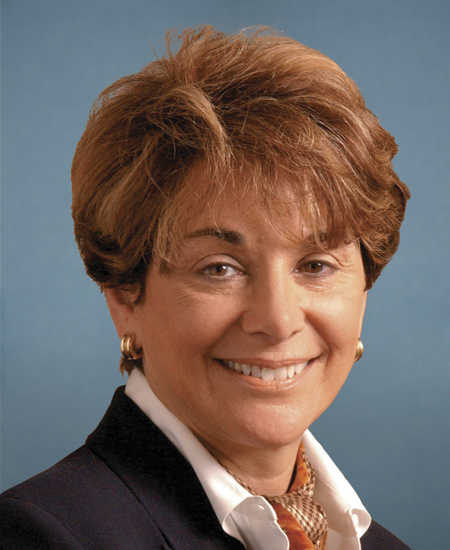
Rep. Anna G. Eshoo
Sponsored bills
Southeast Asian Deportation Relief Act of 2022 This bill prohibits the detention or removal of certain nationals of Vietnam, Cambodia, or Laos. Specifically, this protection from detention or removal shall apply to nationals of these countries who (1) entered the United States on or before January 1, 2008, (2) have continuously resided in the United States since entry, and (3) are subject to a final order of removal. Such individuals shall also receive employment authorization. The Department of Homeland Security must notify each individual covered by this bill, as well as information and instructions on how to file a motion to reopen removal proceedings.
Afghan Adjustment Act This bill expands eligibility for special immigrant visas to certain Afghan nationals (and accompanying spouse and children) and addresses related issues. The Department of Homeland Security may provide such visas to Afghan nationals who provided qualifying service as a member of the Afghan Air Force or other specified entities and meet eligibility requirements, such as passing a background check. Currently, special immigrant visas for Afghan nationals are generally only available to those who were employed by or on behalf of the U.S. government in Afghanistan. Such visas shall also be available to an Afghan national who is a qualifying relative of a veteran or member of the U.S. Armed Forces. The bill also modifies procedures for providing lawful permanent resident status to certain classes of Afghan nationals, such as by (1) providing a streamlined process with specified vetting requirements for certain individuals, including those who provided support to the U.S. government in Afghanistan; and (2) preserving the eligibility of certain battered spouses whose eligibility for such status stemmed from a marriage that has terminated. Furthermore, the Department of State (1) must respond to inquiries from Members of Congress about specific applications from Afghan nationals seeking special immigrant or refugee status; and (2) establish an office in Afghanistan to perform certain tasks, such as issuing visas, if no U.S. embassies are operational in Afghanistan. The President must establish a task force to develop and implement a strategy to assist Afghan nationals who qualify for admission to the United States.

Renewing Immigration Provisions of the Immigration Act of 1929 This bill expands eligibility for a program that authorizes the Department of Homeland Security to, at its discretion, provide lawful permanent resident status to certain long-term residents of the United States, including individuals who are unlawfully present. Currently, this program, sometimes referred to as the Registry program, is only available to eligible non-U.S. nationals ( aliens under federal law) who entered the United States before January 1, 1972. The bill removes this entry cutoff date and opens up the program to eligible individuals who have resided in the United States for at least seven years. Existing requirements (e.g., the individual must not be inadmissible or deportable due to certain grounds related to crime or terrorism) continue to apply.
Facial Recognition Ban on Body Cameras Act This bill establishes a framework to prohibit federal, state, and local law enforcement agencies from using facial recognition technology on images captured by body-worn cameras. Specifically, the bill prohibits federal law enforcement agencies from using facial recognition technology or other remote biometric surveillance systems on any image acquired by body-worn cameras of law enforcement officers. Additionally, the bill requires state and local governments to comply with a similar law or policy as a condition of receiving funds under the Edward Byrne Memorial Justice Assistance Grant program.
Safety From Violence for Healthcare Employees Act or the SAVE Act This bill establishes a new criminal offense for knowingly assaulting or intimidating hospital personnel during the performance of their official duties in a manner that interferes with their performance of the duties or limits their ability to perform the duties. Additionally, the bill authorizes grants to reduce the incidence of violence at hospitals, including violence or intimidation against hospital personnel in the performance of their duties.
Judicial Ethics and Anti-Corruption Act of 2022 This bill makes various changes to the federal framework governing judicial ethics. Among the changes, the bill prohibits federal judges and Supreme Court Justices from owning individual stocks and securities; requires the Judicial Conference of the United States to issue regulations restricting the solicitation or acceptance of gifts in connection with a private judicial seminar; expresses the sense of Congress that the Code of Conduct for U.S. Judges shall apply to Supreme Court Justices; requires federal judges and Supreme Court Justices to report on each association or interest that would require recusal, including any financial interest of a spouse or minor child who resides in the household; and establishes a committee to review complaints against the Supreme Court.
Honor Our Commitment Act of 2022 This bill limits the detention or removal of qualified Vietnamese nationals from the United States and contains other related provisions. A national of Vietnam may not be detained or removed if that individual (1) is subject to a final order of removal, and (2) has continuously resided in the United States since July 12, 1995, or an earlier date. An otherwise qualifying alien may not receive such protections if (1) the Department of Homeland Security (DHS) determines that the alien is directly responsible for harming U.S. national security, or (2) the alien is subject to extradition. A qualified Vietnamese national shall receive authorization to work in the United States. DHS must notify each qualified Vietnamese national about the provisions of this bill.
Jumpstart Our Legal Immigration System Act or the Jumpstart Act This bill makes unused employment-based and family-based immigrant visas from FY1992 through FY2021 available in subsequent fiscal years. It also makes diversity immigrant visas available to individuals who were selected for such a visa between FY2017-FY2021 but were unable to receive the visa due to certain (1) executive actions, or (2) limitations related to COVID-19. The bill also establishes supplemental fees for certain immigration-related applications.
Stopping Harmful Image Exploitation and Limiting Distribution Act of 2022 or the SHIELD Act of 2022 This bill establishes a new criminal offense related to the distribution of intimate visual depictions. Specifically, it makes it a crime to knowingly distribute (or intentionally threaten to distribute) an intimate visual depiction of an individual (1) with knowledge of or reckless disregard for the individual's lack of consent and reasonable expectation of privacy, and (2) without a reasonable belief that distributing the depiction touches a matter of public concern. A violator is subject to criminal penalties—a fine, a prison term of up to two years for each individual victim depicted, or both.