

Maddy summaryHR 813, the Global Investment in American Jobs Act of 2023, requires the Secretary of Commerce to conduct a comprehensive review of U.S. competitiveness in attracting foreign business investments from "trusted countries" (those not deemed adversaries by the U.S.). The review will examine economic impacts, barriers like data localization and intellectual property issues, and address concerns about investments linked to the Chinese Communist Party, while focusing on sectors like technology and manufacturing. This procedural bill does not create new laws but mandates a report to Congress within one year, detailing findings and recommendations to improve the U.S. investment climate. It directly affects U.S. economic competitiveness, foreign investors from allied nations, and policies governing international business engagement. The review explicitly excludes matters handled by the Committee on Foreign Investment in the United States.
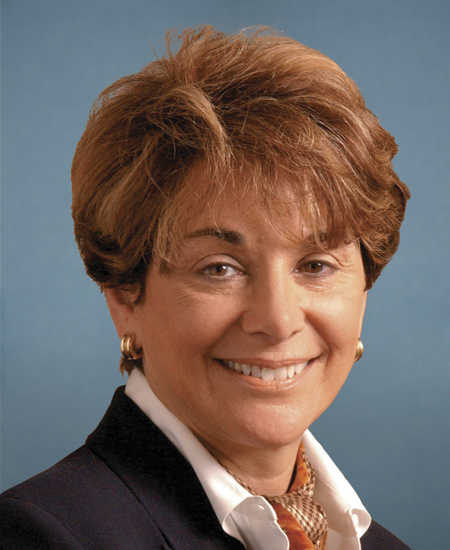
Rep. Anna G. Eshoo
Sponsored bills
Maddy summaryHJRES 82 is a non-binding resolution stating that the Equal Rights Amendment (ERA) has been validly ratified by the required 38 states (including Virginia's 2020 ratification) and should be certified as the 28th Amendment to the U.S. Constitution. It directs the Archivist of the United States to fulfill their statutory duty under Title 1, U.S. Code, to certify and publish the ERA without delay. The resolution argues Article V of the Constitution has no ratification deadline, citing precedents like the 27th Amendment. It does not change the Constitution itself but urges the Archivist to complete the certification process. The bill affects the Archivist’s office, requiring them to act on the ERA’s ratification status.
Maddy summaryThe Algorithmic Justice and Online Platform Transparency Act requires major online platforms to disclose how they use personal information in algorithmic processes that recommend content, moderate posts, and target advertisements. Platforms must provide transparent notices to users about data collection and use, publish annual transparency reports showing content moderation decisions broken down by demographic information, and maintain an accessible advertisement library showing targeted ads. The bill prohibits algorithms from discriminating in housing, employment, credit, and education opportunities based on protected characteristics like race, gender, or disability. It establishes an interagency task force to study discriminatory algorithmic practices and empowers the Federal Trade Commission to enforce these requirements.
Maddy summaryHR 4579, the Fairness for Farm Workers Act, amends the Fair Labor Standards Act to establish phased overtime requirements for agricultural workers. Starting in 2024, most farm employers must pay overtime for hours worked beyond 55 per week (reducing to 50 in 2025, 45 in 2026, and 40 in 2027), with small farms (25 or fewer employees) getting a 3-year delay on the full 40-hour standard. The bill also removes existing exemptions that allowed some agricultural employers to avoid overtime pay for certain workers. This directly affects farm workers in agriculture and their employers, requiring compliance with standard overtime rules previously not applied to this sector.
Maddy summaryThe DISCLOSE Act of 2023 would increase transparency in political spending by requiring organizations making campaign-related disbursements over $10,000 to disclose the names and addresses of their major donors, including the top five funders for political communications. It would close loopholes allowing foreign nationals to secretly fund election activities through corporations or other entities by expanding the definition of prohibited foreign contributions. The bill would mandate "stand by every ad" disclosure requirements for political communications across all media, including audio, video, and internet ads, requiring clear identification of funders. It would also require reporting of disbursements related to Federal judicial nominations, which currently aren't subject to disclosure requirements. These provisions would apply to corporations, labor organizations, and certain nonprofits that engage in political activity.
Maddy summaryThe IDEA Full Funding Act (HR 4519) mandates specific annual increases in federal funding for special education programs under the Individuals with Disabilities Education Act (IDEA). It requires Congress to appropriate increasing amounts each fiscal year - from $5.87 billion for 2024 up to $55.53 billion for 2033 - to reach 40% of the national average per-pupil expenditure for public schools by 2033. This directly affects all public school districts serving students with disabilities, as federal IDEA funding supports their special education services. The bill sets fixed dollar amounts or percentage targets (whichever is greater) for each fiscal year, aiming to gradually close the long-standing gap between promised and actual federal funding. It does not alter eligibility for services but mandates higher, phased funding levels to meet the 40% target.
This resolution expresses the sense of the House of Representatives that (1) lesbian, gay, bisexual, transgender, queer, intersex, and asexual (LGBTQIA+) rights are human rights and protected by the U.S. Constitution; (2) LGBTQIA+ Pride Month should be celebrated; and (3) all Americans should be treated equally regardless of sexual orientation, sex characteristics, or gender identity.
Maddy summaryThis bill prohibits defendants in federal criminal cases from using a victim's LGBTQ+ identity (sexual orientation, gender identity, or expression) as a legal excuse for violence or to reduce sentences - a practice known as the "LGBTQ+ panic defense." It specifically bans arguments that a "nonviolent sexual advance or perception" of the victim's identity justified the crime, while allowing evidence of the defendant's past trauma under standard evidence rules. The law directly affects federal criminal trials where defendants attempt to justify violence against LGBTQ+ victims using prejudice-based excuses. It also requires the Attorney General to report annually on federal prosecutions involving bias-motivated crimes against LGBTQ+ individuals.
Maddy summaryHR 4422 (Global Respect Act) requires the President to publicly identify foreign officials responsible for violence, torture, or arbitrary detention against LGBTQI individuals and block their entry to the U.S., including revoking visas for them and their immediate families. It mandates annual reporting to Congress on the list of sanctioned individuals, the reasons for additions/removals, and efforts to coordinate with other countries on similar sanctions. The bill also updates U.S. human rights reporting requirements to explicitly include data on violence and discrimination against LGBTQI people worldwide. These measures aim to increase accountability for human rights violations against LGBTQI individuals without advocating for specific policy outcomes.
Maddy summaryHR 4340, the Therapeutic Fraud Prevention Act of 2023, prohibits paid providers from offering conversion therapy - defined as any commercial service attempting to change a person's sexual orientation or gender identity - and bans advertising that claims such therapy is effective or harmless. It directly affects therapists, counselors, or organizations offering paid conversion therapy services, including those advertising such services. Key provisions make it unlawful to provide, advertise, or facilitate paid conversion therapy, with enforcement led by the Federal Trade Commission (FTC) under consumer protection laws and allowing states to pursue civil actions. The bill explicitly excludes supportive care for gender transition or identity exploration from its definition of prohibited therapy.