

Prison Camera Reform Act of 2021 This bill establishes various requirements to ensure that the security camera, radio, and public address systems used by the Bureau of Prisons (BOP) have the capabilities necessary to (1) ensure the health and safety of staff and inmates; and (2) ensure the documentation and accessibility of video evidence pertaining to misconduct, maltreatment, or criminal activity within correctional facilities. Among the requirements, the BOP must evaluate the systems currently in use at its facilities and implement a plan that addresses deficiencies in and makes upgrades to the systems.
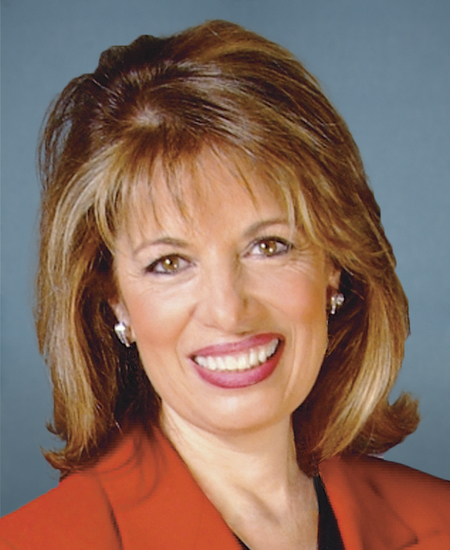
Rep. Jackie Speier
Sponsored bills
Private Prison Information Act of 2021 This bill specifies that a record related to a nonfederal prison, correctional, or detention facility must be considered a federal agency record for purposes of the Freedom of Information Act (FOIA). A nonfederal prison, correctional, or detention facility must disclose information under FOIA unless the information is exempt from disclosure or the disclosure is prohibited by law. The term nonfederal prison, correctional, or detention facility means (1) a private prison, correctional, or detention facility; or (2) a state or local prison, jail, or other correctional or detention facility.
Foreign Merger Subsidy Disclosure Act of 2021 This bill requires entities to disclose in their premerger notification filings to federal antitrust regulators a detailed accounting of any economic support they received from a foreign state.
Fostering Overseas Rule of law and Environmentally Sound Trade Act of 2021 or the FOREST Act of 2021 This bill restricts certain commodities produced on illegally deforested land from accessing the U.S. market. Specifically, the bill prohibits the importation of any product made wholly or in part of a covered commodity produced from illegally deforested land. The bill outlines requirements for import declarations of covered commodities. The U.S. Trade Representative (USTR) must, within 30 days, publish (1) an initial list of covered commodities that consists of palm oil, soybeans, cocoa, cattle, rubber, and wood pulp; and (2) an initial list of covered products that are defined by the bill in accordance with the Harmonized Tariff Schedule. These lists must be updated at least on an annual basis. Further, the USTR must identify foreign countries without adequate and effective protection against illegal deforestation caused by the production of commodities that are likely to enter the United States. The USTR must develop an action plan that includes benchmarks for each identified country. Additionally, the bill creates an interagency working group to provide advice and recommendations to the USTR, U.S. Customs and Border Protection, and other relevant agencies. The bill provides funding to assist foreign governments in combating illegal deforestation. The bill also includes illegal deforestation as a specified unlawful activity under a federal financial crime statute. The bill establishes a federal procurement preference for commodities that are not produced from land subject to deforestation.
Survivors' Bill of Rights in the States Act of 2021 This bill directs the Department of Justice to make grants to states that provide certain legal rights to survivors of sexual assault.
Hold Accountable and Lend Transparency on Campus Sexual Violence Act of 2021 or the HALT Campus Sexual Violence Act of 2021 This bill addresses dating violence, domestic violence, sexual assault, or stalking incidents on college campuses, including by expanding requirements governing the disclosure of such incidents and efforts to prevent them. Specifically, the bill requires the Department of Education (ED) to make available an online survey tool regarding student experiences with domestic violence, dating violence, sexual assault, harassment, and stalking. ED must publish a biennial report that includes campus-level data for each institution of higher education (IHE). The bill permits ED to impose civil penalties on IHEs that have violated a law under the jurisdiction of its Office for Civil Rights. In addition, the bill directs ED, the Department of Health and Human Services, and the Department of Justice to create a task force on sex-based harassment and violence in education.
Judiciary Accountability Act of 2021 This bill applies certain civil rights and employee protection laws to judicial branch employees. Specifically, the bill applies to judicial branch employees laws that prohibit discrimination based on race, color, religion, sex (including sexual orientation or gender identity), national origin, age, or disability. Further, the bill prohibits retaliation against whistleblowers within the judicial branch. Additionally, the bill establishes (1) the Commission on Judicial Integrity to oversee a program to prevent workplace misconduct; (2) the Office of Judicial Integrity to oversee confidential reporting systems regarding workplace misconduct, training programs on workplace behavior and bystander intervention, and other reporting initiatives regarding employee metrics and demographics; (3) the Special Counsel for Equal Employment Opportunity to investigate alleged workplace misconduct and complaints; and (4) the Office of Employee Advocacy to provide legal assistance, representation, and consultation to judicial employees. Finally, the bill establishes workplace discrimination, harassment, and retaliation as judicial misconduct.
Supreme Court Ethics Act This bill establishes a new statutory requirement for the Judicial Conference of the United States to issue a judicial code of conduct for judges and justices of U.S. courts, including Justices of the Supreme Court. Currently, the Judicial Conference issues a code of conduct for judges of U.S. courts (but not for Justices of the Supreme Court).
Improving Access for Afghan Refugees Act This bill requires the Department of State to provide priority refugee status to eligible habitual residents of Afghanistan. To be eligible for such priority status, a habitual resident of Afghanistan must also be a national of Afghanistan or stateless. Such an individual shall receive priority refugee status if the individual (1) has suffered persecution or has a well-founded fear of persecution and worked in a specified field that makes the individual a target of persecution on account of race, religion, or other characteristics; (2) was employed for at least one year in Afghanistan by U.S.-based media or nongovernmental entities or an entity that received a contract or grant from the U.S. government; or (3) is the beneficiary of a visa petition sponsored by a relative who is a U.S. citizen or permanent resident. The State Department may also provide priority status to other groups of individuals who are nationals and residents of Afghanistan. Certain annual numerical limits on refugee admissions shall not apply to individuals who receive priority status under this bill. For refugee applications under this bill, the State Department and the Department of Homeland Security shall ensure that all steps in the approval process in the U.S. government's control are completed within six months of an application's submission, with exceptions for cases that need more time to address national security concerns.
Daniel Anderl Judicial Security and Privacy Act of 2021 This bill generally prohibits federal agencies and private businesses from publicly posting the personally identifiable information (e.g., home addresses) of federal judges and their immediate family members. It also (1) requires information to be removed upon written request from the federal judge concerned, (2) prohibits data brokers from purchasing or selling such information, and (3) establishes programs to protect such information at the state and local level and to enhance security for judges.