

Maddy summaryThe IDEA Full Funding Act (HR 4519) mandates specific annual increases in federal funding for special education programs under the Individuals with Disabilities Education Act (IDEA). It requires Congress to appropriate increasing amounts each fiscal year - from $5.87 billion for 2024 up to $55.53 billion for 2033 - to reach 40% of the national average per-pupil expenditure for public schools by 2033. This directly affects all public school districts serving students with disabilities, as federal IDEA funding supports their special education services. The bill sets fixed dollar amounts or percentage targets (whichever is greater) for each fiscal year, aiming to gradually close the long-standing gap between promised and actual federal funding. It does not alter eligibility for services but mandates higher, phased funding levels to meet the 40% target.
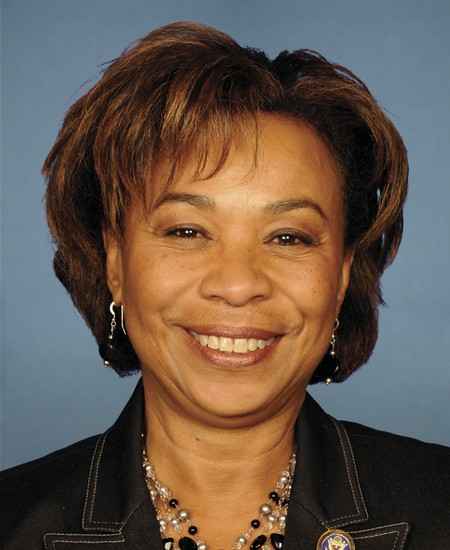
Rep. Barbara Lee
Sponsored bills
Maddy summaryHR 3853, the Roadless Area Conservation Act of 2023, requires the U.S. Forest Service to enforce existing protections against road construction, reconstruction, and logging in designated roadless areas within the National Forest System. It directly affects Forest Service management practices and ensures these areas - critical for clean water, wildlife habitat, recreation, and tribal cultural sites - remain undisturbed. The bill codifies the current Roadless Rule, which already prohibits such activities in inventoried roadless areas, without creating new restrictions on non-roadless lands or limiting permitted uses like hiking or hunting. This preserves existing protections for over 58 million acres of National Forest land without altering the Forest Service’s multiple-use management approach.
Aircraft Noise Reduction Act This bill allows a general aviation airport to make reasonable adjustments to air traffic and training patterns of noncommercial charter flights for the purposes of implementing aircraft noise limitations. A general aviation airport is a public-use airport that does not have scheduled service or that has scheduled service with less than 2,500 passenger boardings per year. Specifically, upon the request of a general aviation airport, the Federal Aviation Administration (FAA) must consult with the airport and provide for reasonable adjustments to air traffic and training patterns that do not otherwise violate law. No federal funds may be withheld from, withdrawn from, or denied to a general aviation airport based solely on an activity carried out under this bill. In the case of an emergency, the FAA may reject or temporarily restrict an accommodation to a general aviation airport to implement aircraft noise limitations. Further, the Department of Transportation must update current regulations, as necessary, to allow general aviation airports to implement effective noise abatement measures, as determined appropriate by general aviation airport owners and operators.
Maddy summaryHR 4426 extends the Radiation Exposure Compensation Act (RECA) fund for 19 years (up from 2 years) and expands eligibility for compensation to individuals exposed to radiation from nuclear testing and uranium mining. The bill updates eligibility criteria for claims related to leukemia and other specified diseases, including adding chronic lymphocytic leukemia to the list of covered conditions. It creates new provisions for uranium mining workers, including combined work histories and allows the use of affidavits to substantiate claims. The bill also expands medical benefits eligibility and establishes a $3 million annual grant program to study the epidemiological impacts of uranium mining on non-occupationally exposed individuals, including family members of miners.
Maddy summaryHR 4466 would rename the National School Lunch Program Act from "Richard B. Russell National School Lunch Act" to "Jean E. Fairfax National School Lunch Act" to honor Jean E. Fairfax, a civil rights activist who advocated for equitable access to the program. The bill would update this name in the law and over 40 other federal statutes referencing the current title, but does not alter the program's operations, funding, or eligibility. It directly affects legal references in federal law without changing how the program serves students.
Maddy summaryHRES 566 is a non-binding resolution introduced by Representative Correa in 2023 that expresses the House of Representatives' support for recognizing and encouraging everyday acts of kindness as a means to strengthen community bonds and societal resilience. It does not create new laws or policies but symbolically affirms that kindness - defined as selfless actions without expectation of return - can improve social connections, health, and conflict resolution. The resolution serves as a statement of shared values rather than a concrete policy change.
This resolution expresses the sense of the House of Representatives that (1) lesbian, gay, bisexual, transgender, queer, intersex, and asexual (LGBTQIA+) rights are human rights and protected by the U.S. Constitution; (2) LGBTQIA+ Pride Month should be celebrated; and (3) all Americans should be treated equally regardless of sexual orientation, sex characteristics, or gender identity.
Maddy summaryHRES 561 is a non-binding House resolution opposing state laws that criminalize access to essential health care. It specifically condemns using criminal penalties against people for pregnancy outcomes (such as miscarriages), seeking abortion or contraception, or receiving gender-affirming care, and disapproves of punishing health care providers or supporters for facilitating such care. The resolution affirms that patients deserve access to reproductive and gender-affirming health services without fear of prosecution or discrimination. It emphasizes that criminalizing these health care decisions violates patient rights and ethical provider obligations, without creating new legal requirements.
Maddy summaryThis bill would require Supreme Court justices to retire after 18 years of service (except for those appointed before the law's enactment), and mandate that the President nominate one justice during the first and third years after each presidential election. It would create a "Senior Justice" category for retired justices who can temporarily fill vacancies until new appointments are confirmed. The Senate would be required to act on nominations within 120 days, or the nominee would be seated automatically. The law directly affects future justices and the appointment process, while exempting current justices from the retirement requirement.
Maddy summaryThis bill repeals the 1957 joint resolution (Public Law 85-7) that promoted peace and stability in the Middle East. It removes this outdated law from federal statutes, effective 90 days after enactment. The repeal has no new policy provisions or direct impact on current programs or individuals, as it only eliminates a historical legal reference. No affected parties or mechanisms are created, as this is a purely procedural repeal.