

Maddy summaryThis bill authorizes $30 million annually (2024-2028) for the National Institutes of Health to expand research on uterine fibroids, including studies on racial disparities (noting Black women are 80% likely to develop fibroids by menopause versus 70% of White women). It also requires the creation of a Medicaid database to track treatment services for fibroids and mandates a congressional report on related costs and coverage. The bill directs the Department of Health and Human Services to develop public education materials about fibroid symptoms, treatment options (including non-hysterectomy care), and racial prevalence differences. It directly affects women with fibroids - particularly those from racial minority groups - and aims to improve data collection and awareness around a condition causing significant health burdens and healthcare costs.
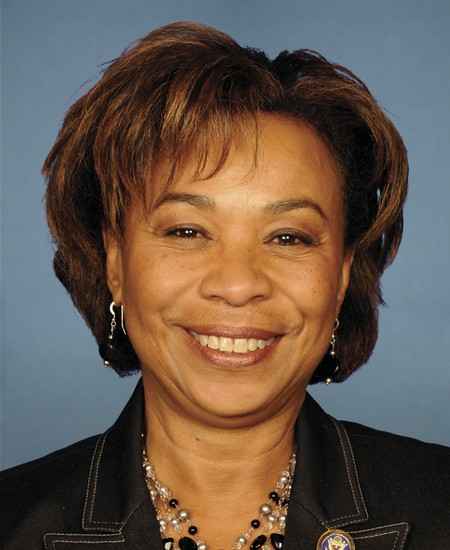
Rep. Barbara Lee
Sponsored bills
Maddy summaryThis House Resolution condemns the April 2023 conflict in Sudan between the Sudanese Armed Forces (SAF) and Rapid Support Forces (RSF), calling for an immediate ceasefire and adherence to prior cease-fire agreements. It urges the U.S. government to scale up humanitarian aid, prioritize support for displaced civilians and children, and apply sanctions against those obstructing Sudan’s democratic transition or violating international law. The resolution directs U.S. agencies to coordinate with local actors, ensure aid reaches civilians, and develop strategies for civilian-led negotiations. As a non-binding statement, it expresses congressional support for Sudanese civilians and democratic transition without creating new legal requirements or funding.
Maddy summaryThe Federal Death Penalty Prohibition Act would ban the federal government from imposing or carrying out the death penalty for any violation of federal law after the bill's enactment. It would require federal courts to resentence all individuals currently under a federal death sentence to a non-death penalty. This bill directly affects federal criminal defendants and inmates on federal death row, but does not impact state-level death penalty cases. The law would take effect immediately upon passage, ending federal death penalty sentencing for future cases and changing current death row sentences.
Maddy summaryHR 4579, the Fairness for Farm Workers Act, amends the Fair Labor Standards Act to establish phased overtime requirements for agricultural workers. Starting in 2024, most farm employers must pay overtime for hours worked beyond 55 per week (reducing to 50 in 2025, 45 in 2026, and 40 in 2027), with small farms (25 or fewer employees) getting a 3-year delay on the full 40-hour standard. The bill also removes existing exemptions that allowed some agricultural employers to avoid overtime pay for certain workers. This directly affects farm workers in agriculture and their employers, requiring compliance with standard overtime rules previously not applied to this sector.
This bill requires the President to direct the U.S. representative to each relevant international organization to call for a moratorium on the permitting of deep seabed mining and exploration and oppose support of such activities until the President (1) certifies that the International Seabed Authority has promulgated regulations that ensure the effective protection of the marine environment from any harmful effects of such mining, and (2) reports to Congress on the details of the regulations and related information. The regulations must be informed by the scientific consensus on impacts to ocean ecosystems in order for the President to certify them.
Housing for Formerly Incarcerated Reentry and Stable Tenancy Act or the Housing FIRST Act This bill limits the information allowed to be shared on credit reports and considered in housing decisions, including certain criminal background information. First, the bill prohibits a consumer reporting agency from including specified information on a consumer credit report provided for tenant screening purposes, such as arrests, juvenile adjudications or convictions, civil citations, resolved criminal cases (e.g., through completion of a diversion program), and convictions with completed sentences. Further, the bill restricts the use of consumer credit reports for tenant screening. A person who obtains such a report must not use it in violation of fair housing laws and must disclose its use to the consumer. When taking adverse action based on the report, a person must provide the consumer with a copy of the report, the specific reasons for the adverse action, and other information. The bill also specifies that upon request, consumer reporting agencies must disclose to a consumer the entity that is the source of any information on a consumer credit report. Finally, the bill excludes from consumer credit reports criminal convictions older than seven years.
Maddy summaryHR 4550 creates a federal grant program to help public elementary, secondary, and preschool schools recruit and retain paraprofessionals (school support staff like teaching assistants). The bill directs the Secretary of Education to fund state education agencies, which then distribute subgrants to schools - prioritizing those serving high numbers of low-income students - to support activities like mentoring programs, professional development, and wage increases or certification assistance (e.g., for special education or English learner support). States must report annually on wage baselines, paraprofessional numbers, and program outcomes. This bill directly affects schools and paraprofessionals, with funding authorized for fiscal years 2024-2028.
Maddy summaryThis bill prohibits new federal permits for deep seabed mining and hardrock mineral extraction on U.S. federal waters (Outer Continental Shelf). It directly affects mining companies seeking to operate in these areas, with an exception only for scientific research. The bill requires the Commerce Secretary to commission a National Academies study within 90 days to assess environmental impacts, including effects on marine ecosystems, fisheries, and alternatives like recycling. The study’s findings will be submitted to Congress to inform future policy decisions on seabed mining.
Maddy summaryThis bill requires national parks to reduce disposable plastic products, primarily targeting plastic water bottles and food containers sold to visitors. Park directors must eliminate these sales where feasible after considering factors like operational costs, waste reduction, infrastructure for refill stations, and impacts on park vendors. Each park must also implement visitor education about water availability and report biennially on progress, including visitor satisfaction and safety metrics. The law directly affects all national park units, concessionaire businesses, and park visitors. It mandates a phased, practical approach without banning all plastics immediately.
Maddy summaryThe DISCLOSE Act of 2023 would increase transparency in political spending by requiring organizations making campaign-related disbursements over $10,000 to disclose the names and addresses of their major donors, including the top five funders for political communications. It would close loopholes allowing foreign nationals to secretly fund election activities through corporations or other entities by expanding the definition of prohibited foreign contributions. The bill would mandate "stand by every ad" disclosure requirements for political communications across all media, including audio, video, and internet ads, requiring clear identification of funders. It would also require reporting of disbursements related to Federal judicial nominations, which currently aren't subject to disclosure requirements. These provisions would apply to corporations, labor organizations, and certain nonprofits that engage in political activity.