

Maddy summaryHR 984, the Commitment to Veteran Support and Outreach Act, authorizes $50 million annually (2024-2028) for grants to states and tribes to improve outreach to veterans and their families. The bill provides funding to hire more county/Tribal veterans service officers, expand existing outreach programs, and ensure equitable access to benefits for vulnerable groups like American Indian veterans, elderly veterans, and women veterans. States and tribes must submit detailed plans, track how quickly veterans receive benefits, and report annually on progress toward outcome measures set by the Veterans Affairs Secretary. Grants must supplement, not replace, existing state/local funding and prioritize areas with critical officer shortages or high veteran suicide rates.
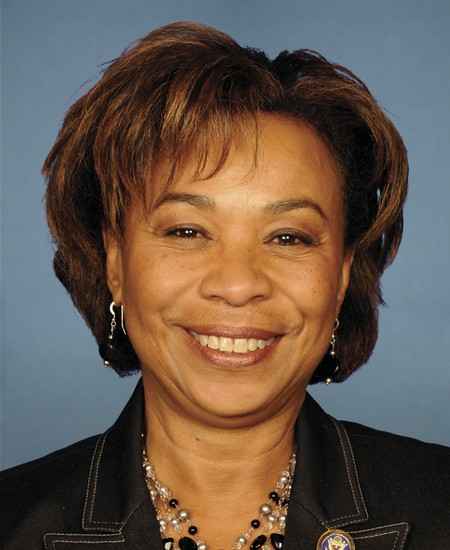
Rep. Barbara Lee
Sponsored bills
Maddy summaryHR 4893, the Scientific Integrity Act, requires federal agencies that fund, conduct, or oversee scientific research to adopt policies preventing political interference in science. The bill mandates these agencies to prohibit suppression or distortion of research findings, establish Scientific Integrity Officers to enforce policies, and implement training and reporting systems. It directly affects scientists and engineers employed by or contracted with covered agencies (like the EPA or NIH), ensuring their work remains free from political pressure. Key mechanisms include annual public reporting on misconduct complaints, whistleblower protections, and requiring scientific conclusions to be based on evidence, not ideology.
Atrocity Prevention Act This bill establishes annual reporting requirements for the Department of State regarding countries and regions at risk of atrocities (such as genocide). The bill also makes permanent a requirement, currently set to expire in 2025, for the State Department to report annually to Congress on U.S. efforts to prevent and respond to atrocities. Under this bill, the State Department must annually (1) rank countries and regions at risk of atrocities as high, medium, or low risk, and (2) assess the risks related to providing security assistance and cooperation to medium- and high-risk countries. For each country identified as high- or medium-risk, the State Department must determine whether the United States should continue to provide security assistance and cooperation. For each country newly identified as high- or medium-risk, the State Department must address whether U.S. security assistance and cooperation may be used to perpetrate atrocities or exacerbate risk factors for the commission of atrocities. For each country that was already identified as high- or medium-risk in the previous report, the State Department must assess any relevant changes in the country since the last report. Finally, the bill requires that the report be submitted in unclassified form. The report may include a classified annex.
Maddy summaryHR 4889, the Raise the Wage Act of 2023, would gradually increase the federal minimum wage for most workers to $15.50 per hour by 2027, with specific annual targets: $9.50 starting in 2023, rising to $11.00 after one year, $12.50 after two years, and $15.50 after four years. It would also phase out the separate lower minimum wage for tipped employees (starting at $6.00/hour) by aligning their pay with the regular minimum wage by 2028, while requiring employers to let workers keep all tips. The bill includes similar phased increases for workers under 20 and transitions toward fairer wages for workers with disabilities under special certificates, which would sunset after 2028. Future annual increases after 2028 would tie the minimum wage to the median hourly wage of all workers.
Maddy summaryThis bill requires large U.S. insurance companies (those collecting $100 million+ in annual premiums) to annually disclose all investments and insurance policies tied to fossil fuel industries - including coal, oil, gas extraction, and related infrastructure. Companies must report specific details like maximum financial exposure and policy amounts for each fossil fuel-related investment and policy. Federal agencies will use this data to monitor financial risks to consumers and the broader economy, and the public will access a searchable annual database of all disclosed information. The law directly affects major insurers regulated by the Federal Insurance Office, mandating transparency around their fossil fuel ties.
Maddy summaryHR 4157, the "Not Just a Number Act," requires the Department of Veterans Affairs (VA) to produce annual reports on veteran suicide rates and their connection to VA healthcare and benefits. The reports must break down suicide rates by age, gender, and race, and examine how engagement with VA services (like Vet Centers, healthcare enrollment, benefits claims, and housing loans) correlates with suicide trends. The bill also mandates a VA toolkit for state/local coroners to improve veteran suicide death reporting, and a study on creating a dedicated VA suicide prevention office. These measures aim to standardize data collection and identify effective prevention strategies, directly affecting VA operations, congressional oversight, and veteran care systems.
Maddy summaryThe CHIPP Act (HR 4771) permanently extends federal funding for the Children's Health Insurance Program (CHIP), which provides health coverage to low-income children in families that earn too much to qualify for Medicaid but cannot afford private insurance. It removes previous expiration dates (like 2029) from CHIP funding provisions, ensuring continuous support for states administering the program. The bill also permanently extends related programs, including pediatric quality measures funding with automatic inflation adjustments, and modifies eligibility rules to allow states to expand coverage for children in higher-income households. This affects all 50 states that run CHIP programs and the millions of children and families who rely on this coverage.
Maddy summaryHR 4796, the Reproductive Health Patient Navigator Act of 2023, establishes a federal grant program to fund organizations that help individuals access abortion services. Eligible entities - such as abortion funds, community groups, or local governments - would receive grants to provide services like connecting people to providers, coordinating travel/financing costs, offering culturally appropriate information, and ensuring data confidentiality. The bill includes strong legal protections, prohibiting states from restricting or penalizing navigators for assisting people seeking abortion services, even in states where abortion is illegal. It also allows affected navigators to sue states that violate these protections. The program is funded for fiscal years 2023 through 2027.
Maddy summaryHR 4760 imposes a new federal fuel tax on private jet aviation, increasing the rate to 35.9 cents per gallon plus $1.589 per gallon (up from previous rates), directly affecting private jet operators and manufacturers. The tax revenue funds a new "Funding to Support Clean Communities Trust Fund," which allocates 100% of these revenues to clean air initiatives, including air monitoring in disadvantaged communities and public transit improvements within 20 miles of airports. Exceptions apply for emergency uses like disaster evacuations or medical aid, and the fund requires at least 50% of spending to target environmental justice communities disproportionately impacted by air pollution. The tax and fund mechanisms take effect January 1, 2024, with annual inflation adjustments for the tax rate.
Maddy summaryThe People's Response Act establishes a new Division on Community Safety within the Department of Health and Human Services to fund community-based approaches to safety that are disconnected from traditional law enforcement and criminal justice systems. It creates four grant programs totaling $13 billion over five years: one for community-led organizations serving disproportionately impacted communities (especially Black and Indigenous communities), one for local governments to conduct safety needs assessments, one for states to support statewide implementation, and one for hiring and training first responders who provide non-carceral crisis response. These grants require recipients to use "qualified approaches to community safety" that avoid collaboration with carceral institutions and prioritize organizations led by or serving communities most affected by the criminal legal system. Recipients must report on outcomes including racial disparities in arrests, incarceration, and how funds are used to address safety needs through community-led initiatives.