

This concurrent resolution opposes actions that undermine Israel's future as a Jewish, democratic state. The resolution expresses that democracy is at the core of the special relationship between the United States and Israel, and that Congress stands with all Israelis seeking to defend liberal democracy, judicial review, and independent political institutions.
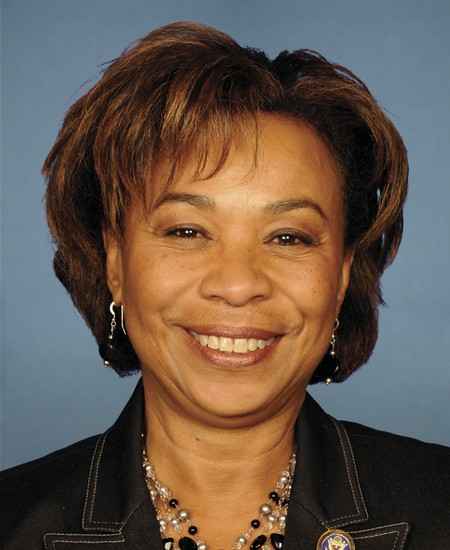
Rep. Barbara Lee
Sponsored bills
Maddy summaryThis bill requires the Attorney General to publish an annual public report detailing the Bureau of Alcohol, Tobacco, Firearms, and Explosives' (ATF) inspections of gun dealers, including the number of inspections, serious violations found (such as illegal transfers or record falsification), and actions taken like license revocations. The report must include specific data points - such as the number of licenses revoked or not renewed, reasons for not revoking licenses, and geographic breakdowns - and be posted online. It also mandates a Government Accountability Office (GAO) study examining ATF's enforcement of firearm license rules, focusing on systemic issues, geographic enforcement differences, and outcomes of license revocation processes. The bill increases transparency around gun dealer oversight without changing legal requirements for dealers.
Maddy summaryThe FAIR Leave Act (HR 5037) repeals a time limitation on leave for spouses that was part of the Family and Medical Leave Act (FMLA). This provision previously restricted the amount of leave employees could take to care for a spouse with a serious health condition. By removing this restriction, the bill allows workers to take more leave without a prior cap for this specific purpose. The policy change directly affects employees needing leave to support a spouse's medical needs under the FMLA.
Maddy summaryHR 5064, the Public Housing Fire Safety Act, requires the Department of Housing and Urban Development (HUD) to inspect public housing for automatic sprinkler systems and report findings to Congress within three years. It establishes a competitive grant program using $25 million annually (2024-2033) from the Capital Fund to retrofit older public housing projects without sprinklers, excluding newly rebuilt properties. The bill directly affects public housing agencies managing buildings that lack sprinklers, providing funding to install them while clarifying that inspections and grants do not mandate retrofits for all properties. Key provisions include mandatory reporting on fire safety gaps and targeted funding to improve safety in older housing units.
Maddy summaryHR 4987, the Democracy Restoration Act of 2023, would restore voting rights for people with felony convictions who are living in their communities (not incarcerated), directly affecting approximately 4.6 million disenfranchised Americans. The bill requires states to automatically restore voting rights upon completion of sentences, including probation or parole, without requiring payment of fines or fees. It mandates notification to individuals about their restored voting rights and prohibits states from conditioning voting rights on payment of legal financial obligations. The legislation addresses the disproportionate impact of voting restrictions on racial minorities, particularly Black and Latino communities, who face significantly higher rates of disenfranchisement. This bill would apply to all federal elections held on or after its enactment date.
Maddy summaryHR 4983, the Equal Employment for All Act of 2023, prohibits most employers from using credit reports in hiring decisions or employment-related adverse actions. The bill amends the Fair Credit Reporting Act to ban employers from considering credit history when making job offers, promotions, or other employment decisions, except for positions requiring national security clearances or when specifically required by law. It applies directly to all employers and job applicants nationwide, eliminating the common practice of credit checks during hiring. The law requires employers to stop using credit reports for employment purposes, with limited exceptions, and maintains existing disclosure requirements for other permissible uses of consumer reports.
Maddy summaryHR 4963, the Tax Fairness for Workers Act, would restore tax deductions for certain employee expenses. It creates an above-the-line deduction for union dues and expenses paid by wage-earning employees, and allows miscellaneous itemized deductions for other work-related expenses (like uniforms or supplies) that were previously disallowed after 2017 tax law changes. These provisions directly affect employees who pay union dues or incur qualifying job-related costs. The bill amends specific sections of the Internal Revenue Code to make these deductions available for taxable years beginning after December 31, 2022. It does not change tax rates or provide new benefits, only reinstating previously eliminated deductions for eligible workers.
Maddy summaryThe Rebuild America's Schools Act of 2023 creates a $20 billion annual federal grant program to fund long-term improvements to public school facilities across the United States. It requires states to prioritize school districts serving high-poverty students (with high percentages of students eligible for free/reduced lunch) and those with deteriorating infrastructure, while mandating that recipient schools develop 10-year facilities master plans. The bill specifies that funds must be used for construction, renovation, and modernization projects that improve energy efficiency, address environmental health hazards (including lead, asbestos, and poor air quality), and ensure school safety, while requiring the use of American-made materials for construction projects.
Chyna Gibson Stop the Transgender Murder Epidemic Act of 2023 or the Chyna Gibson STME Act of 2023 This bill establishes a commission to address various issues facing gender-nonconforming, gender-expansive, and transgender women of color. The commission must be comprised of 13 members who are qualified based on their education, training, activism, or experience, particularly in the field of transgender studies and human rights. The commission may hold hearings and must report its findings and recommendations to Congress no later than 18 months after its first meeting.
Maddy summaryThe Break the Cycle of Violence Act establishes federal grants to fund community-based violence intervention programs in areas disproportionately affected by gun violence, particularly communities of color. It authorizes $300 million for 2024, increasing to $700 million annually through 2031, for evidence-informed strategies including trauma-responsive care, violence interruption, and economic opportunities for opportunity youth (ages 16-25 not in school or employment). The bill requires grantees to implement culturally competent services targeting individuals at high risk of violence or victimization, with a focus on reducing gun violence without contributing to mass incarceration. It creates a National Community Violence Response Center to coordinate data collection, research, and best practices for community violence prevention. The legislation also includes provisions for job training and workforce development programs through the Department of Labor to connect opportunity youth with in-demand occupations.