

Maddy summaryThe Fair Representation Act would require states to use ranked choice voting for elections of Senators and Representatives, allowing voters to rank candidates in order of preference rather than selecting just one candidate. It would mandate multi-member districts for states with six or more representatives (with 3-5 representatives per district) and establish nonpartisan redistricting criteria prioritizing population equality, voting rights protections, and minimizing partisan gerrymandering. The bill would provide federal funding to help states implement these changes, with requirements applying to elections held in 2026 or later for Senators and after the 2030 census for Representatives. This legislation aims to create more representative congressional elections by reducing the impact of gerrymandering and expanding voter choice.
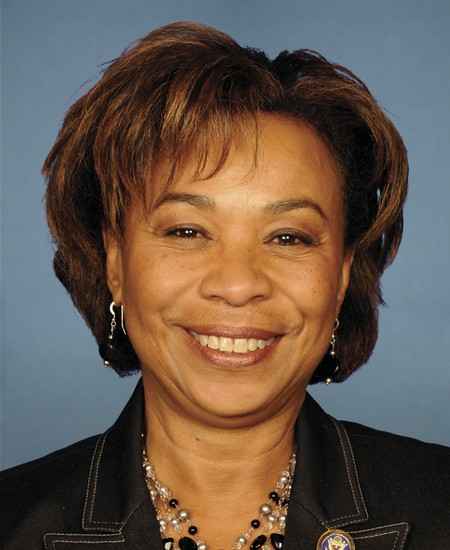
Rep. Barbara Lee
Sponsored bills
Maddy summaryThe Stateless Protection Act of 2024 would create "stateless protected status" for noncitizens in the United States who are stateless (not recognized as citizens by any country). The bill would allow these individuals to apply for protection from deportation, employment authorization, travel documents, and adjustment to lawful permanent resident status (a green card). It establishes a process for determining statelessness, requiring the Department of Homeland Security to consider evidence from various sources including international organizations and foreign governments. The legislation directly affects approximately 218,000 stateless people living in the U.S., who currently face barriers to work, education, healthcare, and travel due to their legal status. The bill also includes provisions for preventing statelessness internationally and updating U.S. laws to prevent future cases of statelessness.
Maddy summaryThis bill would create a new wealth tax on individuals with significant assets, targeting those with net assets exceeding $50 million. It would tax assets between $50 million and $1 billion at 2%, and assets above $1 billion at 3% (potentially increasing to 6% if certain health care legislation is enacted). The tax would apply to individuals, married couples treated as a single taxpayer, and certain trusts, with specific valuation and reporting requirements for assets. The bill also includes $70 billion in funding over 10 years for the IRS to enforce this new tax and related reporting requirements.
Maddy summaryThis bill amends budget scoring rules to require the Congressional Budget Office to account for long-term savings from preventive health programs when evaluating legislation. It directs the CBO to assess if a bill reduces future government costs through evidence-based preventive health services (like screenings or vaccinations) and include those savings in budget projections. The change affects how Congress scores the fiscal impact of health-related bills, requiring them to consider savings over 20 years (not just the current budget cycle). It does not create new programs but changes the budget analysis process for preventive health measures.
Maddy summaryHRES 1093 is a symbolic resolution recognizing the contributions of social workers across the U.S. It supports Social Work Month and World Social Work Day without creating new laws or funding. The resolution acknowledges social workers' roles in mental health, veteran support, disaster response, community well-being, and addressing systemic barriers like poverty and discrimination. It encourages public awareness activities but does not change policies or affect specific groups through new regulations. This is a non-binding expression of support from the House of Representatives.
Maddy summaryHCONRES 99 is a symbolic congressional resolution honoring Wadee Alfayoumi, a 6-year-old Palestinian-American boy murdered in a hate crime on October 14, 2023, after being stabbed 26 times by a perpetrator who made anti-Muslim and anti-Palestinian remarks. The resolution recognizes Congress's condemnation of hate crimes, Islamophobia, and anti-Palestinian discrimination, while affirming the United States' "zero tolerance" for such violence. As a procedural resolution (not a law), it does not create new policies but formally honors Wadee and his family, emphasizing the need to reject dehumanizing rhetoric targeting religious or ethnic groups.
Maddy summaryThe Housing ACCESS Act requires the federal government to issue guidance within one year to help states connect Medicaid beneficiaries with housing services. It directs states to align eligibility processes, streamline service coordination between health and housing agencies, and track outcomes like housing stability - disaggregated by race. The bill also mandates a national study to set fair reimbursement rates for housing services, aiming to ensure living wages for providers and a 1:15 case manager-to-client ratio. States must report on progress within two years, with the guidance intended to simplify how health and housing providers access each other's systems.
Maddy summaryHRES 1077 is a ceremonial resolution designating the third week of March 2024 as "National CACFP Week" to raise awareness of the Child and Adult Care Food Program (CACFP). It recognizes CACFP’s role in providing nutritious meals to over 4 million children and 138,000 adults daily in childcare centers, after-school programs, and adult care homes. The resolution urges continued support for strengthening CACFP but does not create new policies or funding. It directly affects no individuals or entities - it is a symbolic congressional acknowledgment of CACFP’s existing benefits.
Maddy summaryHRES 1079 is a symbolic House resolution condemning Russia's claimed suspension of the New START nuclear arms control treaty, which the U.S. considers legally invalid. It calls on Russia to immediately return to full compliance with New START, including resuming inspections and data sharing, and emphasizes the importance of arms control for global stability. The resolution urges the Biden administration to continue arms control talks with Russia and China to prevent a nuclear arms race. As a non-binding resolution, it does not change U.S. policy but expresses congressional support for maintaining the New START framework, which limits Russia's nuclear arsenal to 1,550 warheads.
Maddy summaryThis bill, the Judicial Integrity Act, updates federal conflict of interest rules to explicitly include federal judges and Supreme Court justices under the same standards that apply to other government officials. It requires these judges to avoid financial interests that could compromise their impartiality, such as investments in cases they oversee. The bill also creates a new process allowing the Judicial Conference of the United States to issue regulations exempting minor financial interests (like small stock holdings) from disclosure rules, after public notice and comment. This change aims to clarify judicial conduct standards while providing a structured way to handle trivial financial ties.