

Maddy summaryThis bill modifies how disability benefits are treated for homeless disabled veterans seeking housing assistance. It excludes certain disability payments (under Chapter 11 or 15 of Title 38, U.S. Code) from income calculations when determining eligibility for HUD-assisted housing programs, including the supported housing program under Section 8(o)(19) and housing on Department property. Specifically, it ensures these benefits are not counted toward income for housing eligibility, though they still count for "adjusted income" definitions. The bill directly affects disabled veterans applying for HUD housing assistance who receive these specific disability benefits. It makes a concrete change to income calculation rules without altering benefit amounts or creating new funding.
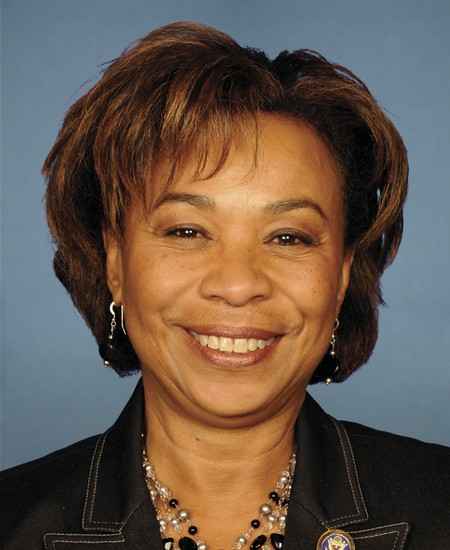
Rep. Barbara Lee
Sponsored bills
Maddy summaryHRES 1555 is a symbolic House resolution condemning the spread of false claims and malicious rumors about disaster response efforts, which have led to credible threats against FEMA personnel and disrupted aid for survivors. It specifically references incidents after Hurricanes Helene and Milton, including a pause in North Carolina door-to-door assistance due to safety threats and antisemitic targeting of officials. The resolution formally condemns those spreading disinformation for political gain and commits Congress to supporting FEMA’s efforts to combat misinformation and promote accurate recovery information. As a non-binding resolution, it does not create new laws but expresses congressional support for protecting disaster response workers and ensuring survivors receive timely aid.
Maddy summaryHRES 1552 is a symbolic House resolution expressing support for recognizing October 26, 2024, as Intersex Awareness Day. It encourages federal, state, and local governments, schools, healthcare providers, and organizations to observe the day through educational programs and activities that celebrate intersex identity and promote awareness. The resolution specifically urges healthcare systems to provide culturally competent care for intersex individuals and schools to incorporate education about intersex diversity. It does not create new laws or policies but aligns with existing federal actions recognizing intersex rights and health equity. The resolution directly supports the intersex community and aims to foster greater public understanding of their experiences.
Maddy summaryHRES 1553 is a resolution expressing the House of Representatives' sense that action is needed to address a federal tax exemption under Puerto Rico's Act 22. This provision allows wealthy Americans who do not reside in Puerto Rico to receive 100% exemptions from income and capital gains taxes in Puerto Rico while legally avoiding U.S. federal taxes. The resolution focuses on the tax loophole enabling this arrangement, which the bill claims contributes to housing displacement and price spikes on the island. It does not change tax law but urges the House to act on this issue. (Note: As a resolution, it is procedural and not a binding legislative measure.)
Maddy summaryThe Victims of Agent Orange Relief Act of 2024 would provide medical care, environmental remediation, and support services for people affected by Agent Orange exposure during the Vietnam War. The bill directly affects Vietnamese residents exposed to Agent Orange (including those living near contaminated areas), their children and descendants, Vietnamese Americans, and American veterans' families, particularly expanding VA benefits to cover birth defects for children of male veterans (previously limited to children of female veterans). Key provisions include creating new USAID programs for medical care, housing repairs, and environmental cleanup at Agent Orange hotspots, requiring health assessments for Vietnamese Americans, and mandating research into intergenerational effects. The bill sets implementation deadlines for federal agencies (180 days for plans, 18 months for full implementation) and expands VA benefits to address gaps in current support. This legislation aims to address longstanding gaps in assistance for victims across Vietnam, Laos, Cambodia, and the United States affected by Agent Orange exposure.
Maddy summaryThis bill disallows tax deductions for mortgage interest and depreciation on single-family homes owned by large institutional investors (defined as entities with over $100 million in assets), and imposes a 100% excise tax on the sale or transfer of such properties. It excludes government entities, nonprofits, and federally-assisted housing (like Section 8 properties) from these rules. Revenue from the sales tax funds the Housing Trust Fund to increase affordable rental housing for low-income families. The policy directly affects major real estate firms owning single-family homes as investments, not individual homeowners or small landlords.
Maddy summaryThe VA Employee Fairness Act of 2024 modifies collective bargaining rules for employees of the Veterans Health Administration (VHA). It removes existing subsections (b), (c), and (d) from the law governing VHA employee bargaining and renumbers the remaining provision. This change streamlines the collective bargaining framework but does not alter the Secretary of Veterans Affairs' existing authorities over incentive pay and expedited hiring. The bill directly affects VHA employees by changing how their collective bargaining rights are structured under federal law. The law remains neutral, focusing solely on procedural adjustments to the existing bargaining framework.
Maddy summaryThis bill establishes minimum safety standards for railroad bridges and requires railroad carriers to provide detailed inspection reports classifying bridges as poor, fair, or good condition, including repair timelines and costs for bridges in poor condition. It mandates railroad carriers to post visible signs identifying bridge ownership and a contact number for public safety concerns, and creates a public database showing basic bridge condition information without detailed technical specifications. The bill also establishes a safety concern reporting system for the public and authorities, and requires the Department of Transportation to conduct randomized bridge inspections to verify reported conditions. Railroad carriers that fail to meet safety requirements face civil penalties, including weekly fines for continued operation of unsafe bridges.
Maddy summaryThe COINTELPRO Full Disclosure Act requires federal agencies to publicly disclose COINTELPRO records within 6 months, with exceptions for records that would cause harm to national security or privacy. It establishes a 4-year Review Board to assess records that might be withheld, and sets a 25-year deadline for full disclosure of all COINTELPRO records not already publicly available. The bill creates a COINTELPRO Records Collection at the National Archives, requires agencies to notify victims or their families before disclosure, and aims to provide transparency about the FBI's historical COINTELPRO program that surveilled domestic organizations from 1956.
Maddy summaryHR 9983, the Save Our Ships Act, establishes a new $5 million annual grant program under the Department of the Interior to preserve historic military vessels. The program provides competitive grants to museums, memorials, and other public sites displaying decommissioned military ships (like those operated by the Navy, Coast Guard, or Maritime Commission) for physical repairs, environmental hazard mitigation, and education programs about maritime careers. Eligible recipients include state/local governments and nonprofit organizations managing these sites, with funds specifically targeting the upkeep of vessels and workforce development in shipbuilding. This bill directly supports the long-term preservation of these vessels for public education and historical access.