

Maddy summaryThe Words Matter Act of 2023 replaces the outdated term "mental retardation" with "intellectual disability" across numerous federal laws and regulations. It amends over 20 provisions in the U.S. Code, Social Security Act, and other statutes - including healthcare, disability programs, and legal definitions - to update terminology used in areas like nursing home care, criminal justice, and federal grants. The bill explicitly states this is a purely linguistic change, not a policy shift, and does not alter eligibility, benefits, or program requirements for individuals with intellectual disabilities. It affects all federal programs and legal references that previously used the terms "mental retardation," "mentally retarded," or "developmentally disabled."
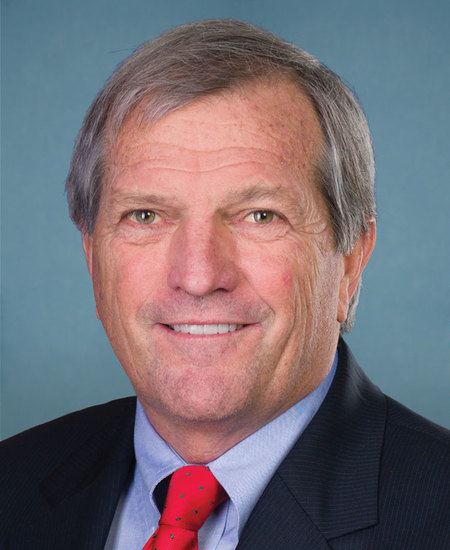
Rep. Mark DeSaulnier
Sponsored bills
Defending the Human Rights of Palestinian Children and Families Living Under Israeli Military Occupation Act This bill limits U.S. assistance to Israel and establishes reporting requirements related to Israel's activities in the West Bank and its expenditures for offshore procurement. (Offshore procurement involves spending U.S. security assistance from the Foreign Military Financing program on Israeli-origin rather than U.S.-origin defense articles.) Specifically, the bill prohibits the use of any funds that are made available for assistance to Israel to support (1) military detention, interrogation, abuse, or ill treatment of Palestinian children; (2) seizure, appropriation, or destruction of Palestinian property and forcible transfer of civilians in the Israeli-controlled West Bank; or (3) certain activities to facilitate unilateral annexation by Israel of West Bank territory. The Department of State must report on the nature and extent of such activities carried out by Israel. Further, the Government Accountability Office must submit to Congress a report on related topics, such as (1) identifying specific programs and items to which funds for offshore procurement in Israel have been allocated, (2) identifying all end-use monitoring to which Israel is subject with respect to U.S.-origin defense articles, and (3) assessing the extent to which offshore procurement funds have supported illegal Israeli settlement activity in the occupied West Bank.
Maddy summaryHR 3073 creates a federal grant program to fund community-based mental wellness and resilience initiatives. It provides planning grants (up to $250,000) for organizations to form community networks and assess needs, followed by program grants (up to $500,000 annually for 4 years) to implement evidence-based programs. The bill requires grantees to use a public health approach, collect community input, and develop strategic plans addressing protective factors and risk factors for mental wellness. At least 20% of funds must support rural communities, and programs must involve diverse community groups like schools, faith organizations, health professionals, and local government. The bill authorizes $36 million over 2024-2028 to support these community-led efforts.
Maddy summaryHR 2965, the Autism Family Caregivers Act of 2023, establishes a federal pilot program to provide free or low-cost evidence-based skills training for family caregivers of children (ages 0-9) with autism spectrum disorder or other developmental delays. It authorizes $10 million annually to fund grants for eligible organizations (like nonprofits, health centers, and community groups) to teach caregivers practical strategies for communication, social engagement, daily living skills, and managing challenging behaviors. The program requires local stakeholder committees - including caregivers, healthcare providers, and community representatives - to ensure cultural relevance, and mandates annual evaluations to assess impacts on children's well-being and caregiver support.
Maddy summaryThis bill prohibits forced arbitration for race discrimination claims under federal, tribal, state, or local law. It makes pre-existing arbitration agreements unenforceable for disputes involving discrimination based on race, color, or national origin, allowing affected individuals to pursue cases in court instead. The law directly impacts employees, job applicants, and others facing alleged race discrimination who would otherwise be barred from court by mandatory arbitration clauses. It requires courts - not arbitrators - to decide if the law applies to a dispute, ensuring legal clarity for affected parties.
Maddy summary# Summary of EDUCATORS for America Act Provisions This comprehensive legislation makes significant changes to educator preparation, certification, and support systems, with a strong focus on loan forgiveness and retention of educators in high-need settings. ## Key Provisions: 1. **Enhanced Loan Forgiveness Programs**: - Creates new "Educator Loan Forgiveness Programs" under sections 428J and 460 of the Higher Education Act - Provides 100% loan forgiveness for educators who complete 5 years of qualifying service in high-need schools or early childhood education programs - Offers monthly loan forgiveness/cancellation during the service period (in addition to annual forgiveness) 2. **Expanded Eligibility**: - Defines "high need school" as schools where: * Over 30% of students meet poverty measures * School is identified for comprehensive support * School is Bureau of Indian Education funded * School is operated by Tribal educational agencies - Includes Tribal early childhood programs, Native Hawaiian education systems, and Bureau of Indian Education programs as eligible settings - Special rule for educators providing instruction in Native American languages 3. **"Qualifying Educator" Definition**: - Includes elementary/secondary teachers (with full certification) - Includes school leaders (with full certification) - Includes early childhood educators and program directors - Includes educators working in Native American language instruction regardless of certification status 4. **New Support Programs**: - Centers of Excellence for teacher preparation at institutions serving underrepresented populations - Recruitment and completion grants for underrepresented students in education - Resiliency grants for technology integration and educator workforce partnerships - Doctoral fellowships to diversify faculty in high-need education areas 5. **Implementation Details**: - Monthly loan credit program for eligible educators in income-driven repayment plans - Allows counting of partial service years under specific conditions - Prevents double benefits with other service programs - Allows for promotions within qualifying schools without losing eligibility This legislation aims to create a more diverse, stable, and well-prepared educator workforce by reducing financial barriers to entering and remaining in the education profession, particularly in high-need schools and early childhood education settings.
Maddy summaryHR 3024, the Life Saving Leave Act, amends the Family and Medical Leave Act to provide eligible employees with up to 40 hours of additional unpaid leave per year for bone marrow or blood stem cell donation activities. This leave covers predonation, donation, and postdonation medical care, and can be taken intermittently. Employees may substitute accrued paid leave (like vacation or sick days) for this time, but employers cannot require it. The bill requires employees to give employers at least 30 days' notice (or as soon as practicable if urgent) and to schedule the leave to minimize disruption.
Maddy summaryThe Protecting America's Workers Act expands workplace safety protections to public employees, including those working for state and local governments who were previously excluded from some OSHA protections. It strengthens whistleblower protections by prohibiting retaliation against employees who report safety concerns, refuse to perform dangerous tasks, or report work-related injuries. The bill requires employers to promptly report work-related deaths and hospitalizations, prohibits policies that discourage injury reporting, and mandates posting of employee safety rights information. It also increases penalties for safety violations and improves access to information for victims and families during workplace investigations. These changes apply to all employers covered by OSHA, with specific implementation timelines for state and local government workplaces.
Maddy summaryThis bill protects living organ donors from insurance discrimination by prohibiting life, disability, and long-term care insurers from denying coverage, raising premiums, or altering policy terms solely because someone donated an organ while alive. It also updates the Family and Medical Leave Act to include recovery from organ donation surgery as a qualifying health condition, allowing donors to take protected leave for this purpose. Additionally, the bill requires the Health and Human Services Secretary to update public educational materials about living donation benefits, risks, and insurance protections within six months of enactment. These changes directly affect living organ donors, insurers, employers, and healthcare systems by ensuring fair access to insurance and workplace leave.
Maddy summaryHR 2955, the Stop Institutional Child Abuse Act, establishes a Federal Work Group to improve data collection and best practices for youth in residential programs (like therapeutic schools, treatment centers, and group homes). The Work Group, composed of federal agency representatives and diverse stakeholders, must develop national data standards, create risk assessment tools, and issue biennial reports with recommendations to enhance safety, reduce restraints, and expand community-based alternatives. It directly affects youth with mental health, substance use, or disability needs placed in these facilities, as well as agencies overseeing them. The bill also mandates a National Academies study to examine funding, oversight, and barriers to community care. These mechanisms aim to standardize data tracking and promote less restrictive, trauma-informed care for youth in residential programs.