

Maddy summaryThis bill removes a barrier for college students seeking food assistance by amending the SNAP program rules. It directly affects students enrolled at least half-time in recognized colleges or training programs, who were previously automatically ineligible unless they met separate requirements. The key change eliminates the prior restriction (in section 6(e)) that barred most higher education students from SNAP, allowing them to qualify under the new provision in section 3(m)(5)(F). The changes take effect January 2, 2024.
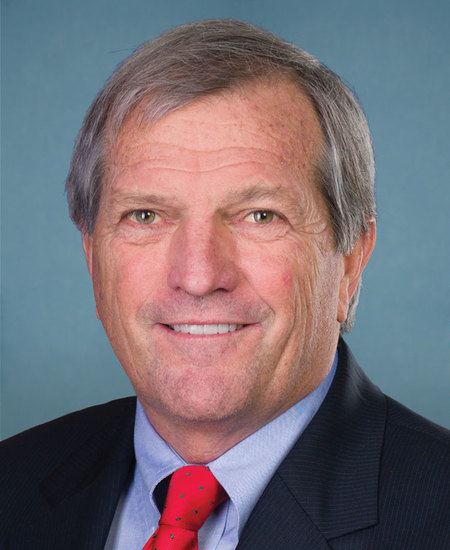
Rep. Mark DeSaulnier
Sponsored bills
Maddy summaryThis bill standardizes voluntary date labels on most packaged foods by requiring uniform phrases: "BEST If Used By" for quality dates (indicating quality may decline) and "USE By" for discard dates (indicating when food should be discarded). It applies to manufacturers of non-infant formula foods who choose to include dates, with no requirement to use them. The law mandates clear, conspicuous placement of these phrases and prohibits states from creating conflicting labeling rules. It excludes infant formula and takes effect two years after enactment, with federal agencies required to educate consumers about the new labels.
Maddy summaryThe Closing the Meal Gap Act of 2023 amends the Food and Nutrition Act to update how SNAP (Supplemental Nutrition Assistance Program) benefits are calculated. It replaces the "thrifty food plan" with a "low-cost food plan" based on a specific 4-person family diet, requiring the government to reevaluate this plan by 2029 and every 5 years after. The bill also updates medical expense deductions, eliminates time limits on benefits, and allows Puerto Rico to join SNAP with specific transition requirements. These changes directly affect SNAP recipients, particularly in Puerto Rico, Hawaii, and Alaska, by adjusting benefit calculations to better reflect current food costs.
Maddy summaryHRES 459 is a resolution expressing the House of Representatives' support for designating June 2, 2023, as "National Gun Violence Awareness Day" and June 2023 as "National Gun Violence Awareness Month." It encourages the public to wear orange, promote gun safety awareness, and discuss community safety measures during this time, particularly highlighting the summer months when gun violence often increases. The resolution references statistics on gun violence deaths and pays tribute to victims like Hadiya Pendleton, but does not create new laws or impose requirements.
Maddy summaryHRES 432 is a non-binding House resolution designating May as "Sex Ed For All Month" to promote inclusive, comprehensive sex education. It encourages schools, governments, and health organizations to adopt evidence-based programs that are medically accurate, culturally responsive, and inclusive of LGBTQ+ youth and racial/ethnic minorities. The resolution specifically recommends curricula covering consent, sexual health, and equity while discouraging programs that withhold critical information or perpetuate stereotypes. As a symbolic resolution, it does not create new laws but aims to influence policy discussions around youth sexual health access.
Maddy summaryHRES 434 is a non-binding resolution declaring a mental health crisis among U.S. youth, citing statistics like 49.5% of adolescents experiencing mental health disorders and a 30% rise in emergency visits for youth during the pandemic. It urges states and schools to improve educator training, expand on-campus mental health resources, remove harmful practices (such as risk assessment teams disproportionately affecting students of color), and address barriers for undocumented and low-income students. The resolution also emphasizes combating stigma, integrating mental and physical health care, and reaching high-risk communities with better resources. As a declaration - not a law - it expresses congressional support for historic federal investments in youth mental health care but does not create new policy.
Maddy summaryHR 3713 creates federal grants to fund comprehensive school-based mental health programs for students in grades K-12, including those in Bureau of Indian Education schools. It requires partnerships between schools and community mental health providers to deliver trauma-informed, culturally appropriate services addressing suicide risk, grief, violence, and trauma exposure. The bill authorizes $300 million annually (2024-2027) for these programs, mandating privacy protections under HIPAA and FERPA, and requires annual reporting on program effectiveness.
Maddy summaryThe Cady Housh and Gemesha Thomas Student Suicide Prevention Act of 2023 requires states to establish a policy mandating annual suicide prevention training for school staff and high school students (grades 9-12). The training must be evidence-based, cover recognizing suicide warning signs, appropriate responses, and referrals to mental health services, while including cultural competency. It allocates $48 million in federal funds, with at least 15% dedicated to supporting this training program, and requires states to collaborate with mental health experts. The bill directly affects school staff and high school students in states that adopt the policy and receive federal funding.
Maddy summaryThe Real Education and Access for Healthy Youth Act of 2023 would provide federal grants to support comprehensive sex education and sexual health services for young people ages 10-29, with specific focus on marginalized communities including Black, Indigenous, Latine, Asian American, Native Hawaiian, Pacific Islander, and LGBTQ+ youth. The bill authorizes $100 million annually for 2024-2029 to fund programs through grants for elementary/secondary schools (section 4), colleges (section 5), educator training (section 6), and youth-friendly sexual health services for marginalized young people (section 7). These programs must be evidence-informed, medically accurate, culturally responsive, age-appropriate, and trauma-informed, while addressing racial and gender inequities in current sex education approaches. The bill also repeals the "abstinence-only-until-marriage" program and redirects its funding to support this comprehensive approach, requiring grantees to report on implementation and impact.
Reward Work Act This bill prohibits issuers from purchasing their own securities on a national exchange. The bill also requires one-third of an issuer's board of directors to be elected by employees in order for the issuer to be allowed to register securities.