

Maddy summaryHR 3896, the Airport Infrastructure Resilience Act of 2023, establishes a federal pilot program to provide competitive grants for airports to improve infrastructure facing climate-related risks like sea level rise, extreme weather, and natural disasters. Airport sponsors (e.g., local authorities managing airports) can apply for funding covering planning, construction, or monitoring equipment to address these threats, with 15% of funds reserved for regional airports (small hubs, nonprimary airports, and reliever airports). The program requires projects to use science-based approaches, minimize environmental impact, and includes annual reports to Congress on funded projects and program effectiveness. The bill authorizes $300 million annually from 2024 through 2028 for this initiative.
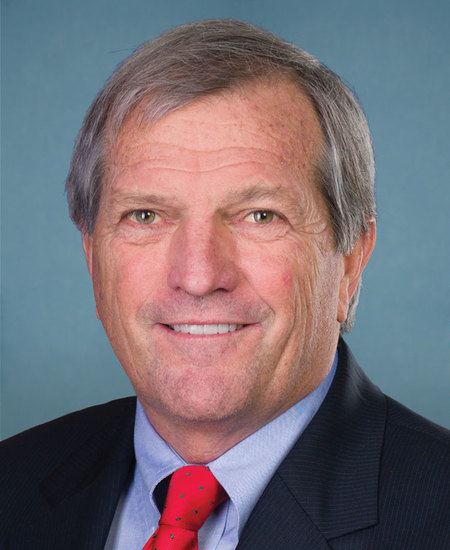
Rep. Mark DeSaulnier
Sponsored bills
Maddy summaryThe American Family Act establishes a monthly child tax credit of $250 per month for each child under age 6 and $300 per month for each child aged 6-18, with income limits of $150,000 for joint filers and $112,500 for other filers. The credit is refundable, meaning it can be paid even if the taxpayer owes no income tax, and will be adjusted annually for inflation. The bill includes detailed rules for determining eligibility, including requirements that the child resides with the taxpayer for more than half the month and provisions to prevent fraud through recapture of improperly received payments. The credit will be paid monthly in advance rather than as a single annual payment, with specific mechanisms for calculating and distributing the payments.
Maddy summaryThe Keeping Gun Dealers Honest Act of 2023 increases federal oversight of licensed gun dealers by requiring three annual compliance inspections instead of one. It raises penalties for violations, including up to five years in prison for certain offenses and up to ten years for recordkeeping failures that aid gun trafficking. The bill also authorizes civil penalties of $10,000 per violation and license suspension for dealers failing to maintain secure gun storage or unlawfully transferring firearms. Additionally, dealers linked to 10 or more crime guns or found to have unlawfully transferred firearms must conduct a physical inventory of their stock.
Maddy summaryThe TRACE Act requires firearm manufacturers to add a second, hidden serial number inside the firearm's frame or visible only under infrared light, starting 12 months after enactment. It also extends the retention period for instant background check records from 180 days to 180 days after compliance (previously 180 days from the check date) and mandates that licensed dealers conduct physical inventory checks of their firearms. These provisions directly affect firearm manufacturers, dealers, and the Bureau of Alcohol, Tobacco, Firearms and Explosives (ATF), which must implement the rules within 180 days. The bill aims to improve tracking of firearms and enforcement of background checks, with no mention of new taxes or fees in related appropriations.
Maddy summaryHR 698, the Assault Weapons Ban of 2023, prohibits the sale, manufacture, transfer, and possession of specific firearms and ammunition devices commonly referred to as "assault weapons" and "large capacity magazines" in interstate commerce. The bill defines "semiautomatic assault weapons" to include rifles like AR-15s and AK-47s, as well as firearms with specific features such as folding stocks, pistol grips, threaded barrels, and detachable magazines holding more than 15 rounds. It exempts law enforcement, military, antique firearms, and weapons already lawfully owned before the law's enactment (known as "grandfathered" weapons). The bill also requires new identification markings on these weapons and large capacity magazines, and adds background check requirements for transfers of grandfathered weapons.
Maddy summaryThe NOTAM Improvement Act of 2023 requires the Federal Aviation Administration (FAA) to establish a task force within 180 days to review and improve the system for delivering flight safety notices (NOTAMs) to pilots. The task force, including representatives from airlines, airports, pilot and dispatcher unions, and aviation safety experts, will evaluate current practices and recommend ways to make notices more accurate, timely, and user-friendly. The FAA must also implement a new Federal flight safety notice system by September 30, 2024, including a backup system and a plan for global standardization with international aviation formats. The task force must submit its recommendations to Congress within one year, focusing on enhancing safety information delivery for pilots and air traffic operations.
Maddy summaryThis House resolution symbolically recognizes May as Jewish American Heritage Month, celebrating Jewish Americans' historical contributions to U.S. society and culture. It references rising antisemitism in 2022 (including ADL data showing a 36% increase in incidents) and includes a non-binding call for leaders to combat antisemitism. As a purely symbolic resolution, it does not create new policies or legal requirements.
Maddy summaryThe Barriers to Suicide Act of 2023 establishes a federal grant program to fund evidence-based suicide deterrents on bridges. The Transportation Secretary will award competitive grants to states or local governments for installing proven safety measures like nets or barriers, prioritizing areas with high suicide rates, with federal funding covering up to 80% of project costs. The bill also mandates a study by the Comptroller General to assess effective deterrents for non-bridge structures (e.g., buildings) and report findings within one year. It authorizes $10 million annually for 2024-2028 to support these initiatives. The law directly affects bridge safety planning for state and local agencies seeking federal assistance.
Maddy summaryThe Disaster Assistance Fairness Act helps condominiums and housing cooperatives (types of residential common interest communities) access federal disaster aid more easily after major disasters. It requires the President to issue rules allowing debris removal from these communities when state or local officials determine the debris threatens safety, health, or economic recovery. The bill also expands federal funding to cover repairs of essential shared areas (like roofs, elevators, and electrical systems) in these communities, provided owners can document their share of costs. This change applies to disasters declared after the bill's enactment.
Maddy summaryThe Universal School Meals Program Act of 2023 would establish a universal school meals program providing free breakfast and lunch to all children enrolled in participating schools, regardless of family income. Key provisions include eliminating income-based eligibility requirements for school breakfast and lunch programs, setting specific reimbursement rates ($2.80 for breakfast and $4.63 for lunch with annual inflation adjustments), and prohibiting schools from collecting debt for unpaid meals or "shaming" students. The bill also replaces references to "free or reduced price" with "economically disadvantaged students" in related laws and establishes new methods for identifying children from low-income backgrounds. This legislation would directly affect all public schools participating in the National School Lunch Program and School Breakfast Program.