

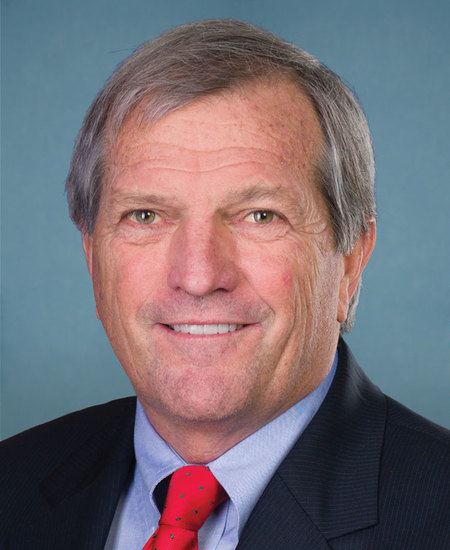
Photo of Mark DeSaulnier
D United States House · District 10 · California On the 2026 ballot

Rep. Mark DeSaulnier

Compare
Total votes
2,837
all sessions
Attendance
99%
40 missed
Near the chamber average
With party
98%
of cast votes
Near the chamber average
Bipartisan score
1%
crosses aisle rarely
Near the chamber average
Sponsored
2,014
bills & resolutions
Higher than 75% of chamber peers
Committees
9
assignments
2,014 bills and resolutions

Sponsored bills

Total
2,014
Primary
119
Co-sponsor
1,895
This page
2,014
matching current filters
Co-sponsor HR 9135
In committee · United States House · Co-sponsor
Ensuring Airline Resiliency to Reduce Delays and Cancellations Act

Maddy summaryThis bill requires major airlines to create and regularly update plans aimed at preventing flight delays and cancellations during disruptions like severe weather, staffing shortages, or cybersecurity threats. The plans must detail how airlines will maintain operations, protect staff and technology systems (including crew scheduling), and address known vulnerabilities. Airlines must submit these plans to the Transportation Secretary within one year of the law taking effect, with safeguards for confidential business information. A government audit will assess the plans' effectiveness three years after implementation.

In committee Dec 18, 2024 1 co-sponsor
Co-sponsor HR 7003
In committee · United States House · Co-sponsor
National Landslide Preparedness Act Reauthorization Act of 2024

Maddy summaryThis bill extends funding for the National Landslide Preparedness Act through 2028, replacing the previous 2021-2024 authorization period. It directly affects existing federal landslide preparedness programs by continuing their current funding structure without new requirements. The key change is simply updating the program's authorization period in two specific sections of the law (sections 3(h) and 5(e)). The bill does not create new policies or alter how landslide preparedness activities are conducted.

In committee Dec 18, 2024 1 co-sponsor
Co-sponsor HRES 1617
In committee · United States House · Co-sponsor
Expressing the sense of the House of Representatives that it is the duty of the Federal Government to dramatically expand and strengthen the care economy.

Maddy summaryHRES 1617 is a non-binding resolution expressing the House of Representatives' view that the federal government should dramatically expand and strengthen the care economy. It calls for federal investments to address systemic gaps in care infrastructure, including universal access to affordable childcare, elder care, paid family leave, and mental health services, while prioritizing higher wages and union protections for care workers - particularly women of color and immigrants. The resolution emphasizes repairing historical inequities rooted in exclusion from labor protections and connecting care infrastructure to broader goals like climate justice and economic equity. It does not create new law but urges future legislation to adopt these principles as a foundation for policy. The resolution directly affects millions of care workers, families relying on care services, and communities facing systemic barriers to care access.

In committee Dec 17, 2024 1 co-sponsor
Co-sponsor HR 9774
In committee · United States House · Co-sponsor
Health Care Affordability Act of 2024

Maddy summaryHR 9774, the Health Care Affordability Act of 2024, would expand premium tax credits under the Affordable Care Act for households earning between 150% and 400% of the federal poverty level. It modifies the sliding scale calculation to reduce the percentage of monthly insurance premiums these households must pay, with the lowest out-of-pocket costs for those near 400% of poverty. This directly affects individuals and families purchasing health insurance through marketplace plans who qualify for these tax credits. The changes apply to tax years beginning after December 31, 2025.

In committee Dec 17, 2024 1 co-sponsor
Primary HR 9413
In committee · United States House · Lead sponsor
Bureau of International Labor Affairs Authorization Act

Maddy summaryThis bill formally establishes the Bureau of International Labor Affairs within the U.S. Department of Labor. It defines the Bureau's mission to promote global labor rights, combat child/forced labor and trafficking, support trade agreement enforcement, and deploy labor attachés to U.S. diplomatic posts. The bill requires the Bureau to submit annual reports to Congress on its activities, including anti-trafficking efforts and labor attaché deployments. It does not create new policy or funding but authorizes the structural framework for existing international labor work.

In committee Dec 17, 2024 0 co-sponsors
Co-sponsor HR 8796
In committee · United States House · Co-sponsor
Stop Comstock Act.

Maddy summaryHR 8796, the "Stop Comstock Act," removes outdated restrictions from federal law that previously banned the distribution of materials related to contraception and abortion as "obscene" or "indecent." The bill amends Title 18 and the Tariff Act by deleting references to "indecent," "immoral," "unlawful abortion," and "procuring abortion" from provisions governing obscene materials. It clarifies that the law only prohibits "obscene materials" in commerce, eliminating broad restrictions on reproductive health information. This directly affects internet platforms, healthcare providers, and individuals sharing reproductive health resources by removing legal barriers to their distribution.

In committee Dec 17, 2024 1 co-sponsor
Co-sponsor HR 8702
In committee · United States House · Co-sponsor
Improving Seniors’ Timely Access to Care Act of 2024

Maddy summaryThis bill requires Medicare Advantage plans to implement electronic prior authorization systems by 2027 and publish detailed data on their approval and denial rates for medical services by 2026. It directly affects Medicare Advantage plans (private insurers offering Medicare coverage) and their enrollees (seniors 65+), mandating transparency about prior authorization decisions, processing times, and appeal outcomes. Key provisions include requiring plans to report annual statistics on request approvals/denials, average processing times, and use of technology, with this data published publicly by the Centers for Medicare & Medicaid Services. The bill also sets timelines for plan responses to prior authorization requests and mandates reports to Congress on implementation and impacts.

In committee Dec 17, 2024 1 co-sponsor
Co-sponsor HR 7142
In committee · United States House · Co-sponsor
Alternatives to PAIN Act

Maddy summaryHR 7142 (Alternatives to PAIN Act) requires Medicare Part D plans to cover non-opioid pain management drugs with no deductible and at the lowest copay level starting in 2025. It defines "qualifying non-opioid drugs" as FDA-approved medications that don’t act on opioid receptors (like certain NSAIDs or nerve pain treatments), excluding opioids and schedule I-III drugs. The bill prohibits Medicare plans from forcing patients to try opioids first (step therapy) or requiring prior approval for these non-opioid options. It directly affects Medicare beneficiaries needing pain management, especially those seeking alternatives to opioids for post-surgical or acute pain. The policy change aims to improve access to non-addictive pain treatments while preserving doctors' authority to prescribe medically appropriate care.

In committee Dec 17, 2024 1 co-sponsor
Co-sponsor HR 7050
In committee · United States House · Co-sponsor
Substance Use Disorder Workforce Act

Maddy summaryThis bill adds 1,000 new medical residency positions (500 in 2024 and 500 across 2025-2028) specifically for training in addiction medicine, addiction psychiatry, or pain medicine. It directly affects hospitals that have or will establish approved residency programs in these fields. Hospitals receiving these positions must use them for addiction-related training for five years, with unused positions redistributed if requirements aren't met. The goal is to expand the healthcare workforce addressing the substance use disorder crisis by increasing specialized training opportunities.

In committee Dec 17, 2024 1 co-sponsor
Co-sponsor HR 6780
In committee · United States House · Co-sponsor
Medically Tailored Home-Delivered Meals Demonstration Pilot Act

Maddy summaryHR 6780 establishes a 4-year Medicare demonstration program testing whether hospitals providing medically tailored home-delivered meals to specific patients improves health outcomes and reduces hospital readmissions. The program targets Medicare beneficiaries with diet-sensitive chronic conditions (like diabetes or heart failure) who are at high risk of readmission and meet specific discharge criteria, such as limited daily living activities. Selected hospitals must screen patients, provide at least two tailored meals daily for 12 weeks, and offer medical nutrition therapy, all without patient cost-sharing. The program requires hospitals to submit data for evaluation, with the goal of assessing impacts on hospital admissions, care costs, and patient satisfaction before reporting to Congress in 2027 and 2030.

In committee Dec 17, 2024 1 co-sponsor
Showing 461 to 470 of 2,014 bills
Previous 1 … 46 47 48 … 202 Next