

Maddy summaryHR 40 would establish a 15-member commission to study the legacy of slavery and systemic discrimination against African Americans in the United States, and develop proposals for reparations. The commission would examine historical and ongoing effects of slavery, discriminatory policies (including redlining and educational disparities), and recommend remedies through education and potential reparations. Composed of members appointed by the President, House Speaker, and Senate President pro tempore, the commission would have 18 months to submit a report to Congress, with $20 million authorized for its work. This legislation creates a study process but does not provide reparations directly.
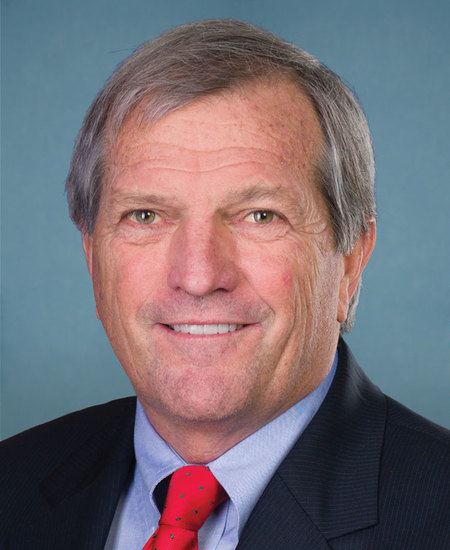
Rep. Mark DeSaulnier
Sponsored bills
Washington, D.C. Admission Act This bill provides for the establishment of the State of Washington, Douglass Commonwealth, and its admission into the United States. The state is composed of most of the territory of the District of Columbia (DC), excluding a specified area that encompasses the U.S. Capitol, the White House, the U.S. Supreme Court building, federal monuments, and federal office buildings adjacent to the National Mall and the U.S. Capitol. The excluded territory shall be known as the Capital and serve as the seat of the government of the United States, as provided for in Article I of the Constitution. The state may not impose taxes on federal property except as Congress permits. The bill provides for the DC Mayor to issue a proclamation for the first elections to Congress of two Senators and one Representative of the state. The bill eliminates the office of Delegate to the House of Representatives. The bill applies current DC laws to the state. DC judicial proceedings and contractual obligations shall continue under the state’s authority. The bill also provides for specified federal obligations to transfer to the state upon its certification that it has funds and laws in place to assume the obligations. These include maintaining a retirement fund for judges and operating public defender services. The bill establishes a commission that is generally comprised of members who are appointed by DC and federal government officials to advise on an orderly transition to statehood.
Maddy summaryThis bill (HR 1555, Public Law 118-211) designates the U.S. Postal Service facility at 2300 Sylvan Avenue in Modesto, California, as the "Corporal Michael D. Anderson Jr. Post Office Building." It directly affects the postal facility and all official references to it, requiring future documents to use the new name. The bill has no policy provisions - its sole purpose is to honor Corporal Michael D. Anderson Jr. through this commemorative naming. It was passed by Congress and signed into law on January 2, 2025.
Maddy summaryHR 10560, the Exercise and Fitness for All Act, requires exercise and fitness service providers covered under the Americans with Disabilities Act (like gyms, hotels, and schools) to provide accessible equipment and classes for people with disabilities. Within 18 months of enactment, the Access Board must develop guidelines specifying the number, types, and features (such as closed captioning or tactile controls) of accessible exercise machines. The Attorney General will then issue regulations mandating reasonable accommodations for disability access in classes and requiring at least one staff member trained to assist individuals with disabilities. This bill directly affects fitness providers by setting enforceable standards for accessibility, aligning with existing ADA requirements.
Maddy summaryThe Stop Campus Hazing Act requires colleges and universities to publicly report hazing incidents involving student organizations. It defines hazing as intentional acts causing physical or psychological harm during initiation or membership in student groups, including activities like forced substance consumption, sleep deprivation, or sexual acts. Institutions must include hazing statistics in annual security reports and publish a "Campus Hazing Transparency Report" on their websites by July 1, 2025, detailing findings about organizations violating hazing policies. The reports must include organization names, violation descriptions, and key dates while excluding personally identifiable student information. This applies to all colleges participating in federal student aid programs.
Maddy summaryThis bill, HR 1097 (Everett Alvarez, Jr. Congressional Gold Medal Act of 2023), authorizes the award of a Congressional Gold Medal to Everett Alvarez, Jr., in recognition of his service as a U.S. Navy pilot and Vietnam War prisoner of war. It directly honors Alvarez, who was the first U.S. pilot shot down in the Vietnam War, spent over 8.5 years in captivity, and later served in the Peace Corps and Veterans Administration. The bill’s key mechanism is directing the U.S. Mint to strike a gold medal bearing his name and image, with bronze duplicates available for sale to cover costs. It does not create new policies or affect any group beyond the honoree.
Maddy summaryThe Transparency in Coverage Act (HR 4507) requires group health plans and health insurance issuers to provide clear, accessible pricing information to the public and plan participants. It mandates disclosures about cost-sharing, in-network rates, denied claims, and other financial details in plain language, with information available online by January 10, 2025. The bill also requires publishing rate and payment information in machine-readable formats, with real-time access through APIs beginning January 1, 2026. This applies to most employers with group health plans, aiming to help people understand healthcare costs before receiving care. The legislation includes specific transparency requirements for pharmacy benefit managers regarding drug pricing, rebates, and spending data.
Maddy summaryHR 10480, the Local Gun Violence Reduction Act, requires the CDC to create a searchable federal database where state and local governments (like cities, counties, and towns) can submit information about their gun violence prevention laws and their effectiveness. Specifically, jurisdictions must provide data on law enactment dates, jurisdiction size, and pre- and post-enactment gun violence rates to demonstrate success. The database will be accessible to all local governments, with the CDC reporting annually to Congress on participation, common law topics, and successful policies. The bill allocates $1.5 million for fiscal year 2025 and $1 million annually thereafter to fund this initiative.
Maddy summaryHR 10481, the Federal Law Enforcement and Public Protection Act, requires federal law enforcement agencies to establish safe storage rules for service firearms when not in use. It mandates officers use approved safety devices like smart locks or safes (not storing weapons in personal vehicles except for limited exceptions), report lost or stolen firearms to federal and local agencies, and undergo training on safe handling. The bill directly affects all federal law enforcement officers and personnel who carry service weapons, requiring agencies to provide equipment, written safety materials about home firearm risks, and enforce discipline for violations. These provisions aim to reduce accidental access or loss of service firearms through standardized safety protocols.
Maddy summaryThe SERVICE Act reduces the required number of qualifying monthly payments for Public Service Loan Forgiveness from 120 to 96. It expands what counts as a qualifying payment to include certain periods of deferment (like military service, medical treatment, or Peace Corps work) and forbearance, and creates a "buyback" process allowing borrowers to pay to count months of public service employment without making qualifying payments. The bill also adds an online portal for borrowers to track their progress toward loan forgiveness, clarifies treatment of independent contractors as public service workers, and improves the reconsideration process for denied applications. This directly affects borrowers with Federal Direct Loans who work in public service jobs, including those who may have missed payments due to circumstances like military service, medical treatment, or other qualifying deferments. The changes aim to make loan forgiveness more accessible by simplifying the process and expanding eligibility criteria.