

Supporting Medicaid in the U.S. Territories Act of 2021 This bill extends, increases, and otherwise modifies Medicaid funding for U.S. territories. Specifically, the bill extends (1) the temporarily increased Federal Medical Assistance Percentage (i.e., federal matching rate), and (2) a higher cap on Medicaid funding. Such provisions apply to Puerto Rico through FY2026 and to other territories through FY2029. The bill also requires Puerto Rico to implement an asset verification program and to report on its ability to comply with certain reporting requirements, procurement standards, and other Medicaid program integrity measures.
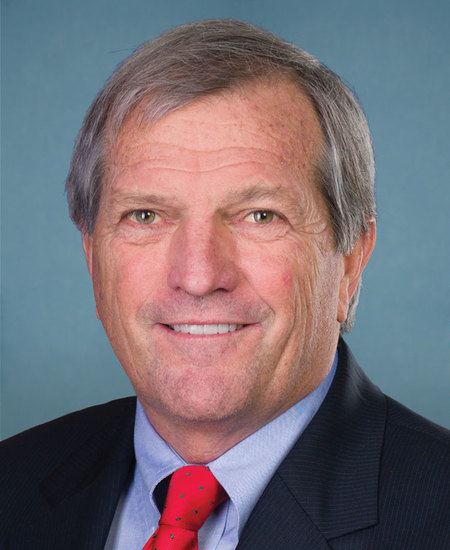
Rep. Mark DeSaulnier
Sponsored bills
This resolution reaffirms the House of Representatives' commitment to media diversity and expresses its pledge to eliminate barriers to such diversity.
Comprehensive Paid Leave for Federal Employees Act This bill provides paid family and medical leave to federal employees. Currently, federal employees are entitled to 12 weeks of administrative leave for one or more of the following reasons: (1) the birth of a child, (2) the adoption or foster care of a child, (3) the care of an immediate family member with a serious health condition, (4) inability to work due to a serious health condition, and (5) exigencies relating to an immediate family member's active duty service in the Armed Forces. However, of these reasons, employees are entitled to paid administrative leave only in connection with the birth, adoption, or foster care of a child (i.e., parental leave). The bill provides 12 weeks of paid administrative leave for any of these reasons, and specifies that this leave is in addition to any annual or sick leave to which employees are entitled.
Medium- and Heavy-Duty Electric Vehicle Infrastructure Act of 2021 This bill directs the Environmental Protection Agency to establish a rebate program that encourages the purchase and installation of electric vehicle charging equipment for medium-duty electric vehicles and heavy-duty electric vehicles.
Better Empowerment Now to Enhance Framework and Improve Treatments Act of 2021 or the BENEFIT Act of 2021 This bill requires the Food and Drug Administration (FDA) to consider relevant patient-focused drug development data, such as data from patient preference studies and patient-reported outcome data, in the risk-benefit assessment framework used in the process for approving new drugs. After a new drug application has been approved, the FDA's public statement about how it used patient experience data shall include a description of how such data was considered in the risk-benefit assessment framework.
This concurrent resolution recognizes the service and sacrifice of those who served and perished in California at Port Chicago Naval Magazine during World War II. The concurrent resolution also exonerates the 50 Port Chicago sailors convicted of the charge of mutiny against the United States and all other charges brought against them after the July 17, 1944, explosion that killed 320. It upgrades the general and summary discharges of the Port Chicago sailors to honorable discharges.
Green New Deal for Public Schools Act of 2021 This bill provides environmental and educational resources to public elementary and secondary schools and Bureau of Indian Education (BIE) schools. Specifically, the bill requires the Department of Energy's (DOE's) Office of Energy Efficiency and Renewable Energy to provide climate capital facilities grants to eligible entities (e.g., public schools and BIE schools). Grant recipients must use these funds to construct new, or convert existing facilities into, healthy zero-carbon schools. Healthy zero-carbon school refers to a school with highly energy-efficient facilities that produce or procure sufficient carbon-free and pollution-free renewable energy to meet the school's needs. Next, the bill directs the Department of Education (ED) to award resource block grants to qualified local educational agencies (LEAs) to hire and retain educators and support staff in high-need schools. ED must award grants to eligible consortia of LEAs for educational equity planning and implementation. In addition, ED must establish the Climate Change Resiliency Program to increase the resiliency of public and BIE schools during climate change-related events, natural disasters, and public health crises. Further, ED must establish a related grant program for state educational agencies. Grant recipients must use these funds for certain activities (e.g., green infrastructure projects). The bill establishes the Office of Sustainable Schools within ED to (1) administer the resource block grant and educational equity grant programs, and (2) coordinate with DOE and the White House Office of Domestic Climate Policy on climate capital facilities grants and the Climate Change Resiliency Program.
Pathways to Health Careers Act This bill provides funding for, reauthorizes through FY2026, and makes a variety of changes to certain grants administered by the Department of Health and Human Services that provide education and training to low-income individuals for health care occupations, including by establishing a new competitive grant for projects designed to train low-income individuals in allied health professions.
Cancer Care Planning and Communications Act of 2021 This bill provides for Medicare coverage and payment of cancer care planning and coordination services for individuals who are diagnosed with or treated for cancer, including the development of treatment plans, follow-up care, and any necessary revisions.
This bill extends by one year the deadline for completion of proposed management plans for the Appalachian Forest National Heritage Area in West Virginia and Maryland, the Maritime Washington National Heritage Area in Washington, the Mountains to Sound Greenway National Heritage Area in Washington, the Sacramento-San Joaquin Delta National Heritage Area in California, the Santa Cruz Valley National Heritage Area in Arizona, and the Susquehanna National Heritage Area in Pennsylvania.