

Peace Corps Reauthorization Act of 2022 This bill reauthorizes through FY2024 and modifies operations of the Peace Corps. Changes include increasing the readjustment allowance paid to volunteers when their service terminates and providing statutory authority for an executive order that grants returned volunteers noncompetitive eligibility for federal civil-service positions. Additionally, the bill entitles returned volunteers to sixty days of health care benefits. The Peace Corps must also provide volunteers with information about enrolling in U.S. health plans before service termination and mental health care during and after service. The bill also includes provisions to address involuntary termination of Peace Corps service in emergencies, including by expediting re-enrollment of involuntarily terminated volunteers. The Peace Corps must also adequately insure volunteers' safety and must coordinate with the Department of State to periodically update agreements concerning the security of Peace Corps volunteers and staff abroad. The bill also authorizes Peace Corps to recruit domestically based volunteers to serve in the United States at the request of another agency or to provide services in a host country virtually, modifies the Peace Corps National Advisory Council's membership and functions, expands whistleblower protections for volunteers, increases the rate of pay that applies to a volunteer's workers compensation claim, requires Peace Corps to implement a zero tolerance drug use policy regarding volunteer involvement with illegal drugs, and emphasizes the use of the internet in Peace Corps programs. Furthermore, the bill requires reporting, including on the provision of mental health services to volunteers.
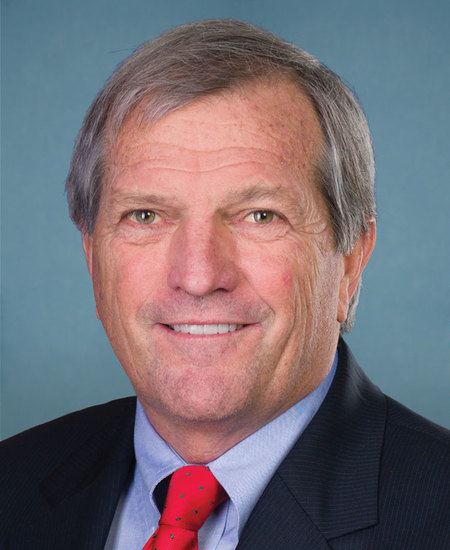
Rep. Mark DeSaulnier
Sponsored bills
The Emergency Relief Program Reauthorization Act of 2022 This bill requires the Department of Agriculture to carry out a program to make payments for losses of crops and livestock during calendar year 2022.
Whistleblower Protection Improvement Act of 2021 This bill establishes, modifies, and expands certain whistleblower protections for federal employees, including with respect to petitions to Congress, whistleblower identity, and protected disclosures. For example, the bill prohibits personnel action against employees who exercise their right to petition or furnish information to Congress and specifically precludes the President, Members of Congress, members of the uniformed services, and other federal employees from interfering with this right. It also generally prohibits employees from disclosing the identity of whistleblowers to individuals outside of the government and allows the Inspector General to determine whether to investigate a referral if the referral is found to have been made in retaliation for whistleblowing activity. Employees may request corrective action from the Merit Systems Protection Board with respect to such prohibited practices and may file an action in court if the board does not render a final decision within 180 days of a request. The bill also expands the list of recipients to whom an employee may make a protected disclosure to include a supervisor in the employee's direct chain of command. It also includes personnel actions involving furloughs of more than 14 days but less than 30 days, and furloughs of 13 days or less that are not due to funding lapses, as appealable adverse actions that are subject to certain procedural requirements.
Stop Delta Tunnels Act This bill prohibits the U.S. Army Corps of Engineers from issuing a permit to discharge dredged or fill material into navigable waters for the proposed Delta Conveyance Project in California. The California Department of Water Resources proposed this project, which involves constructing new State Water Project diversion and conveyance facilities in the Sacramento-San Joaquin Delta. The proposal includes an underground tunnel to deliver water south of the delta.
Lowering Obstacles to Achievement Now Act or the LOAN Act This bill makes various changes to federal student aid programs, including by providing funding to increase the maximum Pell Grant award for each eligible student and reducing the number of monthly loan payments required for loan forgiveness under the Public Service Loan Forgiveness (PSLF) program.
Loan Forgiveness for Educators Act of 2022 This bill expands the Teacher Loan Forgiveness program. Among other provisions, the bill (1) renames the program the Educator Loan Forgiveness program, (2) expands program eligibility to early childhood educators and program directors serving in early childhood education programs and school leaders serving in public high-need schools, and (3) establishes a program in which the Department of Education cancels monthly student loan payments during qualifying service and provides complete loan forgiveness after five years of service.
Improving Seniors' Timely Access to Care Act of 2022 This bill establishes several requirements and standards relating to prior authorization processes under Medicare Advantage (MA) plans. Specifically, MA plans must (1) establish an electronic prior authorization program that meets specified standards, including the ability to provide real-time decisions in response to requests for items and services that are routinely approved; (2) annually publish specified prior authorization information, including the percentage of requests approved and the average response time; and (3) meet other standards, as set by the Centers for Medicare & Medicaid Services, relating to the quality and timeliness of prior authorization determinations.
Seaman Danyelle Luckey Military Medical Accountability Amendment Act of 2022 This bill authorizes claims by members of the uniformed services for an act or omission constituting medical malpractice that occurs onboard a naval aircraft carrier or amphibious ship that, at the time of occurrence, was not engaged in combat operations.
Wildfire Recovery Act This bill makes changes with respect to the federal cost share for Fire Management Assistance Grants and provides that the federal share shall be not less than 75% of the eligible cost. Specifically, the bill directs the Federal Emergency Management Agency (FEMA) to conduct and complete a rulemaking to provide criteria for the circumstances under which FEMA may recommend that the President increase the federal cost share. Such criteria shall include a threshold metric that assesses the financial impact to a state or local government from responding to a fire for which fire management assistance is being provided.
Aviation Emissions Reduction Opportunity Act or the AERO Act This bill requires the Department of Transportation to award competitive grants for projects in the United States that support the production and deployment of sustainable aviation fuel or the development of low-emission aviation technologies. Eligible grantees include, among others, state or local governments, air carriers, and research institutions. None of the funds made available may be used for a project unless all of the iron, steel, manufactured products, and construction materials used in the project are produced in the United States, subject to waivers where inconsistent with the public interest, where not produced in sufficient quantities or satisfactory quality, or where such inclusion will increase the cost of the project by more than 25%. The bill also reauthorizes through FY2027 the Continuous Lower Energy, Emissions, and Noise Program of the Federal Aviation Administration.