Protection and Advocacy in Education Act This bill directs the Department of Education to award grants for protection and advocacy systems to protect and advocate the rights of students with disabilities.
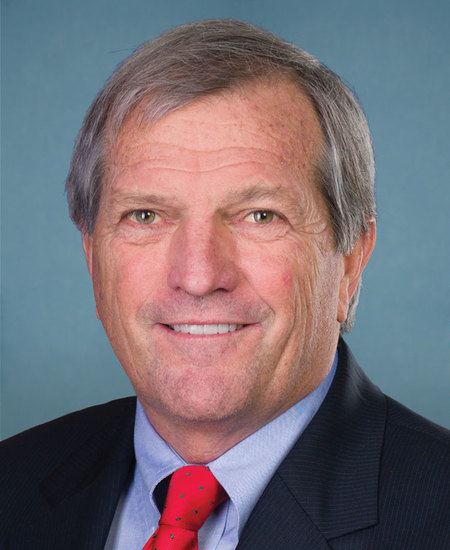
Rep. Mark DeSaulnier
Sponsored bills
21st Century Assistive Technology Act This bill reauthorizes through FY2027, modifies the funding allocations for, and makes administrative and other changes to programs that increase access to assistive technology devices and assistive technology services for individuals with disabilities. An assistive technology device includes any item, piece of equipment, or system that is used to maintain or improve the functional capabilities of individuals with disabilities (e.g., wheelchairs, hearing aids, or screen readers and computer software), and an assistive technology service is a service that directly assists an individual with a disability with selecting or using such devices, including by evaluating the individual's needs or expanding access to such devices and technology. Specific changes include expanding the scope of certain technical assistance to support grant recipients with data collection and increasing collaboration between agencies that are implementing certain assistive technology grants and state agencies that receive other sources of federal funding for this technology.
Reinvesting In Shoreline Economies and Ecosystems Act of 2022 or the RISEE Act of 2022 This bill expands the amount of revenue generated from leases for energy development on federal land or submerged lands in the Outer Continental Shelf that is shared with certain states and coastal communities. For example, the bill dedicates a percentage of the revenue generated from offshore wind leases for coastal states. Currently, this revenue is deposited in the U.S. Treasury. In addition, the bill increases the amount of revenue generated from offshore oil and gas leases that is shared with states under the Gulf of Mexico Energy Security Act. States must use the funding from the revenue for specified purposes, such as coastal restoration, conservation, or infrastructure.
National Center for the Advancement of Aviation Act of 202 2 This bill establishes the National Center for the Advancement of Aviation to (1) develop a skilled and robust U.S. aviation and aerospace workforce; (2) serve as a national independent forum to support collaboration and cooperation between aviation and aerospace stakeholders regarding the advancement of the U.S. aviation and aerospace workforce; and (3) serve as a repository for research conducted by institutions of higher education, research institutions, or other stakeholders regarding the aviation and aerospace workforce, or related technical and skill development. The center must perform the following duties improve access to aviation and aerospace education and related skills training to help grow the U.S. aviation and aerospace workforce; support Armed Forces personnel and veterans seeking to transition to a career in civil aviation or an aerospace-related field through outreach, training, apprenticeships, or other means; and amplify and support the research and development efforts conducted as part of the National Aviation Research Plan and work done at the Federal Aviation Administration Technical Centers regarding the aviation and aerospace workforce. Additionally, the center may issue grants to certain entities to create, develop, deliver, or update middle and high school aviation curricula and aviation curricula used at institutions of higher education, secondary educations institutions, or by technical training and vocational schools; support the professional development of educators using the curricula; establish new education programs that teach technical skills used in aviation maintenance; establish scholarships, internships or apprenticeships for individuals pursuing employment in the aviation maintenance industry; support outreach about educational opportunities and careers in the aviation maintenance industry; and support the transition to career in aviation maintenance, including for members of the Armed Forces.

Longshore and Harbor Workers' COVID-19 Compensation Act of 2022 This bill establishes a conclusive presumption that certain workers diagnosed with COVID-19 are entitled to workers' compensation benefits under the Longshore and Harbor Workers' Compensation Act (LHWCA). It also provides funding to reimburse employers for costs associated with LHWCA benefits related to COVID-19. The LHWCA provides for medical, disability, and survivor benefits for specified private-sector maritime workers. The presumption applies to workers who were diagnosed with COVID-19 between January 27, 2020, and January 27, 2024, and who, during the incubation period, faced a risk of COVID-19 exposure while carrying out job duties. In addition, the bill establishes and provides funding for the Longshore COVID-19 Fund to reimburse employers for costs related to such COVID-19 claims. To be reimbursed, employers must comply with applicable safety and health guidance to prevent occupational exposure to COVID-19.
Maddy summaryHRES 1396 is a procedural resolution that sets rules for the House of Representatives to consider three separate bills. It waives objections to debate, limits discussion time to one hour per bill (divided equally between parties), and establishes specific amendment procedures for each bill. This resolution does not change policy but streamlines the process for voting on: - H.R. 3843 (adjusting antitrust filing fees), - H.R. 7780 (school mental health funding), and - S. 3969 (voting access grants for Northern Mariana Islands and tribal systems). The resolution itself has no direct policy impact - it only governs how the House will handle these bills.
Maximizing Outcomes through Better Investments in Lifesaving Equipment for (MOBILE) Health Care Act This bill allows a health center that currently receives funding through a Health Resources & Services Administration Health Center Program grant to use a New Access Point grant to set up a mobile unit regardless of whether the health center also establishes a permanent health care delivery site. New Access Point grants help health centers establish new delivery sites to provide comprehensive primary care to medically underserved populations. Under current law, health centers may only use the grants to set up a mobile unit if they also establish a permanent site.
National Liberty Memorial Preservation Act This bill extends through FY2027 the authority of the National Mall Liberty Fund D.C. to establish a memorial on eligible federal land to honor the slaves and free Black persons who served as soldiers and sailors or provided civilian assistance during the American Revolution.
Runaway and Homeless Youth and Trafficking Prevention Act of 2022 This bill reauthorizes through FY2027 and expands programs for runaway, homeless, and disconnected youth, including resources and services to support youth victims of human trafficking and youth at risk of being trafficked.
Social Security Fairness Act of 2021 This bill repeals provisions that reduce Social Security benefits for individuals who receive other benefits, such as a pension from a state or local government. The bill eliminates the government pension offset , which in various instances reduces Social Security benefits for spouses, widows, and widowers who also receive government pensions of their own. The bill also eliminates the windfall elimination provision , which in some instances reduces Social Security benefits for individuals who also receive a pension or disability benefit from an employer that did not withhold Social Security taxes. These changes are effective for benefits payable after December 2021.