

Standardizing Thresholds Of Penalties for Fentanyl Act or the STOP Fentanyl Act This bill reduces the drug quantity thresholds that trigger a mandatory minimum prison term for a defendant who manufactures, distributes, imports, exports, or possesses with intent to distribute fentanyl. The bill also creates enhanced criminal penalties for certain violations involving fentanyl that was imported along the U.S.-Mexico border. Specifically, the bill reduces from 400 to 5 grams the fentanyl quantity and from 100 to 0.05 grams the fentanyl analogue quantity that trigger a mandatory minimum prison term for high-level first-time or repeat offenders. It also reduces from 40 to 0.5 grams the fentanyl quantity and from 10 to 0.005 grams the fentanyl analogue quantity that trigger a mandatory minimum prison term for low-level first-time or repeat offenders. Additionally, the bill creates enhanced mandatory minimum prison terms for importing or exporting fentanyl that was imported along the U.S.-Mexico border.
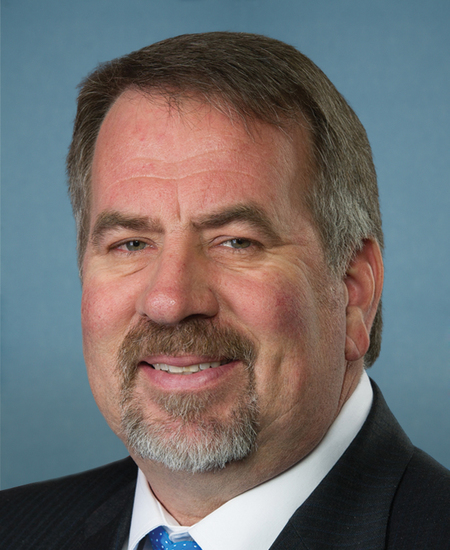
Rep. Doug LaMalfa
Sponsored bills
Maddy summaryThis bill requires family planning services funded under Title V of the Social Security Act to provide pamphlets containing regional adoption center contact information to patients during consultations about medical or abortion services. The pamphlets must include a comprehensive list of adoption centers in the region, along with each center's address and phone number. It mandates that services offer patients the opportunity to read these pamphlets at the time of inquiry. The provision uses existing Title V funding and does not create new financial obligations.
No User Fees for Gun Owners Act This bill prohibits a state or local government from imposing any insurance requirement, tax, user fee, or similar charge as a condition of the manufacture importation, acquisition, transfer, or continued ownership of a firearm or ammunition, with the exception of a proportionate sales tax. The bill imposes the same prohibition under the Internal Revenue Code for firearms, pistols, or revolvers, but allows for the assessment of a proportionate sales tax.
Maddy summaryThis bill creates new federal crimes for killing or assaulting law enforcement officers, judges, and certain public safety officers (including firefighters) while they are on duty or for past duties, with penalties including minimum 10-year sentences for killing and varying assault penalties based on severity. It adds a new factor that would make the federal death penalty more likely for killing such officers, limits federal legal challenges for convictions related to these killings, and expands law enforcement officers' rights to carry firearms in certain circumstances. The bill also provides funding for grants to improve community-law enforcement relationships through transparency, accountability, and officer wellness programs. It directly affects law enforcement officers, judges, and public safety personnel across the country, establishing new federal protections and procedures for violence against these personnel.
Maddy summaryThe Protect Local Farms Act (HR 353) would override state laws that require overtime pay for agricultural workers after fewer than 60 hours in a workweek. It amends federal labor law to preempt any state regulation setting a lower maximum workweek threshold (e.g., 40 or 50 hours) for farm employees. This directly affects agricultural employers and workers in states with stricter overtime rules, such as California or New York, by replacing those state standards with the federal 60-hour threshold. The bill does not change federal overtime rules but ensures states cannot impose more stringent requirements on farm labor.
Maddy summaryHR 311, the Cost Estimates Improvement Act, requires the Congressional Budget Office (CBO) and Joint Committee on Taxation (JCT) to include debt servicing costs in their budget estimates where practicable and to list duplicative federal programs covered by legislation. The bill mandates that all CBO and JCT cost estimates must identify overlapping or redundant agency programs, initiatives, or activities within the proposed legislation. This change aims to improve transparency in federal budget analysis by providing clearer data on long-term debt impacts and program efficiency for lawmakers. The bill directly affects the CBO and JCT as they prepare budget estimates for Congress.
American Workforce Empowerment Act This bill allows tax-preferred college savings plans (529 plans) to fund certain postsecondary certificate programs and apprenticeship programs.
Maddy summaryHRES 29 is a procedural resolution that would amend House rules to create the "Committee on the Elimination of Nonessential Federal Programs." This committee would study and recommend cutting underperforming or nonessential federal programs, requiring annual reports listing such programs and submitting related legislation. The resolution also establishes expedited procedures for bills reported by this committee, including limiting debate to 10 hours and making motions to proceed highly privileged. It does not directly affect constituents but changes House committee structure and procedures.
Qualified Immunity Act of 2023 This bill provides statutory authority for qualified immunity for law enforcement officers in civil cases involving constitutional violations. Current law provides a statutory civil cause of action against state and local government actors (e.g., law enforcement officers) for violations of constitutional rights, also known as Section 1983 lawsuits. The Supreme Court has also found an implied cause of action against federal law enforcement officers in certain situations (e.g., Fourth Amendment violations), also known as Bivens lawsuits. However, under the judicial doctrine of qualified immunity, government officials performing discretionary duties are generally shielded from civil liability, unless their actions violate clearly established rights of which a reasonable person would have known. The bill provides statutory authority for these principles with respect to law enforcement officers. Specifically, under the bill, law enforcement officers are entitled to qualified immunity if (1) at the time of the alleged violation, the constitutional right at issue was not clearly established or the state of the law was not sufficiently clear for every reasonable officer to know that the conduct was unconstitutional; or (2) a court has held that the specific conduct at issue is constitutional. The bill applies to federal, state, and local law enforcement officers. It also specifies that law enforcement agencies and local governments may not be held liable if their officers are entitled to qualified immunity.
Maddy summaryHR 252, the Inflation Prevention Act of 2023, would require Congress to block any new spending bill or amendment that could increase inflation above 4.5%, as measured by the Consumer Price Index (CPI). If current inflation exceeds 4.5%, the bill would prevent consideration of new spending measures unless a three-fifths Senate supermajority votes to override the rule. The Congressional Budget Office (CBO) would estimate the inflation impact of proposed spending and notify Congress if inflation rises above 4.5%. This rule applies to all spending bills, amendments, and conference reports in both the House and Senate, directly affecting how Congress processes budget-related legislation. The bill focuses on procedural rules for spending decisions, not on specific policies or affected groups.