

Maddy summaryThe PERMIT Act (HR 3898) amends the definition of "navigable waters" under the Clean Water Act to exclude specific water features from federal regulation. It explicitly removes waste treatment systems, ephemeral streams (flowing only after rain), prior converted cropland, groundwater, and other features designated by regulators. This change directly affects federal agencies like the EPA and Army Corps of Engineers, reducing their jurisdiction over these excluded water bodies. The bill aims to streamline permitting by clarifying which waters fall under federal Clean Water Act oversight.
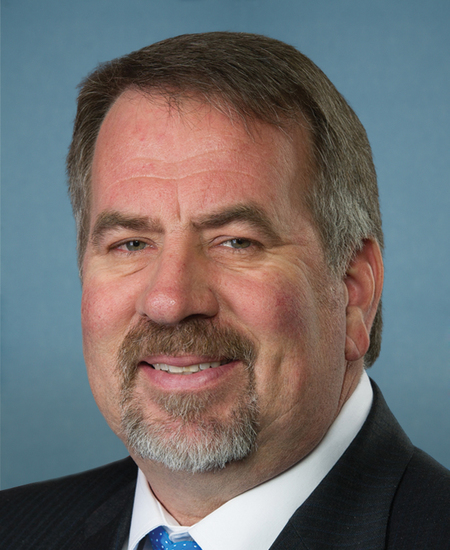
Rep. Doug LaMalfa
Sponsored bills
Miracle on Ice Congressional Gold Medal Act This act provides for the award of Congressional Gold Medals to the members of the 1980 U.S. Olympic men's ice hockey team in recognition of the team's achievement at the 1980 Winter Olympic Games.
Maddy summaryHR 1623 (the SCREEN Act) requires online platforms that profit from hosting pornographic content to implement age verification technology, preventing minors from accessing such material. Covered platforms must publicly disclose their verification process and securely handle age data collected through these systems. The law applies specifically to platforms where pornographic content is a regular business activity, not all websites. It mandates that only adults can access pornographic content on these platforms, without banning the content itself.
Maddy summaryHR 573, the "Studying NEPA’s Impact on Projects Act," requires the Council on Environmental Quality (CEQ) to annually publish detailed reports starting July 2025 on how the National Environmental Policy Act (NEPA) affects federal projects. The reports will track NEPA-related lawsuits (including outcomes and costs), the length and cost of environmental reviews (like impact statements), and timelines for completing key review steps over 5- to 10-year periods. Data must be broken down by project type (e.g., energy, transportation) and sector (e.g., renewable energy, pipelines) to show trends in compliance, delays, and expenses. This information will be made publicly available online and submitted to relevant congressional committees, providing transparency on NEPA’s practical implementation without changing the law itself.
Maddy summaryThis bill establishes a direct payment program to compensate specialty crop growers and wine producers for financial losses caused by increased tariffs on U.S. exports after January 20, 2025. Covered losses include higher handling costs for perishable crops, reduced export revenue, canceled contracts, and lost market access due to foreign tariffs. The USDA may also purchase surplus non-wine specialty crops for nutrition programs like school meals. Payments and surplus crop purchases require annual reporting to Congress until 2030, with funding authorized for fiscal years 2026-2030.
Maddy summaryHRES 932 is a symbolic resolution passed by the House of Representatives that condemns six specific members of Congress (including Senators Kelly and Slotkin and Representatives Crow, Deluzio, Goodlander, and Houlahan) for allegedly making statements that encouraged military and intelligence personnel to disobey orders from the President. The resolution claims these lawmakers falsely suggested the administration issued "illegal orders" and undermined the military chain of command, violating the Uniform Code of Military Justice (UCMJ). It does not create new laws or policies but formally denounces the lawmakers' statements as "dangerous and seditious rhetoric." As a procedural resolution, it has no binding effect on military conduct or policy.
Maddy summaryHR 6372, the D.C. Shield Law Repeal Act, repeals the Human Rights Sanctuary Amendment Act of 2022 (D.C. Law 24-257), which had modified District of Columbia protections for certain immigrant residents. The bill restores the previous legal framework that existed before the 2022 amendment took effect. This directly affects D.C. law and its implementation regarding immigrant rights within the District.
Maddy summaryHRES 920 is a ceremonial resolution celebrating the 50th anniversary of the Individuals with Disabilities Education Act (IDEA) on November 29, 2025. It recognizes IDEA’s historical impact - establishing the right to free, appropriate public education in the least restrictive environment for children with disabilities - and notes how it transformed access to education after over 1 million children were previously excluded from schools. The resolution does not create new policy or funding; it solely commemorates IDEA’s legacy, honors the students and families it has served, and acknowledges educators and advocates who advanced its implementation. This is a symbolic gesture with no direct effect on current law or services.
Give Kids a Chance Act of 2025 This bill expands the Food and Drug Administration’s (FDA’s) authority with respect to research on rare pediatric diseases, including by permitting the FDA to take enforcement action against drug sponsors that fail to satisfy pediatric study requirements and by reauthorizing programs that support pediatric research. Specifically, the bill modifies requirements relating to molecularly targeted pediatric cancer investigations to permit research on new drugs in combination with active ingredients that have already been approved, provided certain conditions are met; permits the FDA to take enforcement action against drug sponsors that fail to comply with pediatric study requirements, if such sponsors demonstrated a lack of due diligence in satisfying the requirement; renews the FDA’s authority to award priority review vouchers to sponsors of new products intended to treat rare pediatric diseases through September 30, 2029; and reauthorizes through FY2027 certain funding for the National Institutes of Health to support priority pediatric research. The bill also provides statutory authority for the FDA’s interpretation of the orphan drug exclusivity period. The bill specifies, consistent with FDA regulations, that the seven-year market exclusivity period for drugs for rare diseases or conditions (i.e., orphan drugs) prohibits the approval of the same drug for the same approved use or indication with respect to the disease or condition. (In Catalyst Pharmaceuticals, Inc. v. Becerra , a court rejected the FDA’s interpretation and held that orphan drug exclusivity extends to all uses or indications for the disease or condition.)
Maddy summaryThis bill denies immigration benefits to individuals who participated in, supported, or facilitated Hamas attacks against Israel starting October 7, 2023. It amends immigration law to make such individuals inadmissible (barred from entering the U.S.) and ineligible for any immigration relief, including asylum or other protections. The law requires annual reports from the Homeland Security Secretary tracking how many people are denied entry or removed under these provisions. It directly affects non-U.S. nationals involved in Hamas-related violence against Israel since the October 7, 2023, attacks.