

Maddy summaryThis bill amends the McKinney-Vento Homeless Assistance Act to integrate behavioral health, mental health, and substance use disorder treatment into housing support for homeless individuals. It requires housing programs receiving federal funds to partner with nearby Certified Community Behavioral Health Clinics for eligible participants, defined as those in supportive housing, receiving Supplemental Security Income (SSI), Social Security Disability Insurance (SSDI), or classified as homeless with a disability. The bill sets aside 2% of annual funding for this integration and provides incentives of up to $500,000 per 1,000 homeless individuals in high-need areas, capped at $2 million per project. It also mandates annual reports on implementation progress to Congress.
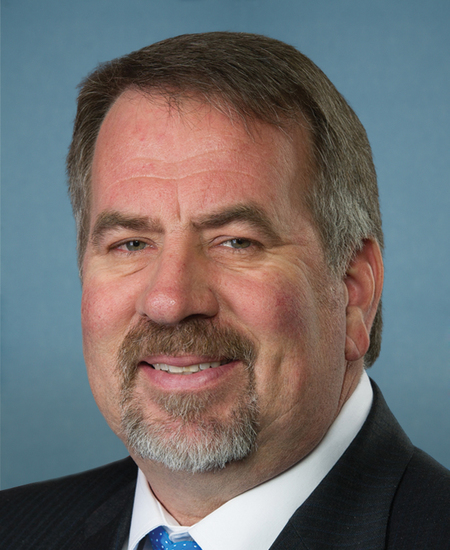
Rep. Doug LaMalfa
Sponsored bills
Maddy summaryThis bill repeals a law (18 U.S.C. § 1715) that previously prohibited mailing firearms without a license. It directly affects the U.S. Postal Service, firearm sellers, and individuals mailing firearms by preventing the Postal Service from creating rules that would block firearm mailings or require disclosure of sensitive records like sales receipts or firearm serial numbers. Key provisions include removing the existing ban on mailing firearms and prohibiting the Postal Service from imposing new restrictions on firearm mailings or demanding customer transaction data. The bill ensures that firearm mailings can proceed without these specific federal restrictions, while applying to ongoing legal cases under the repealed law.
Maddy summaryThis bill amends the McKinney-Vento Homeless Assistance Act to allow federal funding through the Emergency Solutions Grant Program to cover "safe parking" initiatives. It defines "safe parking" as providing homeless individuals living in vehicles (including RVs) with overnight parking alongside re-housing and supportive services to transition to stable housing. The key change makes safe parking programs eligible for federal grant funding that previously did not cover this specific activity. This directly affects homeless individuals residing in vehicles and the service providers operating these programs.
Maddy summaryHR 7107, the Human Trafficking Awareness Training Act, requires the Federal Law Enforcement Training Centers (FLETC) to create a mandatory training program for state, local, tribal, territorial, and educational institution law enforcement officers. The training covers recognizing human trafficking indicators, understanding victim-centered responses, reporting protocols, relevant federal and state laws, and high-risk locations. The bill authorizes $2.3 million annually from 2024 through 2029 to fund this program and mandates coordination with the Department of Homeland Security’s Blue Campaign. It also requires integrating this training into existing FLETC programs. The law defines human trafficking per the Trafficking Victims Protection Act of 2000.
Maddy summaryHR 6564, the Farm Credit Adjustment Act, modifies examination requirements for certain Farm Credit System institutions. It allows the Farm Credit Administration (FCA) to conduct examinations of low-risk institutions no more frequently than every 24 months, instead of the previous mandatory schedule. This change applies directly to Farm Credit System institutions deemed low-risk by the FCA, giving the agency discretion to extend examination cycles. The amendment takes effect on October 1, 2024.
Maddy summaryThis bill requires the U.S. Army Corps of Engineers to prioritize water supply and conservation as a core mission when planning, building, and managing all water projects. It directly affects the Corps' project decisions, mandating they consider these factors alongside existing priorities like flood control and navigation. Key provisions explicitly state that this change does not alter the Corps' current authorities, pending permit processes, or state water management rights. The bill focuses on operational priorities within the Corps' existing framework, without creating new federal water regulations or overriding state water laws.
Maddy summaryHR 7014, the Protect Medicaid Act, prohibits federal Medicaid funding for the administrative costs associated with providing health benefits to noncitizens who are not lawfully admitted permanent residents and are ineligible for Medicaid due to immigration status. It directly affects states that currently offer health benefits to such noncitizens, requiring them to cover administrative expenses through state funds instead of federal Medicaid dollars. The bill amends federal law to add a specific prohibition on using federal funds for these administrative costs, while leaving the provision of medical care itself unaffected. Additionally, it mandates an Inspector General report analyzing how states separate administrative costs, ensure compliance, and finance these programs, including impacts on drug pricing. The law focuses solely on administrative funding, not on restricting medical benefits for eligible individuals.
Maddy summaryThis bill amends the National Dam Safety Program to prioritize safety for smaller, lower-income communities. It defines "underserved communities" as those with under 50,000 residents and median income below 80% of the state average, ensuring these areas get priority for dam rehabilitation funding. The bill requires dam owners to commit to long-term maintenance plans and mandates floodplain management plans for projects involving dam removal or modification, including community outreach. It also extends funding authorization through 2028 with updated allocation rules for states.
Maddy summaryThis resolution expresses the U.S. House of Representatives' support for designating October 1-7, 2023, as "National 4-H Week." It recognizes 4-H as the nation's largest youth development organization, serving nearly 6 million young people through programs in health, science, agriculture, and civic engagement, delivered by land-grant universities and over 600,000 volunteers. The resolution does not create new laws or funding but formally acknowledges 4-H's role in empowering youth leadership and encourages public recognition of its impact. It directly affects 4-H members, volunteers, and the broader network of land-grant institutions and the USDA's Cooperative Extension System.
Maddy summaryThe Death Tax Repeal Act would eliminate the federal estate tax and generation-skipping transfer tax for estates of people who die on or after the bill's enactment date, and for generation-skipping transfers made after that date. It would also establish a new $10 million lifetime gift tax exemption (adjusted annually for inflation) and replace the existing gift tax rate schedule with a revised structure. These changes would primarily affect high-net-worth individuals and their heirs, as the estate tax and gift tax typically apply to large estates or gifts exceeding the new exemption threshold. The bill's provisions would take effect on the date of enactment, with transitional rules for the year the bill is signed into law.