

Maddy summaryHR 578, "Sarah’s Law," requires mandatory detention for certain non-citizens (aliens) charged with crimes resulting in death or serious bodily injury. It directly affects non-citizens facing such charges and their victims' families. Key provisions mandate that the Department of Homeland Security detain these individuals immediately and notify victims or their closest living relatives (like parents or spouses) about the alien’s identity, immigration status, custody details, and removal efforts. The bill adds specific categories of non-citizens to the mandatory detention list, including those whose visas were revoked or who are deportable for prior immigration violations. This creates a formal process for victim notification while expanding detention requirements under immigration law.
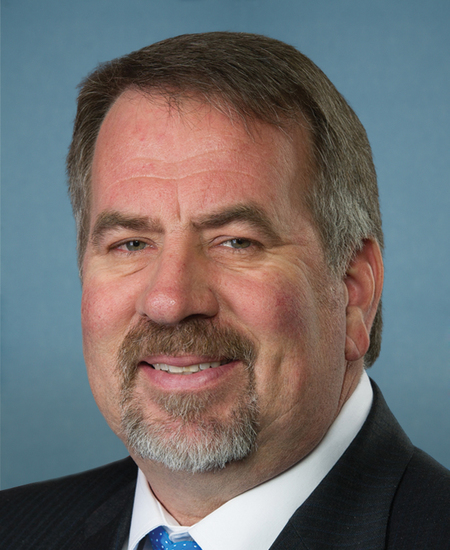
Rep. Doug LaMalfa
Sponsored bills
Maddy summaryHR 563 requires the Bureau of Alcohol, Tobacco, Firearms and Explosives (ATF) to destroy all firearm transaction records from discontinued businesses within 90 days of the law's enactment. It also amends a federal law to prevent future registration of such transactions by removing language that required these records to be delivered to the Attorney General. The bill mandates that the ATF submit a report to Congress detailing how many records were destroyed. This legislation directly affects ATF record-keeping procedures, not individual gun owners or firearm ownership rights.
This bill increases the annual limit on the tax credit for qualified railroad track maintenance expenses (also referred to as the short line railroad tax credit) and expands eligibility for claiming the credit. Under current law, the tax credit is limited each tax year to $3,500 multiplied by the sum of the number of miles of railroad track owned or leased by the taxpayer (miles owned or leased) and the number of railroad track miles assigned to the taxpayer by a Class II or III railroad (miles assigned). This bill increases the annual limit to $6,100 multiplied by the sum of miles owned or leased and miles assigned. The $6,100 amount used in the calculation of the tax credit limit is adjusted for inflation for tax years beginning after 2025. The bill also expands eligibility for the tax credit to include gross expenses for maintaining railroad tracks owned or leased as of January 1, 2024. Under current law, the tax credit is limited to gross expenses for maintaining railroad tracks owned or leased as of January 1, 2015.
Maddy summaryThis bill amends the Antiquities Act to require Congress, not the president, to authorize the creation or expansion of national monuments. It directly affects presidents and federal agencies by ending the current practice of presidentially designating monuments under the Antiquities Act. The key provision replaces the existing authority with a requirement for explicit congressional approval for any new monument or extension. This would change the legal process for establishing protected public lands, shifting decision-making power from the executive branch to Congress.
Maddy summaryHCONRES 3 is a symbolic congressional resolution expressing support for the Geneva Consensus Declaration, an international agreement signed by 39 countries that affirms women’s health, family protection, and opposes international abortion rights. It urges the U.S. to rejoin the declaration, which emphasizes that no country has an obligation to fund or facilitate abortion and that families are foundational to society. The resolution does not create new laws but reaffirms existing U.S. policies prohibiting federal funding for abortions or coercive family planning abroad. It directly affects U.S. foreign policy direction but has no binding effect on government actions.
Maddy summaryHR 335, titled "Repeal the NFA Act," seeks to eliminate the National Firearms Act (NFA) of 1934, a federal law regulating certain firearms like machine guns, short-barreled rifles, and suppressors. If enacted, the bill would remove the NFA from the Internal Revenue Code by repealing Chapter 53, which currently governs the taxation and registration of these firearms. This repeal would directly affect firearm owners and manufacturers subject to NFA regulations, removing federal requirements for registration and tax payments on specified weapons. The bill focuses solely on repealing existing law without introducing new provisions or exceptions.
Maddy summaryThis bill, the SAGA Act (HR 373), prevents states and local governments from imposing stricter regulations than federal law on rifles and shotguns that move across state lines. It prohibits state or local laws requiring more restrictive rules, registration, licensing, taxes, or fees for rifles, shotguns, or their parts (including detachable magazines, pistol grips, and stocks) than federal standards. The bill also requires courts to award attorney fees to successful plaintiffs in lawsuits challenging violations of these provisions. This directly affects state and local governments, gun manufacturers, and retailers by limiting their regulatory authority over certain firearms.
Maddy summaryHR 346, the Preserving Choice in Vehicle Purchases Act, amends the Clean Air Act to clarify that state emissions standards directly or indirectly limiting sales of new internal combustion engine vehicles (ICE) would not qualify for federal EPA waivers. It adds a specific definition to the law, requiring states to avoid restrictions on ICE vehicle sales to maintain waiver eligibility. The bill also mandates the EPA to revoke existing waivers granted between January 2022 and the bill's enactment if those waivers didn't comply with the new definition. This directly affects states with their own vehicle emission standards (like California), the EPA's waiver approval process, and automakers selling vehicles in those states.
Maddy summaryHR 272, the Protecting Life and Taxpayers Act of 2025, prohibits federal funding (directly or indirectly) to any organization that performs or funds abortions, requiring certification from all recipients. This applies to entities receiving federal funds, including contractors and subsidiaries, with limited exceptions for pregnancies resulting from rape or incest, or when a physician certifies a life-threatening condition. The bill directly affects healthcare providers, clinics, and organizations that rely on federal grants or contracts. It changes existing funding rules by banning federal money from supporting abortion services, except in the specified medical or criminal exceptions.
Maddy summaryThis bill blocks federal funding for Planned Parenthood Federation of America and its clinics for one year unless they certify they won't perform abortions. Exceptions apply for pregnancies resulting from rape or incest, or when a woman's life is in danger due to a medical condition. The bill redirects the redirected funds to community health centers and other providers serving women's health needs, authorizing $235 million for this purpose. It explicitly states this will not reduce overall federal funding for women's health services. The policy change directly affects Planned Parenthood clinics receiving federal funds, requiring them to certify abortion restrictions or lose funding.