

Maddy summaryHR 2644, the "Love Them Both Act of 2025," prohibits the Equal Employment Opportunity Commission (EEOC) and the Office of Congressional Workplace Rights from finalizing, implementing, or enforcing any regulations related to abortion or abortion-related services under the Pregnant Workers Fairness Act. This bill directly affects federal agencies responsible for workplace regulations, blocking them from creating rules about abortion coverage in employment contexts. The key mechanism is a specific restriction on regulatory actions, preventing agencies from developing policies on abortion-related services under the existing Pregnant Workers Fairness Act. It does not alter the core protections of the Pregnant Workers Fairness Act but limits how its regulations can address abortion coverage.
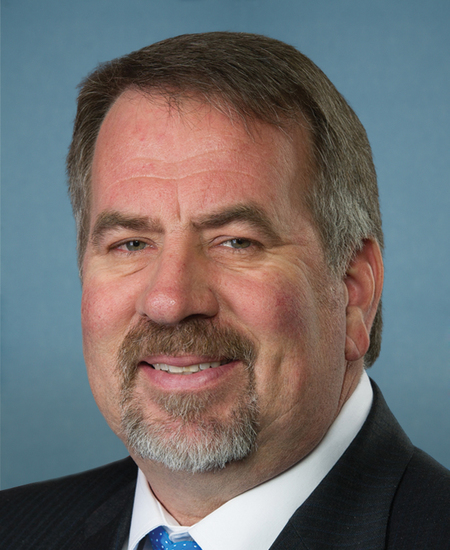
Rep. Doug LaMalfa
Sponsored bills
Maddy summaryThe IDEA Full Funding Act (HR 2598) mandates specific annual federal funding levels for the Individuals with Disabilities Education Act (IDEA), directly affecting schools and students with disabilities nationwide. It requires the federal government to appropriate either a fixed dollar amount or a specified percentage (increasing annually from 4.5% to 40%) of a calculated total - based on the number of eligible students and average per-pupil costs - starting in fiscal year 2026 through 2035. The bill sets clear, escalating funding targets, with the higher of two calculated amounts (dollar figure or percentage) becoming available for obligation each fiscal year. This establishes a binding financial commitment to address long-standing underfunding of special education services under IDEA.
Maddy summaryThe Free Speech Fairness Act (HR 2501) would amend tax law to allow 501(c)(3) organizations, such as charities and educational nonprofits, to make political campaign statements as part of their regular activities without risking their tax-exempt status. The bill specifies that these statements must be made in the ordinary course of the organization's exempt purpose and result in only minimal additional costs. This change clarifies that routine political commentary by these groups does not violate their tax-exempt status under current rules. The provision would apply to tax years beginning after the bill's enactment.
Maddy summaryThe Public Land Renewable Energy Development Act of 2025 establishes rules for solar and wind energy projects on federal public lands and National Forest System lands. It requires project owners to pay current rents and fees (with a limited exception for projects that applied for permits by December 2016) and directs 25% of revenue from these projects to the state, 25% to the county (based on land area), 25% to speed up renewable energy permit processing, and 25% to a new conservation fund. The fund finances habitat restoration, wildlife corridor protection, wetland conservation, and improved public access to federal lands affected by renewable energy development. This bill directly affects renewable energy developers, states, counties, and federal agencies managing public lands.
Maddy summaryThis bill amends the Food and Nutrition Act of 2008 to change work requirements for SNAP (Supplemental Nutrition Assistance Program) recipients. It adds new exemptions for individuals under 18, over 65, medically certified as unfit for work, parents with children under 7, or pregnant women. It also allows states to request waivers from work requirements in counties with unemployment rates exceeding 10%. These changes directly affect SNAP participants who may qualify for exemptions or live in high-unemployment areas.
Maddy summaryHJRES 82 disapproves the District of Columbia Council's approval of the Insurance Regulation Amendment Act of 2024 (D.C. Act 25-699), a local law that would have amended insurance regulations in Washington, D.C. This procedural resolution, submitted under the District of Columbia Home Rule Act, allows Congress to reject the District's legislative action. The bill itself does not change insurance regulations but formally expresses disapproval of the District's law, preventing it from taking effect.
Maddy summaryThe Freedom from Unfair Gun Taxes Act of 2025 would prohibit states and local governments from imposing taxes on the sale of firearms, ammunition, or firearm parts during interstate or foreign commerce. This bill directly affects state tax policies and manufacturers or dealers selling these items across state lines. It explicitly states that the bill does not change the existing federal tax on firearms and ammunition that funds wildlife conservation programs. The key provision bans state-level taxes for these sales in interstate transactions while preserving current federal funding mechanisms.
Maddy summaryThis bill amends Title IX to prohibit individuals assigned male at birth (based on reproductive biology and genetics at birth) from using locker rooms designated for females during active use in school programs. It directly affects transgender girls and schools implementing gender-segregated facilities. The key provision makes it unlawful under federal law to use such facilities when they are actively used by individuals of a different sex. The policy change takes effect 30 days after enactment.
Maddy summaryThis bill imposes U.S. economic sanctions and visa restrictions on the Popular Resistance Committees (PRC) and related entities, targeting individuals and groups linked to the October 7, 2023, attacks on Israel. It requires the President to block assets and deny visas to PRC members, affiliates, and any group operating under their umbrella, effective 90 days after enactment. The law also mandates a report within 90 days on whether "Lion’s Den" meets criteria for terrorism designation under existing U.S. law. These measures apply specifically to designated terrorist organizations and their networks, without altering broader U.S. counterterrorism policy.
Maddy summaryThis bill would cancel a specific Environmental Protection Agency (EPA) rule finalized in March 2024 that reconsidered national air quality standards for particulate matter. It directly affects the EPA’s regulatory authority and would prevent the implementation of that rule, impacting industries and communities subject to particulate matter air quality standards. The key mechanism is a direct nullification of the EPA’s final rule (89 Fed. Reg. 16202), declaring it "shall have no force or effect." This policy change would revert to prior air quality standards without altering the broader regulatory framework.