

Maddy summaryHJRES 78 is a joint resolution seeking congressional disapproval of a U.S. Fish and Wildlife Service rule that granted endangered species status to the San Francisco Bay-Delta population of the longfin smelt, a fish native to California's Bay-Delta region. If passed, this resolution would block the rule from taking effect, preventing the smelt from receiving federal protections under the Endangered Species Act. The rule, published in the Federal Register in July 2024, aimed to protect this specific fish population from threats like habitat loss and water management practices. This resolution does not create new policy but directly reverses an existing regulatory action affecting the smelt and its ecosystem.
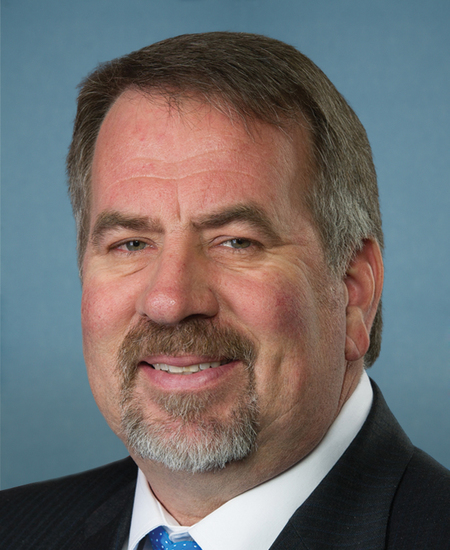
Rep. Doug LaMalfa
Sponsored bills
Maddy summaryHR 3033, the "Protecting the Mailing of Firearms Act," repeals a federal law (18 U.S.C. §1715) that previously prohibited mailing firearms and related items. This bill directly affects firearm sellers, buyers, and the U.S. Postal Service by removing the ban on mailing firearms, ammunition, and components. It also prohibits the Postmaster General from creating rules that would block firearm mailings or require disclosure of sales receipts, transaction records, or firearm serial numbers. The law takes effect immediately for pending cases and prevents new restrictions on firearm shipping through the postal system.
Maddy summaryThis bill amends the Wild Free-Roaming Horses and Burros Act to change how the Bureau of Land Management manages horse and burro populations. It requires using fertility control vaccines as the first priority method for population management, replacing previous steps. Crucially, it directs the Secretary to prioritize recruiting and training military veterans for these fertility control tasks, including through the PZP applicator certification program, with veterans receiving appropriate compensation. This directly affects wild horse and burro populations through new management methods and military veterans through new training and contracting opportunities under the program.
Maddy summaryHR 2812, the Youth Lead Act, amends an existing agricultural act to allocate $5 million annually for youth organizations from fiscal years 2026 through 2030. This funding is specifically designated for youth organizations under the amended section of the Agricultural Research, Extension, and Education Reform Act of 1998. The bill does not create new eligibility rules or define "youth organizations," but directs existing federal funds toward this purpose. It directly affects qualifying youth organizations that receive these annual grants. The provision is a straightforward funding mechanism with no other substantive policy changes.
Maddy summaryThis bill requires the U.S. government to strengthen measures against hostage-taking by Iran and other adversaries. It mandates annual reports on $6 billion in Iranian funds transferred to Qatar (including certifications on humanitarian use), reviews of past hostage cases in Iran to identify individuals for sanctions, and restrictions on Iranian diplomats at the UN who face terrorism-related sanctions. The bill also directs the Secretary of State to evaluate whether U.S. passports should be invalid for travel to Iran due to detention risks, and requires a strategy to deter hostage-taking by U.S. adversaries. These provisions aim to hold accountable those involved in hostage-taking while protecting U.S. citizens.
Maddy summaryThe Affordable Housing Credit Improvement Act of 2025 would reform the Low-Income Housing Credit program, which provides tax credits to developers of affordable housing. It would increase state allocations based on population with annual cost-of-living adjustments, modify tenant eligibility rules to allow higher income limits for some residents, and add protections for domestic violence victims in housing. The bill would simplify rules for rural and Native American housing projects, clarify credit eligibility requirements, and require greater transparency in program administration. These changes would directly affect developers, property owners, and low-income tenants in housing projects that receive LIHC tax credits.
Maddy summaryHR 2688, the Protecting Student Athletes’ Economic Freedom Act of 2025, prevents student athletes (and former athletes) from being classified as employees under federal or state law solely due to their participation in varsity intercollegiate athletics. The bill explicitly states that institutions, conferences, or associations cannot treat athletes as employees based on their athletic involvement, competition, or team membership. This directly affects current and former college athletes participating in NCAA or similar varsity sports programs. The law overrides conflicting state or federal employment laws to maintain their non-employee status, focusing solely on clarifying legal classification without altering athletic eligibility or compensation rules.
Maddy summaryHR 2124 (LAND Act) restricts foreign purchases of U.S. agricultural land by requiring foreign buyers to follow the same rules as U.S. citizens would face in their home country, plus applicable state laws. It defines "home country" based on citizenship (using the most restrictive foreign law for dual nationals or companies) and mandates sellers to report sales to the USDA, which then notifies relevant lawmakers. A new U.S. Land Protection Task Force (including USDA, Justice, and State departments) will monitor compliance, track land sales data, and report to Congress every six months. The bill directly affects foreign individuals, companies, and governments purchasing agricultural land, with no changes to existing U.S. citizen purchasing rules.
Maddy summaryThis bill directs the USDA to fund research on wildfire smoke's impact on wine grapes and wine. It requires the Secretary of Agriculture to identify smoke compounds, develop testing methods, create a background database of natural smoke levels, and create tools to reduce exposure - working with universities in California, Oregon, and Washington. The research aims to help winegrowers affected by wildfire smoke, which has increasingly damaged crops in those states. It authorizes $6.5 million annually for fiscal years 2026-2030 to support this work.
Maddy summaryThe TORCH Act (HR 168) streamlines wildfire risk reduction on National Forest System lands by creating new pathways for hazard tree removal, timber sales for extreme risks, and grazing management. It establishes a categorical exclusion for high priority hazard tree activities (limited to 3,000 acres), allows timber sales without appraisal for extreme risks, and expands opportunities for using livestock grazing to reduce fire fuels. The bill also modifies good neighbor agreements to better support state and local wildfire mitigation efforts and streamlines vegetation management for electric utility lines near power lines. These changes primarily affect the U.S. Forest Service, electric utility companies, and state/local governments managing wildfire risk on federal lands.