

Maddy summaryThis bill amends the definition of "major disaster" under the Stafford Act to explicitly include "extreme heat" before "or drought." It directly affects communities experiencing severe heatwaves by allowing such events to qualify for federal disaster assistance, which previously required disasters like floods or droughts. The key change is a technical update to eligibility criteria, enabling affected areas to access federal aid programs like FEMA assistance for extreme heat emergencies. (Procedural bill, summary limited to 2 sentences per guidelines.)
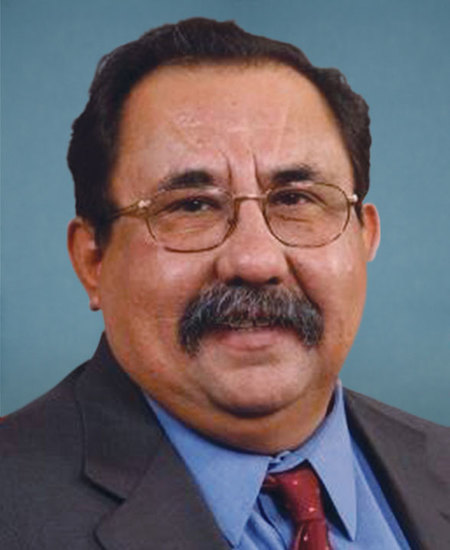
Rep. Raúl M. Grijalva
Sponsored bills
Maddy summaryHRES 485 is a non-binding resolution expressing the U.S. House of Representatives' support for designating June 9 as "Batten Disease Awareness Day." It does not create new laws or policies, but formally recognizes Batten disease - a rare, fatal neurological disorder affecting children - as a condition requiring public awareness. The resolution describes Batten disease as a genetic condition causing progressive vision loss, seizures, motor skill decline, and early death, with no known cure. It directly affects families and advocacy groups for this rare disease by promoting public recognition on a specific date. This is a symbolic gesture with no direct impact on healthcare, funding, or regulations.
Maddy summaryHRES 490 is a non-binding resolution supporting the designation of June 12-18, 2023, as "National Men’s Health Week." It acknowledges persistent health disparities affecting men (such as higher rates of heart disease, cancer, and lower healthcare engagement) and urges the public to focus on preventive care. The resolution requests the President issue a proclamation encouraging nationwide observance through awareness events and health screenings. It does not create new laws or funding but formally recognizes an existing annual observance established since 1994.
Maddy summaryThis resolution designates May 5, 2023, as the "National Day of Awareness for Missing and Murdered Indigenous Women and Girls" to honor victims and support families. It asks the public to commemorate affected individuals and demonstrates solidarity with impacted communities. The bill also recommends the Justice Department commission a new study to update statistics on violence against Indigenous women, referencing the 2016 DOJ study that found 84.3% experienced violence in their lifetime. This symbolic measure aims to raise awareness and encourage federal action, without changing laws or allocating new funding.
Maddy summaryHR 3985 establishes a new Office within the U.S. Department of State to monitor and combat Islamophobia abroad. The bill requires the State Department to appoint a Special Envoy who will coordinate efforts to track Islamophobic incidents globally and mandate specific reporting in three key State Department documents. These reports must detail physical violence against Muslims or Muslim institutions, hate propaganda in media, government responses, religious freedom protections, and anti-bias education efforts in foreign countries. The provisions apply to annual human rights, foreign assistance, and religious freedom reports, requiring detailed descriptions of Islamophobia occurrences and governmental actions. The new reporting requirements become effective 180 days after the bill's enactment.
Maddy summaryHR 3978, the Southern California Coast and Ocean Protection Act, prohibits the federal government from issuing new oil and gas leases in the Southern California planning area. It directly affects the Secretary of the Interior and potential oil and gas companies by banning exploration, development, or production leases in that specific region, as defined in the 2018 National OCS Leasing Program. The bill amends existing law to permanently block new leasing in this coastal zone, with no new permits allowed under current or future federal leasing programs.
Maddy summaryThis bill requires federal agencies collecting demographic survey data to begin including questions on sexual orientation, gender identity, and variations in sex characteristics (intersex traits) within 360 days of enactment. Agencies must review existing surveys to identify gaps, develop privacy-protective methods for collecting this data (including anonymization and data destruction protocols), and incorporate it into relevant reports within three years. The law applies to all federal surveys that collect standard demographic data (like race, ethnicity, and age), such as the census or health surveys, but does not compel individuals to disclose their status. It emphasizes maintaining confidentiality, allows limited agency waivers if standards can't be met, and mandates a congressional report on implementation within two years.
Maddy summaryHR 3953, the Debt Ceiling Reform Act, changes how Congress can block the Treasury from borrowing more money. It requires the Treasury to notify Congress when debt approaches a $1 trillion increment, giving Congress 30 days to pass a resolution disapproving further borrowing. The bill mandates strict timelines: the House must act within 6 days of introduction (with committees required to report bills within 5 days), and the Senate must consider the resolution within 6 days with limited debate. This process directly affects the Treasury’s ability to issue debt and Congress’s procedural control over debt ceiling decisions. The bill does not eliminate the debt ceiling but streamlines the disapproval process.
Maddy summaryThe VITAL Act increases federal low-income housing tax credits to boost accessible, affordable housing for people with disabilities and older adults. It raises the credit amount from $1.75 to $4.47 per unit and requires states to allocate at least 40% of new credits toward projects meeting accessibility standards (like widened doorways, zero-step showers, and walkable neighborhoods). Developers of projects where 50%+ of units are designated for people with disabilities receive a 130% credit increase to make these projects financially viable. The bill directly affects state housing agencies, developers, and households with disabilities/aging populations, while adding $8.25 million annually for state resource centers and a national advisory council to support implementation.
Maddy summaryHR 3973, the Judicial Ethics and Anti-Corruption Act of 2023, establishes new ethics rules for federal judges and justices. The bill prohibits judges from owning stocks, commercial real estate, business interests, and certain trusts, while creating a Federal Employee Investment Account for permitted investments. It requires judges to disclose potential conflicts of interest, restricts privately funded judicial education events, and creates a Supreme Court Complaints Review Committee to handle complaints against justices. The bill aims to increase transparency and reduce conflicts of interest for federal judges and justices.