This resolution condemns all forms of discrimination and expresses support for policies to prevent and respond to hate crimes, including education and training on prevention and response.
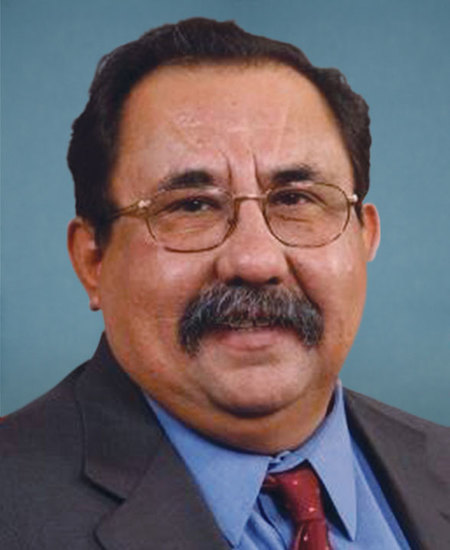
Rep. Raúl M. Grijalva
Sponsored bills
Maddy summaryThe Eviction Prevention Act of 2023 provides $125 million annually to states and local governments to fund legal counsel for eligible individuals (those with income below 125% of the federal poverty level) facing eviction. It establishes a national database requiring courts to collect detailed data on eviction cases, including tenant demographics, reasons for eviction, representation status, and case outcomes. The database will track court-ordered evictions, administrative evictions, and illegal evictions, with specific requirements for reporting by courts and law enforcement. This legislation authorizes $100 million annually for the database's operation through fiscal year 2028, aiming to improve understanding of eviction patterns and outcomes. The bill creates concrete mechanisms for increasing legal representation access and gathering comprehensive eviction data to inform policy decisions.
Maddy summaryThis bill establishes a federal grant program to help schools located near federal lands (like military bases and tribal reservations) with aging, unsafe facilities. It authorizes $250 million annually for four years to fund construction, renovation, and repairs of school buildings that don't meet basic safety standards. The program prioritizes schools with urgent health and safety hazards, offering full federal funding to those with no bond capacity and requiring local matching funds based on financial need for other schools. Schools must use funds to improve existing facilities, not purchase land, and must supplement but not supplant existing funding for school infrastructure.
Maddy summaryThis bill creates a federal grant program to fund electric bicycle sharing services in disadvantaged communities. It provides up to $5 million per grant to states, local governments, or nonprofits for purchasing e-bikes (required to be made in the U.S.), installing charging infrastructure, and offering community outreach and subsidized memberships. Grants must address community transportation needs, improve cyclist safety, and include reporting on usage, emissions reductions, and user demographics. The program, authorized for $100 million annually through 2033, requires services to operate in communities identified by the federal Climate and Economic Justice Screening Tool.
Maddy summaryHR 6567 establishes a new FEMA program to improve disaster recovery in U.S. territories like Puerto Rico, Guam, and the U.S. Virgin Islands. The program will identify and address recurring challenges - such as outdated infrastructure, remote locations, language barriers, and limited staff - that delay recovery after hurricanes and other disasters. FEMA must provide tailored technical assistance, develop training courses, and create best practices for territories applying for federal disaster funding. The bill authorizes $50 million annually (2024-2028) for this program and requires biennial reports to Congress on progress and recommendations for continuation. It directly affects territories struggling with slow recovery due to unique geographic, economic, and administrative hurdles.
Maddy summaryHR 6654, the Farewell to Foam Act of 2023, bans the sale and distribution of expanded polystyrene foam food containers, packaging peanuts ("loose fill"), and coolers starting January 1, 2026. It directly affects food service providers (like restaurants and schools), manufacturers, distributors, and retailers who sell these foam products. The bill prohibits selling these items, with enforcement starting with a written warning for first violations, followed by escalating civil penalties ($250 for a second violation, up to $1,000 for fourth+ violations), while exempting small businesses with low annual revenue from repeated penalties within a 7-day period.
Maddy summaryThis bill requires the government to partner with scientific experts to regularly assess health impacts of PFAS chemicals (common "forever chemicals" found in water and products) and develop clinical guidance for doctors. Within two years of enactment, the Agency for Toxic Substances and Disease Registry must complete an initial assessment and clinical recommendations, updating them every five years. The guidance will be posted online and shared with public health officials and healthcare providers to help treat PFAS-related health issues. It directly affects people exposed to PFAS and the medical professionals treating them.
Maddy summaryThis bill forgives federal student loans for individuals enrolled in Medicare Part A or in the 24-month waiting period for Medicare benefits. It requires the Secretary of Education to cancel the full outstanding balance (principal, interest, and fees) on eligible loans used for undergraduate or graduate education, provided the loans were taken out at least 10 years before application. Borrowers must apply, and the law prohibits refunds for payments made prior to forgiveness. The policy directly affects Medicare/Social Security recipients with qualifying federal student loans, eliminating their debt burden without requiring repayment.
Maddy summaryThe Affordable Drug Manufacturing Act of 2023 establishes a new Office of Drug Manufacturing within the Department of Health and Human Services to directly manufacture and sell specific prescription drugs. It prioritizes drugs with expired patents or limited manufacturers (like insulin, asthma inhalers, naloxone, epinephrine injectors, and antibiotics) that face high costs or shortages, requiring the Office to produce at least 15 such drugs within one year and 25 within three years. The Office sets "fair prices" based on manufacturing costs, patient access, and impact on competition, while mandating public transparency in all pricing and requiring federal agencies to purchase these drugs. This directly affects patients and consumers by aiming to lower costs and improve access to essential medications through government-manufactured alternatives.
Maddy summaryHR 6600, "Tyler’s Law," requires the Secretary of Health and Human Services to study how often hospital emergency departments test for fentanyl during overdose cases, along with the costs, benefits, risks, and patient privacy impacts. The study must be completed within one year of the bill’s enactment, followed by guidance issued within six months on whether fentanyl testing should become routine. This guidance will address how hospitals can inform clinicians about testing protocols and how fentanyl testing might affect future overdose risks and patient health outcomes. The bill directly affects hospitals and emergency departments treating overdose patients, focusing on improving data-driven practices for fentanyl detection.