

Maddy summaryThe Success in the Middle Act of 2023 provides federal funding to improve middle grades education (grades 5-8) by requiring states to develop evidence-based improvement plans focused on student engagement, academic achievement, and transitions to high school. It targets schools serving high percentages of at-risk students, including those with chronic absenteeism, failing grades, or disabilities, by establishing early warning systems to identify students needing support. The bill authorizes $500 million to $650 million annually for 2024-2028 to support professional development for teachers, curriculum alignment, student support services, and data-driven interventions. It requires states to track metrics like chronic absenteeism, on-time promotion rates, and course failure rates to measure progress toward closing achievement gaps. The law aims to improve students' readiness for high school and postsecondary success by addressing challenges unique to the middle grades period.
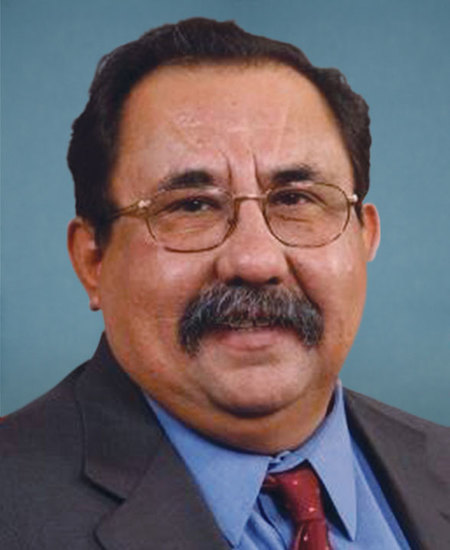
Rep. Raúl M. Grijalva
Sponsored bills
Maddy summaryThis bill authorizes a Congressional Gold Medal to honor the "Hello Girls" - female telephone operators who served in the Army Signal Corps during World War I. They provided critical battlefield communications in France (connecting 26 million calls), wore military uniforms, and faced combat risks, but were denied veteran benefits for 60 years due to being classified as civilian contractors. The medal recognizes their pioneering service, devotion, and the decades-long struggle to gain military recognition. The award follows similar recognition for other WWII women veterans and aims to correct the historical injustice they faced.
Maddy summaryThe SVB Act (HR 1602) repeals Title IV of the 2018 Economic Growth, Regulatory Relief, and Consumer Protection Act, which had relaxed banking regulations. It directly affects banks previously subject to those relaxed rules, particularly smaller institutions that benefited from the 2018 changes. The bill’s key mechanism is restoring the pre-2018 regulatory framework, reversing the specific provisions that eased oversight. This returns banking oversight to the structure that existed before the 2018 law took effect, without creating new rules.
Maddy summaryHRES 219 is a symbolic resolution (not a binding bill) expressing the House’s support for inclusive public schools. It urges schools to adopt historically accurate, diverse educational materials that reflect the nation’s diversity, foster parent-educator partnerships, and eliminate discrimination based on race, disability, LGBTQ+ identity, or other factors. The resolution emphasizes creating safe, well-rounded learning environments that prepare all students for success while protecting students’ civil rights. It directly affects public school districts, educators, families, and students by encouraging practices that promote equity and inclusion.
This resolution expresses support for the designation of COVID-19 Victims and Survivors Memorial Day to memorialize the lives lost to the COVID-19 pandemic.
Maddy summaryHRES 185 is a non-binding House resolution declaring racism a public health crisis in the United States. It directly affects communities of color - including Black, Latino, Native American, and Asian American populations - who experience significant health disparities like higher infant mortality rates, shorter life expectancy, and worse outcomes for conditions like heart disease and diabetes. The resolution cites evidence showing racism meets all four public health crisis criteria (widespread impact, unfair distribution, preventable, and lacking current solutions) and calls for a nationwide strategy to dismantle systemic racism and address its health impacts. It does not create new laws or funding but urges federal agencies to prioritize racial equity in health policy.
Maddy summaryHRES 181 is a non-binding House resolution expressing symbolic support for designating February 28, 2023, as "Rare Disease Day." It does not create new laws or policies but formally recognizes the importance of raising awareness about rare diseases, improving early diagnosis, and supporting research for treatments. The resolution acknowledges that rare diseases affect over 25 million people in the U.S. and highlights ongoing efforts like the FDA’s Rare Disease Endpoint Advancement Pilot Program. It aligns with the global observance of Rare Disease Day, which began in the U.S. in 2009.
Maddy summaryHR 1499, the Good Jobs for Good Airports Act, requires airports receiving federal funding to pay covered service workers a minimum wage of at least $15 per hour (or higher if state/local laws or federal standards require it) and provide minimum fringe benefits. It directly affects workers in specific airport roles like security, ticketing, concessions, cleaning, and ramp services at small, medium, or large hub airports. The bill mandates annual certification from airport operators to verify compliance with these wage and benefit standards, tied to eligibility for federal airport grants under the Infrastructure Investment and Jobs Act. It does not override stricter state or local laws but ensures minimum standards for workers supporting airport operations.
Maddy summaryThis bill requires Medicaid to cover dental and oral health services for adults beginning in 2025, directly affecting low-income adults enrolled in Medicaid. It defines covered services to include preventive care, restorative treatments, dentures, implants, and emergency dental care. The bill increases federal funding for these services (100% FMAP for a 12-quarter period starting in 2025) and requires states to implement new quality measures tracking oral health outcomes and disparities. It also mandates reports on access barriers and creates outreach programs to improve culturally competent dental care for underserved populations.
Maddy summaryHR 1328, the Medical Device Nonvisual Accessibility Act of 2023, requires certain home-use medical devices (like blood pressure monitors and sleep apnea machines) to include nonvisual accessibility features - such as voice commands or audio feedback - by 2025. It directly affects blind or low-vision users who rely on these devices for independent, safe, and private care at home. The bill mandates that devices classified as Class II or III (and cleared via FDA processes) must meet accessibility standards ensuring equal usability for blind or low-vision individuals, with limited waivers allowed for manufacturers facing undue hardship. The FDA will develop and enforce these standards within two years, consulting with accessibility experts and blind users.