

Maddy summaryThis bill modifies federal highway funding rules to prioritize safety for cyclists and pedestrians. It allows states and local governments to receive 100% federal funding for projects that connect existing bike/pedestrian infrastructure or reduce safety risks for these users, instead of the usual lower federal share. The bill also requires projects to align with state safety plans focusing on vulnerable road users and includes specific "Proven Safety Countermeasures" for cyclists/pedestrians. These changes directly affect states administering federal highway funds and local governments seeking to improve non-motorized transportation infrastructure.
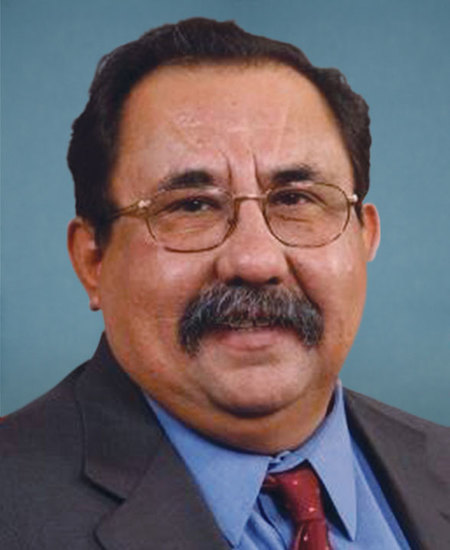
Rep. Raúl M. Grijalva
Sponsored bills
Maddy summaryThis bill requires federal agencies to assess and improve data collection for U.S. territories (American Samoa, Guam, Puerto Rico, U.S. Virgin Islands, and the Northern Mariana Islands) to match the level of data collection provided for states. It mandates a 6-month assessment identifying gaps in current statistical programs, a 12-month implementation plan with cost estimates, and annual reports until fully implemented. By year four, federal agencies must standardize how they collect and publish statistics for territories, ensuring parity with states in areas like demographics and economic data. The bill directly affects territories by addressing historical disparities in federal data collection, which impacts funding allocation and policy decisions. It focuses on procedural changes to data systems, not direct policy or financial provisions.
Maddy summaryHR 1320, the COAST Anti-Drilling Act, bans new oil and gas leasing in four specific coastal areas: the Mid-Atlantic, South Atlantic, North Atlantic, and Straits of Florida planning areas of the outer Continental Shelf. The bill amends federal law to prohibit the Secretary of the Interior from issuing any leases or authorizations for exploration, development, or production of oil, natural gas, or minerals in these regions. This directly affects coastal states and marine ecosystems in those areas by preventing new offshore drilling projects. The law creates a permanent restriction on new leasing in these designated zones.
Maddy summaryThe Food Deserts Act creates a federal grant program to help establish grocery stores in underserved communities by funding state revolving funds. States receive capitalization grants (up to $150 million for FY2022) to provide low-interest loans to grocery stores that meet specific criteria, such as selling unprocessed, affordable healthy foods and matching 20% of the loan with non-federal funds. Priority is given to stores hiring local workers, offering nutrition education, sourcing from local farms, and having established supply chains. The program directly supports grocery store operators in areas with limited access to fresh food, aiming to improve community health outcomes through increased access to nutritious options.
Correcting Guam's History in the PACT Act This bill expands eligibility for a presumption of service-connection for specified diseases associated with exposure to certain herbicide agents. Under a presumption of service-connection, specific conditions diagnosed in certain veterans are presumed to have been caused by the circumstances of their military service. Health care benefits and disability compensation may then be awarded. Under the bill, service performed in Guam or its territorial waters between August 15, 1958, and July 31, 1980, provides a veteran who has a specified disease that is associated with exposure to certain herbicide agents with eligibility for a presumption of service-connection. (Under current law, the eligible time frame for service in Guam is between January 9, 1962, and July 31, 1980.)
Maddy summaryThe TRACK Act of 2023 requires federal agencies (including HHS, NIH, Defense, and Veterans Affairs) to create a public database tracking all government funding for biomedical research and development. It compiles specific details about contracts, grants, licensing agreements, and tax benefits related to drug, device, and therapy development - including funding amounts, recipient organizations, product names/prices, and patent information. The database must be searchable by the public within one month of the bill’s enactment and updated every two weeks. This directly affects federal agencies managing biomedical funding and the private companies, institutions, and researchers receiving that support. The goal is to increase transparency about how taxpayer dollars fund medical product development.
Maddy summaryHR 1654, the DEPOSIT Act, imposes a new tax on certain bank executives' bonuses and stock profits when their bank fails and the FDIC becomes conservator or receiver. It specifically targets executives who earned over $250,000 (adjusted for excluded profits) in the year before their bank's failure and received bonuses within 60 days prior to the FDIC takeover or sold bank stock within that same period. The tax adds 90% of bonus profits and 100% of stock profit amounts to the executive's regular income tax. All revenue generated from this tax will be directed to the Deposit Insurance Fund, which protects bank deposits.
Maddy summaryThe Digital Equity Foundation Act of 2023 would establish a nonprofit Foundation for Digital Equity to improve technology access and digital skills for underserved communities. The Foundation would work to promote broadband adoption, digital literacy, and digital inclusion by raising funds from private sources and collaborating with government agencies like the FCC and NTIA. It would develop programs targeting communities with low broadband adoption rates, convene stakeholders, and support initiatives addressing digital discrimination. The Foundation would be governed by a Board of Directors with specific representation requirements and would be required to submit annual reports to Congress on its activities and funding.
Maddy summaryThis symbolic resolution (HRES 226) recognizes March 2023 as National Middle Level Education Month. It honors middle school educators (serving students in grades 5-9, ages 10-15) and encourages the public to engage with schools supporting this critical developmental stage, but does not create new policies, funding, or affect any specific group. The resolution serves purely as a statement of support for middle-level education's role in student development.
Maddy summaryHR 1591 amends the Elementary and Secondary Education Act to increase annual federal funding for impact aid programs that support school districts near military bases, national parks, and other federal properties. It authorizes specific, rising funding levels for four key areas: payments for federal land acquisitions ($90 million in 2024, growing to $150 million by 2029), basic payments to heavily impacted school districts ($1.6 billion in 2024, growing to $2.45 billion by 2029), payments for students with disabilities ($60 million in 2024, growing to $120 million by 2029), and school construction projects ($22.9 million in 2024, growing to $45.4 million by 2029). These appropriations represent incremental steps toward full federal funding for these aid programs, as specified in the bill's text. The bill directly affects school districts located near federal land, providing predictable annual funding increases for their operational and infrastructure needs.